On September 10, we celebrate the National Day of Polish Children of War – established by the Sejm of the Republic of Poland to pay tribute to the youngest victims of the German and Soviet occupation during World War II.
It is a day of remembrance for children murdered, orphaned, expelled, and mutilated, whose childhoods and futures were robbed by the war.
The barbarity of the German occupiers knew no bounds – bombings of cities, executions of civilians, mass deportations, and violations of international law complemented the daily terror.
However, the crimes against children were particularly dramatic. It was in their defenselessness that the occupiers found a platform for their brutality and cruelty.

killed in the German death camp:
„I remember she was crying. Before the photo was taken, she wiped tears from her face and blood from her cut lips,”
Photo : IPN
One symbol of the tragedy of Polish children is Czesława Kwoka, a fourteen-year-old girl deported to Auschwitz in the first transport from the transit camp in Zamość.
Her photograph, taken by camp prisoner Wilhelm Brasse, remains one of the most moving testimonies to the camp’s nightmare.
“I remember she was crying. Before the photo was taken, she wiped tears from her face and blood from her cut lips,”
– the photographer recalled.
Czesława was murdered with a phenol injection.
In remembering her, we remember the hundreds of thousands of Polish children whose lives, health, and homes were taken away by the occupiers.
The National Day of Polish Children of War is not only a remembrance of the tragic past. It is also a warning to future generations – so that never again will the youngest in the world become victims of war.
We remember. 🇵🇱❤️
Source. IPN
Photo. IPN
PL.
Narodowy Dzień Polskich Dzieci Wojny
10 września obchodzimy Narodowy Dzień Polskich Dzieci Wojny – ustanowiony przez Sejm RP, aby oddać hołd najmłodszym ofiarom niemieckiej i sowieckiej okupacji w czasie II wojny światowej.
To dzień pamięci o dzieciach zamordowanych, osieroconych, wypędzonych i okaleczonych, którym wojna odebrała dzieciństwo i przyszłość.
Barbarzyństwo okupantów niemieckich nie znało granic – bombardowania miast, egzekucje cywilów, masowe deportacje i łamanie prawa międzynarodowego dopełniały codziennego terroru. Jednak szczególnie dramatyczny wymiar miały zbrodnie wobec dzieci.
To właśnie w ich bezbronności okupanci znaleźli pole dla swego bestialstwa i okrucieństwa.
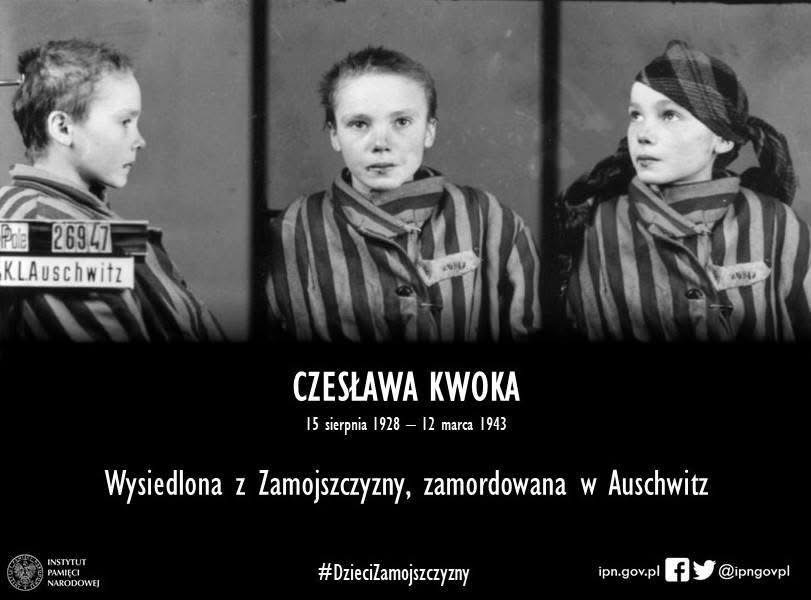
„Pamiętam, że płakała. Zanim zrobiono zdjęcie, otarła łzy z twarzy i krew z rozciętych ust”.
Fot. IPN
Jednym z symboli tragedii polskich dzieci jest Czesława Kwoka, czternastolatka wywieziona do Auschwitz pierwszym transportem z obozu przejściowego w Zamościu.
Jej fotografia, wykonana przez więźnia obozowego Wilhelma Brasse, do dziś jest jednym z najbardziej poruszających świadectw obozowego koszmaru.
„Pamiętam, że płakała. Zanim zdjęcie zostało zrobione, otarła łzy z twarzy i krew z rozciętych ust”
– wspominał fotograf.
Czesława została zamordowana zastrzykiem fenolu.
Pamiętając o niej, pamiętamy o setkach tysięcy polskich dzieci, którym okupanci odebrali życie, zdrowie i dom.
Narodowy Dzień Polskich Dzieci Wojny to nie tylko wspomnienie tragicznej przeszłości.
To także przestroga dla przyszłych pokoleń – aby już nigdy nigdzie na świecie najmłodsi nie stali się ofiarami wojny.
Pamiętamy. 🇵🇱❤️
Źródło. IPN
Zdjęcie. IPN
 Polish Sue
Leave a comment