Easter (Wielkanoc) is one of the most important and deeply cherished holidays in Poland, celebrated with a mix of Catholic devotion, vibrant folk customs, and family traditions. The season is rich in symbolism and rituals that stretch across Holy Week and culminate in joyful Easter celebrations. Below is a look at the key traditions and some unique examples that make Easter in Poland truly special. Let us start with Palm Sunday (Niedziela Palmowa).
Easter preparations begin a week before Easter Sunday with Palm Sunday, commemorating Jesus’ entry into Jerusalem. In Polish churches, the faithful bring colorful, handmade palms to be blessed.
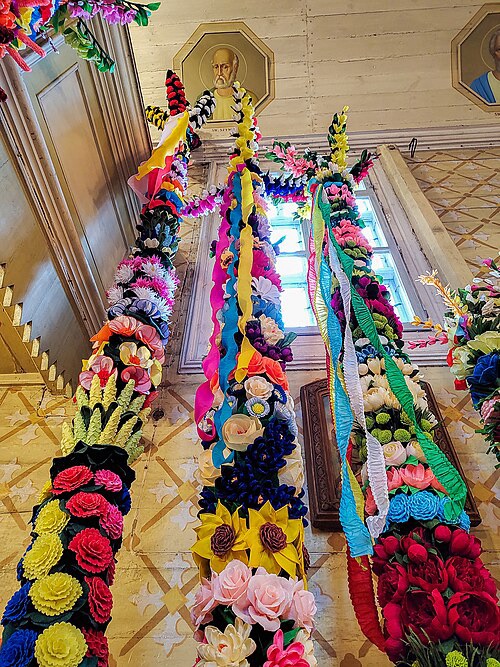
These are often crafted from willow branches, dried flowers, and ribbons — especially in southern regions like Lipnica Murowana, known for its record-breaking, towering palms.
This is a start to Holy Week (Wielki Tydzień).
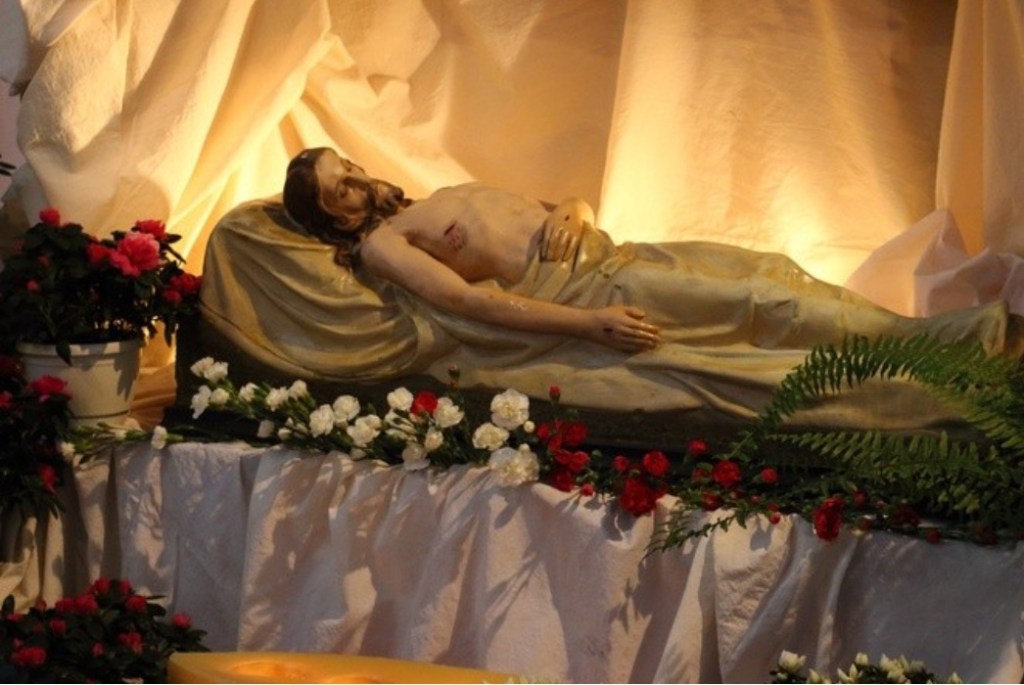
During Holy Thursday, Polish Catholics recall the Last Supper. On Good Friday, it’s customary to visit churches and pray before symbolic tombs of Christ (Grób Pański), which are often elaborately decorated and guarded by traditional “soldiers” in some towns, like the historical guards in Kraków.
Holy Saturday is a day of „Święconka” blessing.
One of the most beloved traditions is the blessing of Easter baskets on Holy Saturday, called Święconka. Families prepare a decorated basket filled with symbolic foods: Eggs (jajka) – representing life and resurrection Bread (chleb) – symbol of Jesus, the Bread of Life Salt (sól) – purification and truth Sausage (kiełbasa) – abundance and God’s generosity Horseradish (chrzan) – strength and overcoming suffering suger lamb (baranek z cukru) – symbolizing Christ.


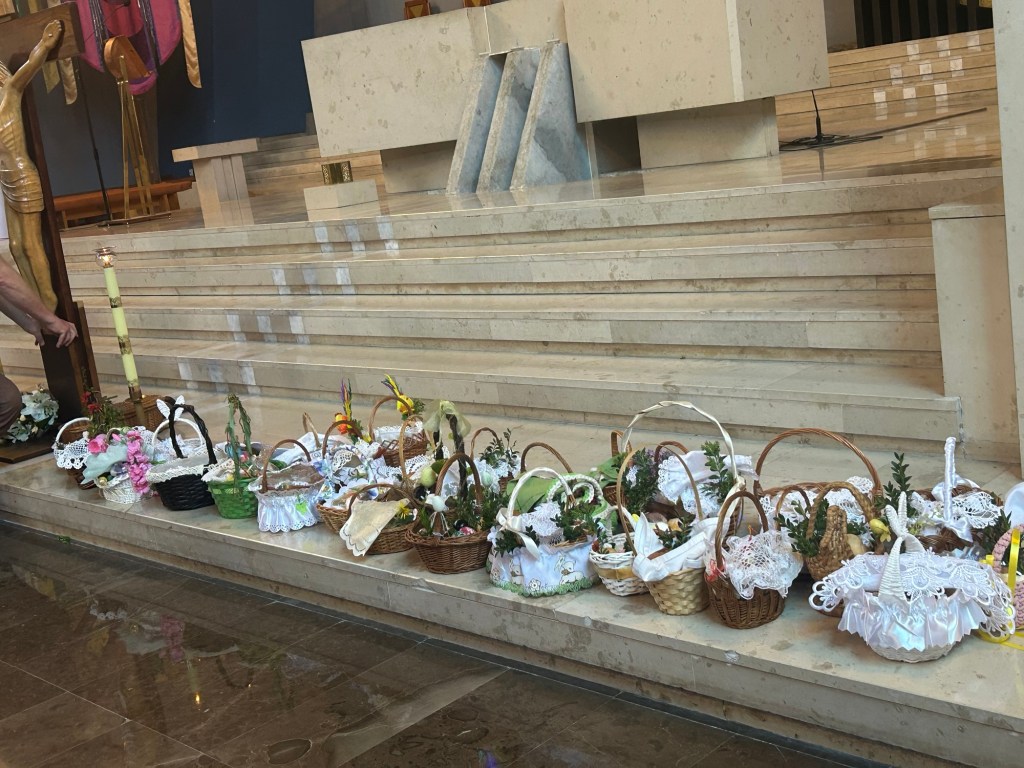


Children often take pride in carrying the baskets to church, where they are blessed by a priest.
Easter Sunday can be described as a joyful Resurrection across Poland.
Easter morning begins with the Resurrection Mass (Msza Rezurekcyjna), often held at sunrise, with processions and ringing bells. Families then gather for a festive breakfast, starting with a prayer and sharing pieces of the blessed egg (dzielenie się jajkiem), wishing each other health and happiness.
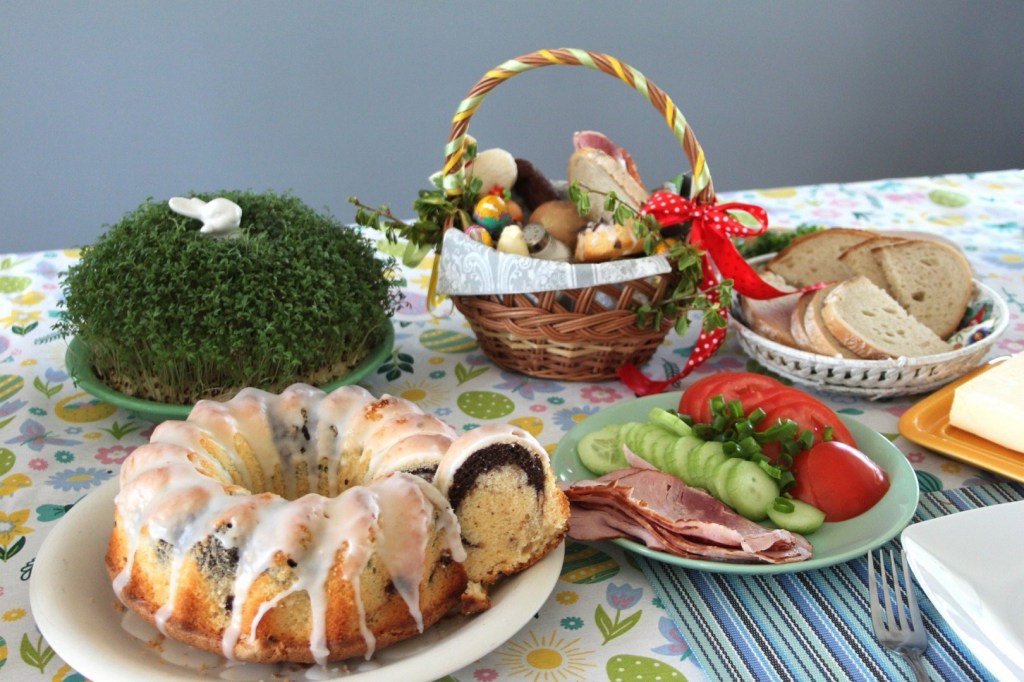
Typical Easter dishes include: żurek – sour rye soup with white sausage and eggs, biała kiełbasa – white sausage, mazurek – a flat, decorated cake topped with dried fruits, nuts, and icing and babka wielkanocna – a tall, yeast cake, often drizzled with icing sugar.
Easter Monday is called in Poland „Śmigus-Dyngus”.
Known as Wet Monday, Śmigus-Dyngus is a lighthearted custom where people splash water on each other. Boys traditionally chase girls with buckets or water guns, although nowadays it’s often a playful battle between friends and family members. In cities like Poznań and Lublin, this turns into a full-blown water fight — a fun way to celebrate the renewal of life.
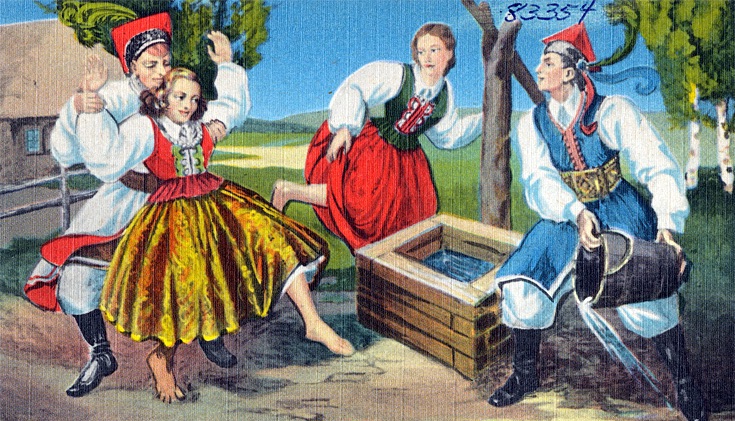
A postcard showing youth dousing each other with water on Śmigus-dyngus
Easter in Poland is not only a celebration of Christ’s resurrection but also a lively expression of cultural identity and community spirit. Whether it’s the solemn prayers of Holy Week, the colorful palms and baskets, or the laughter of Śmigus-Dyngus, each tradition carries deep meaning and continues to be passed down from generation to generation.

Text : Iwona Golińska, Polish Sue
Photos: Polish Sue, Wikipedia
 Polish Sue
Leave a comment