
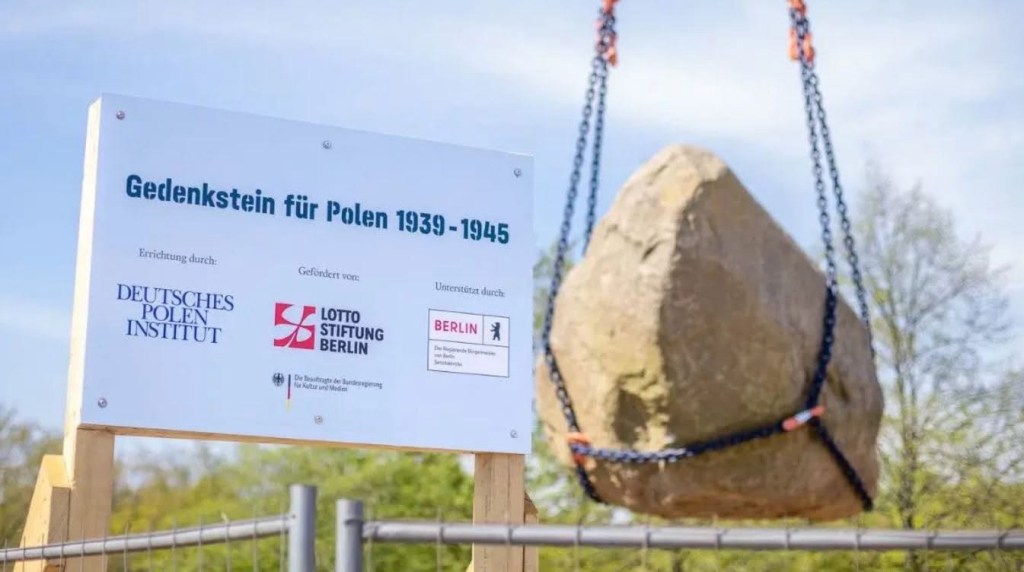
A stone unveiled yesterday in Berlin bears solemn witness to the Polish victims of German crimes during the Second World War. And yet, despite its purpose, the memorial falls short—it does not reflect the full scale, cruelty, or legacy of those crimes. For all its symbolism, it speaks too softly to a history still largely unheard in German society.
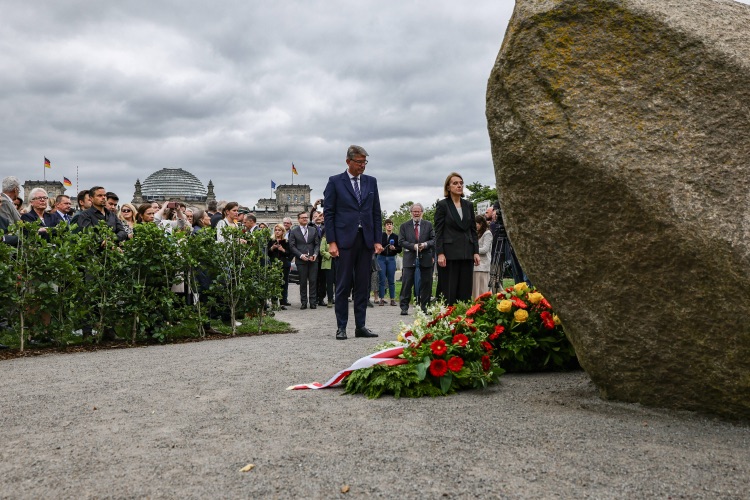
Six Million—and Another Six Million
The German public is rightly familiar with the figure of six million Jews murdered by the Nazi regime—a number cemented into collective memory since it was first cited by Adolf Eichmann and later in Wilhelm Höttl’s testimony during the Nuremberg Trials. Holocaust scholars have refined that figure—Raul Hilberg cites 5.1 million, while Wolfgang Benz estimates between 5.3 and 6.2 million—but “six million” remains etched in stone, both metaphorically and, now, literally.
However, there’s another six million, and only part of it is remembered. This is the number of Polish citizens killed by the German Reich during the war. Of these, 2.9 to 3 million were Polish Jews—victims of the Holocaust, rightly counted among the six million. But the remaining 2.3 to 3 million were ethnic Poles, murdered not in death camps alone, but in forests, fields, prisons, villages, and cities. And they are largely absent from the German historical narrative.
A Forgotten Genocide
This second group includes Poland’s intelligentsia and civil leadership—teachers, priests, judges, artists, and scientists—systematically targeted for extermination from the first day of the war. It includes the residents of over 800 villages razed by German forces, patients in mental institutions eliminated under the T4 euthanasia program, and countless civilians executed as reprisals or deterrents by the SS and Gestapo. It includes prisoners of war, forced laborers, and those who died slowly in German-run concentration camps—sometimes without ever being registered.
But this number still doesn’t account for those who survived with broken bodies and shattered minds—amputees, the shell-shocked, the starved and chronically ill. It doesn’t include parents of murdered children, or children of murdered parents. It doesn’t count the displaced, the orphaned, the robbed, the razed, the homeless, and the culturally gutted.
The Devastation Beyond Numbers
The German occupation of Poland was not just violent; it was annihilatory. It aimed at the erasure of Poland as a nation and a culture. The country’s economy was gutted, machinery and livestock looted, banks emptied, and savings stolen. Over 516,000 artworks disappeared. Fires and bombs incinerated 15 million books. Thousands of historic buildings were reduced to rubble. Some have been rebuilt. Most have not.
This destruction was not a byproduct of war. It was policy.
The Illusion of Acknowledgment
A 2024 poll shows that 53% of Germans believe these crimes have been at least partly acknowledged and punished. Another 25% say they have been fully addressed. 40% think Polish victims have been adequately compensated.
We beg to differ. Jewish survivors and their descendants have received over €90 billion in compensation. German nationals victimized by their own regime have received €48.5 billion. The total compensation paid to Polish victims? €1.5 billion.
That’s not acknowledgment. That’s a footnote.
What the Stone Doesn’t Say
The stone unveiled yesterday attempts to honor Polish victims. It is a symbolic gesture, but also a sobering measure of how much remains unsaid. Without historical truth, memory becomes hollow. Without justice, symbols risk becoming substitutes for responsibility.
If the stone is to have meaning, it must not only mark the past—it must challenge the present. It must inspire German society to confront the fuller truth of its wartime crimes in Poland, and to recognize that remembrance without reckoning is no remembrance at all.
Author: Iwona Golińska
Photos: Deutsches Polen-Institut e.V., Polish Ministry of Foreign Affairs, PAP/EPA/Filip Singer
Sources: INSTITUTE OF NATIONAL REMEMBRANCE
-Pl-
Kamień w Berlinie i milczenie pod nim ukryte.
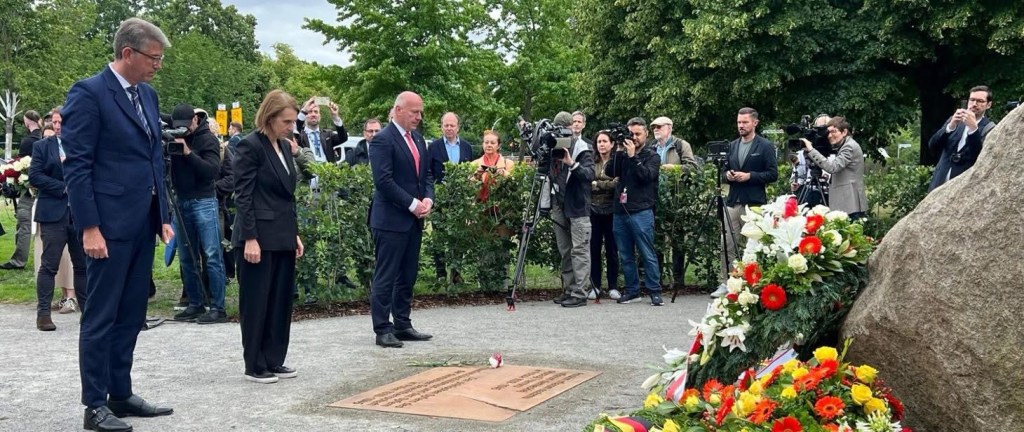
Wczoraj w Berlinie odsłonięto kamień, który ma upamiętniać polskie ofiary niemieckich zbrodni z czasów II wojny światowej. I choć ten gest jest symbolicznie ważny, to jednak nie oddaje ani skali, ani brutalności tych zbrodni. Pomnik mówi zbyt cicho o historii, która w niemieckiej świadomości społecznej wciąż pozostaje niedopowiedziana.
Sześć milionów — i kolejne sześć milionów.
Społeczeństwo niemieckie słusznie kojarzy liczbę sześciu milionów zamordowanych Żydów z Holokaustem. Liczba ta po raz pierwszy padła z ust Adolfa Eichmanna, a następnie została potwierdzona przez Wilhelma Höttla podczas procesu w Norymberdze. Historycy Holokaustu skorygowali ją później — Raul Hilberg mówił o 5,1 mln ofiar, Wolfgang Benz o 5,3–6,2 mln — ale w zbiorowej pamięci pozostało „sześć milionów”. Wyryte w kamieniu — dosłownie i w przenośni.
Ale jest też inne sześć milionów, znane tylko częściowo. To liczba obywateli Polski, którzy zginęli z rąk III Rzeszy. Około 2,9–3 milionów z nich to Żydzi polskiego pochodzenia — ofiary Holokaustu, zaliczane do wspomnianych sześciu milionów. Ale pozostałe 2,3–3 miliony to etniczni Polacy, których los pozostaje niemal nieobecny w niemieckiej pamięci zbiorowej.
Zapomniane ludobójstwo.
Ta druga grupa to elita II Rzeczypospolitej — nauczyciele, duchowni, sędziowie, naukowcy, artyści — mordowani systemowo od pierwszego dnia wojny. To mieszkańcy ponad 800 wsi spalonych i zniszczonych przez niemieckie wojsko i policję. To pacjenci zakładów psychiatrycznych zgładzeni w ramach programu T4. To cywile rozstrzelani w ramach pacyfikacji, odwetu, prewencji. To robotnicy przymusowi, więźniowie obozów koncentracyjnych i dziesiątki innych kategorii ofiar.
Ale ta liczba nie obejmuje tych, którzy przeżyli z ranami i traumą: kalekich, wyniszczonych, z PTSD, zmarłych przedwcześnie z powodu gruźlicy i chorób wojennych. Nie obejmuje rodziców dzieci zamordowanych lub odebranych do germanizacji. Nie obejmuje wygłodzonych, pozbawionych dachu nad głową, rozdzielonych z rodziną, wykorzenionych.
Zniszczenie, które wykracza poza liczby.
Niemiecka okupacja Polski nie była tylko brutalna. Była zaplanowanym aktem unicestwienia państwa i narodu. Gospodarka została zrujnowana, maszyny i żywy inwentarz zrabowane, oszczędności obywateli przejęte. 516 tysięcy dzieł sztuki zaginęło. 15 milionów książek spłonęło w niemieckich pożarach. Tysiące zabytkowych budynków zostały zbombardowane, spalone lub wysadzone. Część odbudowano. Większości — nie. To nie były skutki uboczne wojny. To był plan.
Iluzja rozliczenia.
Z sondażu przeprowadzonego w 2024 roku wynika, że 53% Niemców uważa, iż te zbrodnie zostały przynajmniej częściowo rozliczone. 25% sądzi, że w pełni. 40% wierzy, że Polacy zostali adekwatnie zrekompensowani.
Pozwolimy sobie stanowczo zaprzeczyć. Żydowscy ocaleńcy i ich spadkobiercy otrzymali ponad 90 miliardów euro. Niemcy poszkodowani przez nazistowski reżim — 48,5 miliarda euro. Łączna kwota odszkodowań wypłaconych Polakom? 1,5 miliarda euro. To nie jest rozliczenie. To przypis.
Czego kamień nie mówi.
Kamień odsłonięty wczoraj w Berlinie ma oddać hołd polskim ofiarom. Ale to hołd częściowy, milczący wobec ogromu cierpienia. Bez prawdy — pamięć staje się pusta. Bez sprawiedliwości — symbole mogą zastąpić odpowiedzialność.
Jeśli ten kamień ma mieć znaczenie, musi być początkiem. Musi prowokować niemieckie społeczeństwo do zadania sobie trudnych pytań. Do uznania pełnej prawdy o okupacji Polski. Do refleksji, że upamiętnienie bez rozliczenia to jeszcze nie pamięć.
Autor: Iwona Golińska
Zdjęcia: Deutsches Polen-Institut e.V., Ministerstwo Spraw Zagranicznych RP
Źródło: Instytut Pamięci Narodowej
 Polish Sue
Leave a comment