
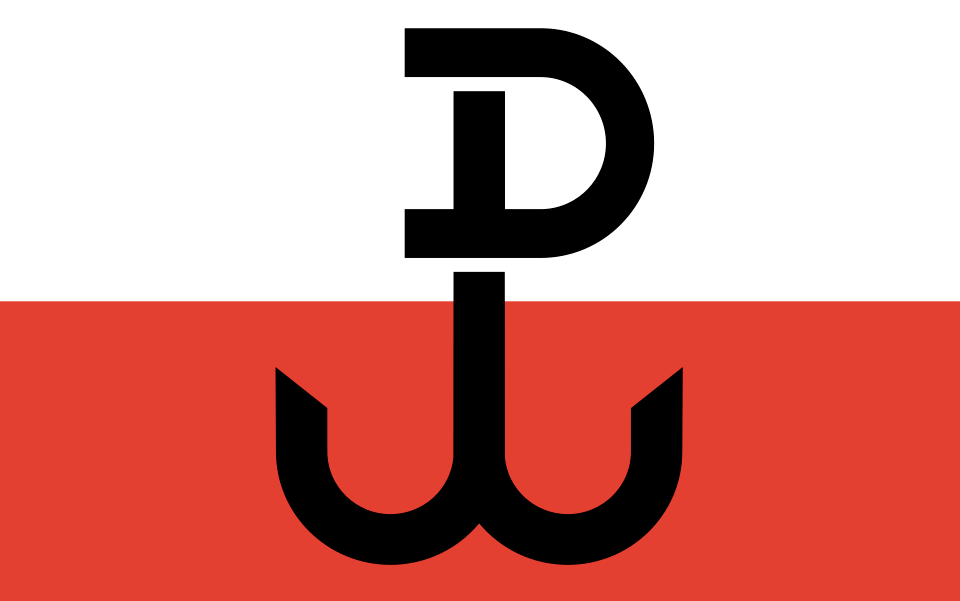
1 July 2025 marks the 80th anniversary of one of the most poignant and dignified acts in modern Polish history — the issuance of the Testament of Fighting Poland, the final declaration of the Polish Underground State.
It was a document born not from victory, but from principle. A testament not only to what Poland had suffered, but to what it believed in — freedom, sovereignty, and democracy.
During World War II, while much of Europe succumbed to occupation and terror, Poland created something unparalleled: a state within a state. Known as the Polish Underground State, it included a secret parliament, courts, education systems, and above all, the Home Army (Armia Krajowa) — Europe’s largest underground military resistance force.
Under the auspices of the Polish Government-in-Exile, this clandestine republic operated under brutal German occupation from 1939 to 1945. Its mission: to preserve the legal continuity of the Polish state and to fight for independence.
“The end of the war against Germany found Poland in a situation that was extremely difficult and even tragic.”
These words opened the manifesto issued on 1 July 1945 by the Council of National Unity (Rada Jedności Narodowej), the underground’s legislative body. The war with Germany was over. Nazi brutality had left Poland devastated, its cities — Warsaw especially — reduced to ruins. Over six million Polish citizens, half of them Jews, had been killed.
As the German occupiers withdrew, a new occupying power — the Soviet Union — installed a communist puppet regime in Warsaw. Stalin’s secret police, the NKVD, began arresting, torturing, and executing members of the Polish underground. The wartime dream of national sovereignty was betrayed in the name of geopolitical expediency.
The Testament of Fighting Poland was no ordinary political document. It was a moral and historical declaration, a final act of resistance — not in the form of weapons, but of words and ideals.
The message included a clear denunciation of Soviet occupation and communist repression. It called for:
The withdrawal of the Red Army and Soviet security services. An end to political persecution of underground soldiers and leaders. The reunification of the Polish Armed Forces under independent command. Free, democratic elections open to all political groups. Independent foreign policy and democratic reforms in political, economic, and social life.
Above all, it demanded the right of the Polish nation to determine its own fate — the very thing it had been denied by both Nazi and Soviet occupiers.
The issuing of the Testament did not mark the end of persecution — it preceded a dark chapter of repression and martyrdom. Tens of thousands of former resistance fighters were imprisoned, tried in show trials, or killed.
Perhaps no figure embodies this tragedy more than General August Emil Fieldorf “Nil”, the head of the Home Army’s Directorate of Diversion (Kedyw), who was executed by the communist regime in 1953 after refusing to cooperate with Soviet authorities. He remains one of the many heroes betrayed by the postwar order.
It would take over four decades for the goals of the Testament to be realized. In 1989, Poland’s communist regime collapsed under the weight of internal resistance and international change, and the first free elections were held. The legacy of the Polish Underground State and the Testament helped inspire the democratic opposition, including the Solidarity movement.
A symbol of this continuity can be found today in front of the Polish Parliament (Sejm) in Warsaw: a monument to the Polish Underground State and the Home Army. It stands not in defeat, but in vindication.
The Testament of Fighting Poland is not just a historical artifact; it is a moral compass. It reminds us that nations are not only defined by their borders, but by the values for which they stand — even when standing comes at the highest cost.
In a time when democratic ideals are tested around the world, this message from a destroyed but unbroken nation continues to speak across generations:
“Democracy is a freedom, vested in the broad masses of a nation, to choose a socio-political system of government and the worldview it originates from.”
To mark the 80th anniversary, the full text of the Testament has been made available here:
👉 Download “Testament of Fighting Poland” (PDF)
#WW2 #PolishHistory #TestamentOfFightingPoland #PolishUndergroundState #CommunistPoland #Democracy #HistoryMatters
Source:
Institute of National Remembrance
Text : Iwona Golinska , Polish Sue

 Polish Sue
Leave a comment