
Margaret Susan Ryder, better known as Sue Ryder, was a remarkable British charity activist who dedicated her life to helping the sick, suffering, and displaced — especially in Poland, a country she came to love deeply.
Born on July 3, 1923, in Leeds, and raised in Suffolk, Sue Ryder began helping others from a young age. During World War II, at just 16 years old, she joined the First Aid Nursing Yeomanry (FANY). Soon, she was recruited into the Polish section of the British Special Operations Executive (SOE), a secret unit working behind enemy lines in occupied Europe.
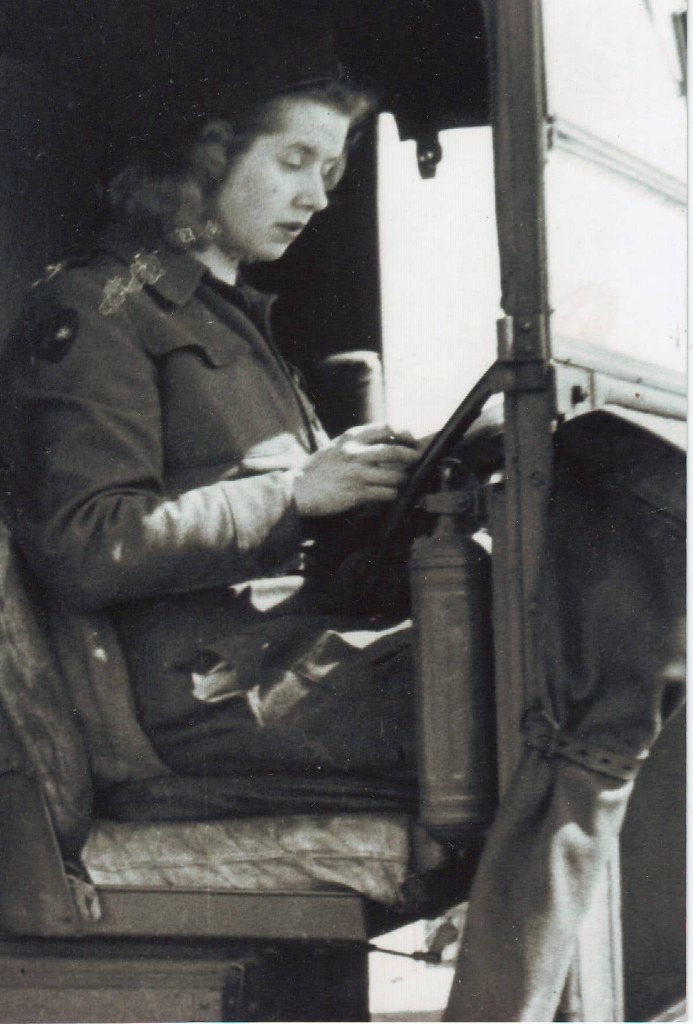
In August 1944, she supported the Warsaw Uprising, working alongside the elite “Cichociemni” Polish Special Forces. Their courage and sacrifice deeply influenced her. After the war, she continued aiding survivors of Nazi concentration camps and political prisoners under the communist regime. These harrowing experiences shaped her lifelong humanitarian mission.
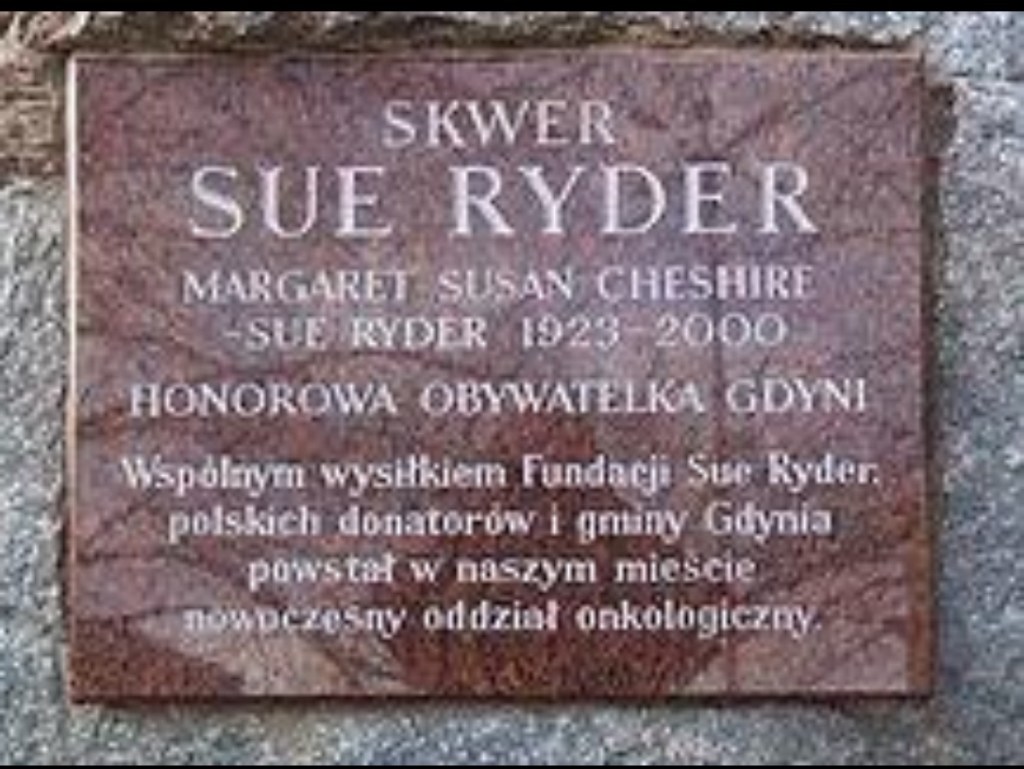
Plaque at „Sue Ryder Square” in Gdynia, Poland, stating that she was an honorary citizen of the city and that her Foundation had helped fund a cancer ward there.
In 1953, Sue Ryder founded the Sue Ryder Foundation, an international charity established in memory of those who perished during WWII. Inspired by a line from Hamlet – “There’s rosemary, that’s for remembrance” – the rosemary twig became a symbol of her cause.
Over the years, the Foundation:
Built over 80 care homes in 15 countries.
Established more than 600 charity shops to fund its work.
Provided care for the terminally ill, disabled, elderly, and homeless.
Organized rehabilitation holidays in the UK for 8,000 Polish survivors of German concentration camps.
Sue Ryder’s guiding principle:
“Do what you can for the person in front of you.”
Sue Ryder had a deep and lasting connection to Poland — rooted, in part, in a youthful love for a Polish “Cichociemny” operative who was later killed in action. Though their story ended in tragedy, her devotion to Poland never wavered.
We wrote about it on the anniversary of her death – here:
Starting in the late 1940s, she:
Built over 30 care institutions across Poland, including:
Hospitals in Konstancin-Jeziorna and Gdynia
A cancer center and homes in cities like Cracow, Radzymin, Popkowice, Psary, and Góra Kalwarial
Gave her family estate in Cavendish to house displaced persons and trauma victims.
Continued her work in Poland even during communism, although she couldn’t officially register her foundation until 1991.
Resided with her husband, Leonard Cheshire, and two children in a small flat, while the rest of their home was offered to those in need.
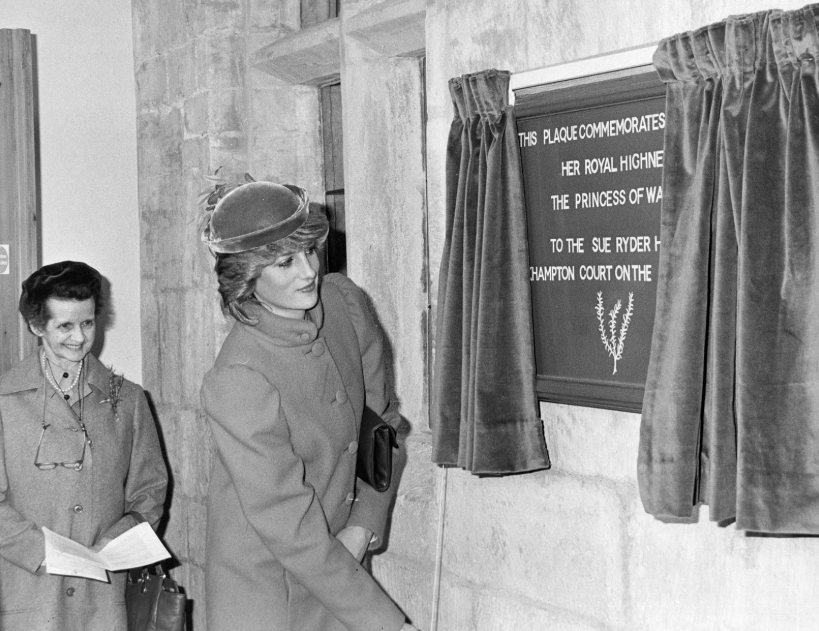
In Warsaw, the Sue Ryder Museum was created to commemorate her life — the only museum in the world dedicated to her. Numerous Polish towns and cities have streets and squares bearing her name, including a prominent square in Gdynia. Sadly, this Museum in Warsaw was closed down despite many efforts to keep it alive including charity event organised in the UK in support of the Museum of which we raised funds in support of the Sue Ryder Museum.
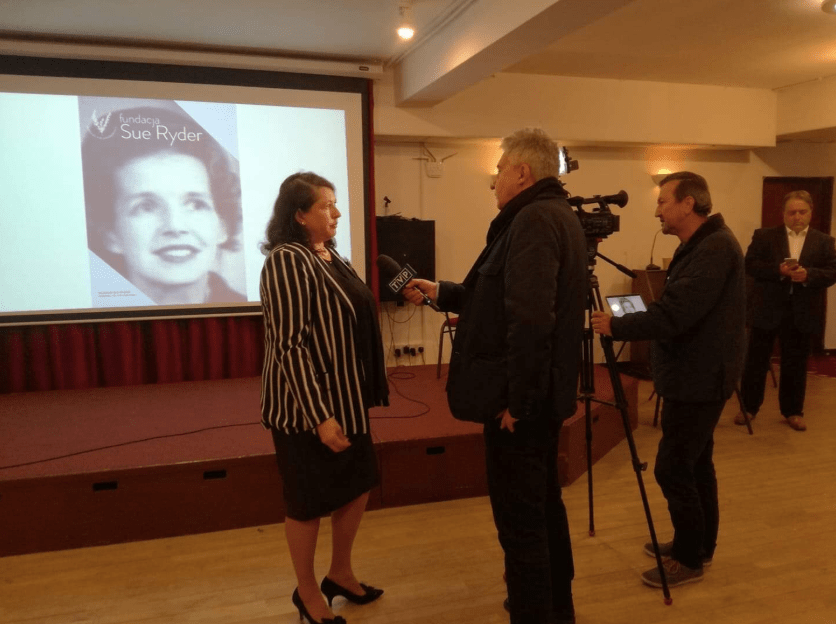
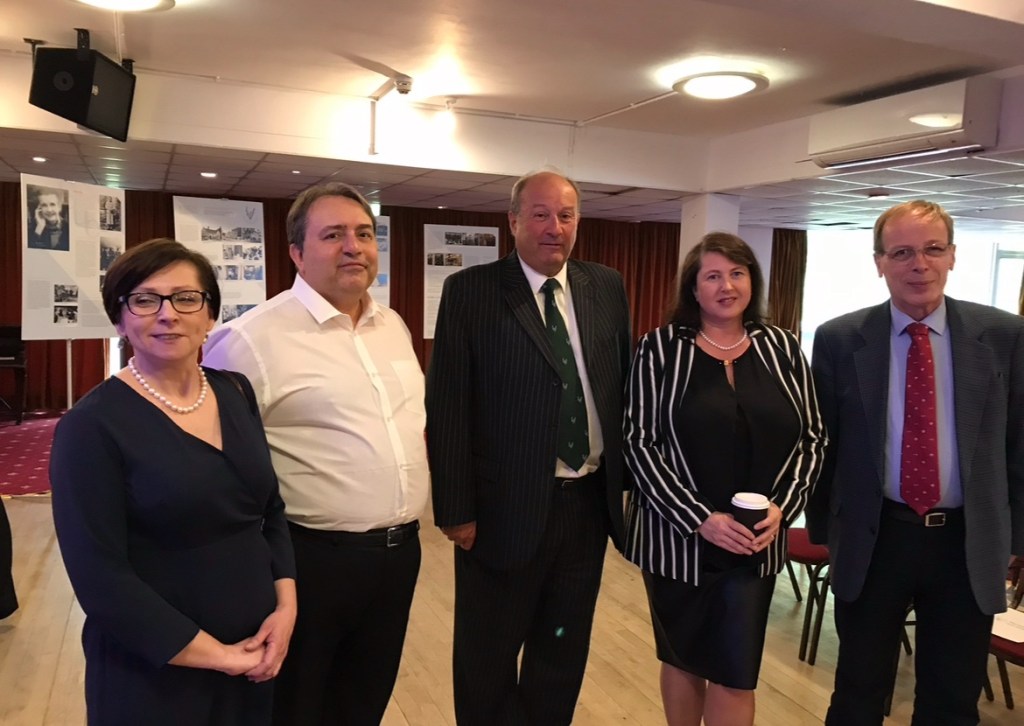
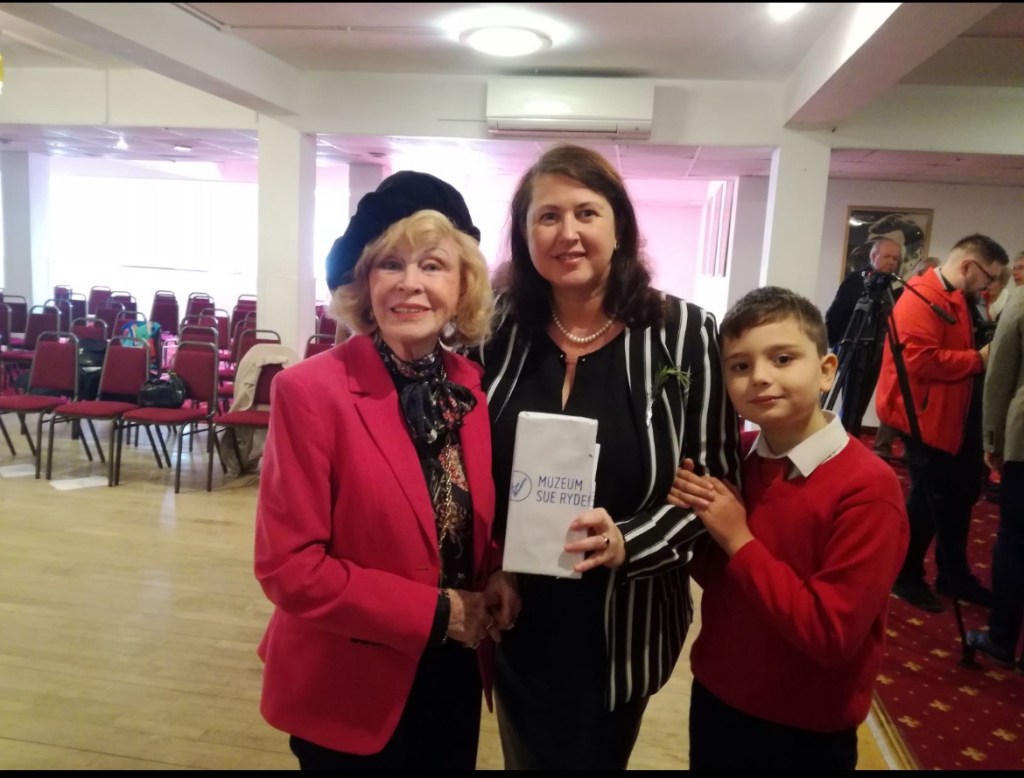
On the 5th of May, 2019 at the London POSK, Iwona Golinska organised a very special event devoted to Sue Ryder in order to promote her ideas in our Polish community in the UK. She commented: “I was able to persuade the Polish Ambassador to the UK, Prof. Arkady Rzegocki to personally gave us an honorary patronage of the exhibition entitled ‘Sue Ryder – Life for People’, devoted to the life and activities of Sue Ryder, combined with a projection of a film about Sue Ryder. It was an exhibition about the life of Sue Ryder and propagating her idea of charity. As part of the meeting we also invited the British Memorial Found of Sue Ryder and people who personally knew Sue Ryder such as Halina Kent and Dr Bożena Laskiewicz. We were also able to collect some donations to support Sue Ryder Museum in Warsaw. I have the pleasure to invite both Poles and Brits to this Museum dedicated to Sue Ryder – a great Samaritan, often compared to Mother Theresa of Calcutta”.

Left : Anna Kalata – director of the Sue Ryder Museum in Warsaw, Profesor Arkady Rzegocki – the Polish Ambassador (Center) and Iwona Golińska at POSK, May 2019.
Few Facts:
As Lady Ryder of Warsaw, she sat in the British House of Lords.
Decorated for her humanitarian service by both the British and Polish governments.
Her foundation in Poland is now legally independent but continues her mission to this day.
The Sue Ryder Foundation in Poland remains the only authorized body to act on behalf of the original UK foundation.
In memory of Sue Ryder’s legacy and with a mission to strengthen ties between the UK and Poland, the Polish Sue Association was founded in the United Kingdom in 2016 by Iwona Golińska.
Sue Ryder’s life was defined by courage, sacrifice, and compassion. She witnessed unimaginable suffering — and responded not with despair, but with action. For countless people in Poland and around the world, she brought care, dignity, and hope.
Her memory endures — not only through the buildings that bear her name, but in the spirit of service and human solidarity she inspired.
We are proud to dedicate our actions to her memory and to the values that mattered most to her — God, Honour, and Homeland — values deeply rooted in the Polish patriotic tradition. Her legacy gives us strength and compassion to continue doing great things.
Text: Iwona Golińska – founder and president of the Polish Sue Association in Great Britain.
Photos: Polish Sue, Wikipedia and Archives
PL.
Sue Ryder (1923–2000): działaczka charytatywna, bohaterka wojenna i wielka przyjaciółka Polski.
Margaret Susan Ryder, lepiej znana jako Sue Ryder, była niezwykłą brytyjską działaczką charytatywną, która poświęciła swoje życie na pomoc chorym, cierpiącym i przesiedlonym — zwłaszcza w Polsce, kraju, który głęboko pokochała.
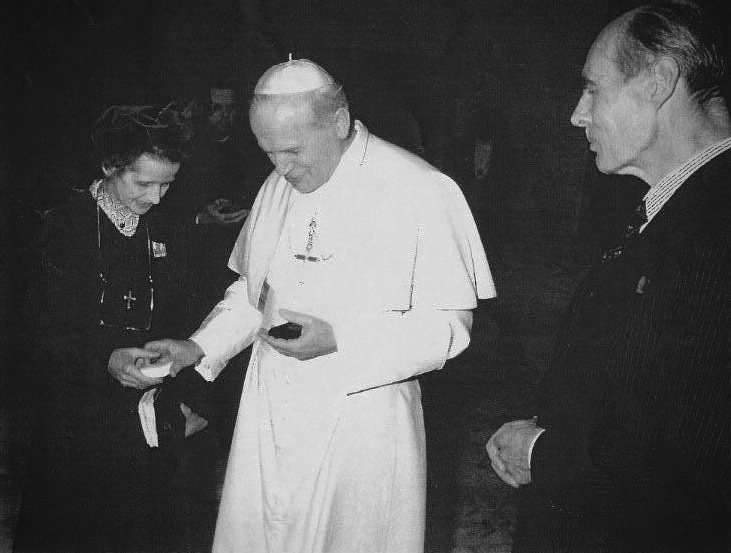
Urodzona 3 lipca 1923 r. w Leeds i wychowana w Suffolk, Sue Ryder zaczęła pomagać innym od najmłodszych lat. Podczas II wojny światowej, mając zaledwie 16 lat, dołączyła do First Aid Nursing Yeomanry (FANY). Wkrótce została zwerbowana do polskiej sekcji British Special Operations Executive (SOE), tajnej jednostki działającej za liniami wroga w okupowanej Europie.
W sierpniu 1944 r. wspierała Powstanie Warszawskie, pracując u boku elitarnych „Cichociemnych” polskich sił specjalnych. Ich odwaga i poświęcenie wywarły na nią głęboki wpływ. Po wojnie kontynuowała pomoc ocalałym z nazistowskich obozów koncentracyjnych i więźniom politycznym w czasach reżimu komunistycznego. Te wstrząsające doświadczenia ukształtowały jej trwającą całe życie misję humanitarną.
W 1953 roku Sue Ryder założyła Fundację Sue Ryder, międzynarodową organizację charytatywną ustanowioną ku pamięci tych, którzy zginęli podczas II wojny światowej. Zainspirowana wersem z Hamleta – „Rozmaryn, to dla pamięci” – gałązka rozmarynu stała się symbolem jej sprawy.
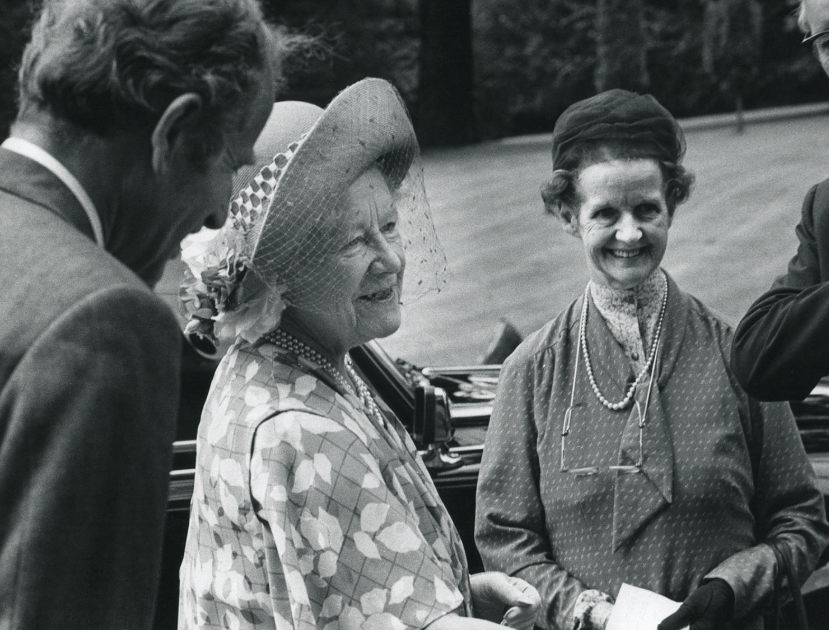
Na przestrzeni lat Fundacja:
Zbudowała ponad 80 domów opieki w 15 krajach.
Założyła ponad 600 sklepów charytatywnych, aby finansować swoją działalność.
Zapewniła opiekę osobom nieuleczalnie chorym, niepełnosprawnym, starszym i bezdomnym.
Zorganizowała wakacje rehabilitacyjne w Wielkiej Brytanii dla 8000 polskich ocalałych z niemieckich obozów koncentracyjnych.
Zasada przewodnia Sue Ryder:
„Zrób, co możesz dla osoby, którą masz przed sobą”.
Sue Ryder miała głęboką i trwałą więź z Polską — zakorzenioną częściowo w młodzieńczej miłości do polskiego „cichociemnego”, który później zginął w akcji. Choć ich historia zakończyła się tragedią, jej oddanie Polsce nigdy nie osłabło.
Pisaliśmy o tym więcej z okazji rocznicy jej śmierci – na linku:
Począwszy od końca lat 40. XX wieku:
Zbudowała ponad 30 placówek opieki w całej Polsce, w tym:
Szpitale w Konstancinie-Jeziornie i Gdyni
Ośrodek onkologiczny i domy w miastach takich jak Kraków, Radzymin, Popkowice, Psary i Góra Kalwaria
Przekazała majątek rodzinny w Cavendish na rzecz osób przesiedlonych i ofiar traumy.
Kontynuowała swoją pracę w Polsce nawet w czasach komunizmu, chociaż oficjalnie nie mogła zarejestrować swojej fundacji aż do 1991 roku.
Mieszkała z mężem Leonardem Cheshire i dwójką dzieci w małym mieszkaniu, podczas gdy reszta ich domu została oddana potrzebującym.
W Warszawie powstało Muzeum Sue Ryder, aby upamiętnić jej życie — jedyne muzeum na świecie poświęcone jej osobie. Liczne polskie miasta mają ulice i place noszące jej imię, w tym znany plac w Gdyni. Niestety, to muzeum w Warszawie zostało zamknięte pomimo wielu wysiłków, aby je utrzymać przy życiu, w tym zorganizowanej przez nas w Wielkiej Brytanii akcji charytatywnej na rzecz Muzeum, na którą zebraliśmy fundusze na rzecz Muzeum Sue Ryder.
Kilka faktów:
Jako Lady Ryder z Warszawy zasiadała w brytyjskiej Izbie Lordów.
Odznaczona za swoją działalność humanitarną przez rządy brytyjski i polski.
Jej fundacja w Polsce jest teraz prawnie niezależna, ale kontynuuje swoją misję do dziś.
Fundacja Sue Ryder w Polsce pozostaje jedynym upoważnionym organem działającym w imieniu pierwotnej fundacji brytyjskiej.
Na pamiątkę spuścizny Sue Ryder i z misją wzmocnienia więzi między Wielką Brytanią a Polską, w 2016 roku w Wielkiej Brytanii przez Iwonę Golińską założono Stowarzyszenie Polish Sue.
Życie Sue Ryder było zdefiniowane odwagą, poświęceniem i współczuciem. Była świadkiem niewyobrażalnego cierpienia — i odpowiedziała nie rozpaczą, ale działaniem. Dla niezliczonej liczby osób w Polsce i na całym świecie przyniosła opiekę, godność i nadzieję.
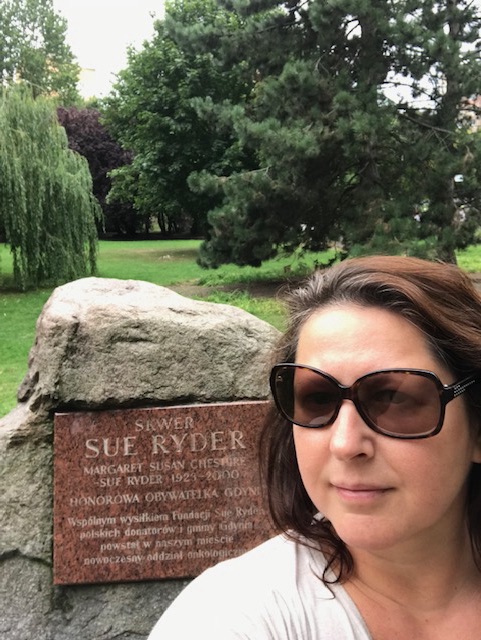
Autorka przy skwerze Sue Ryder w Gdyni.
Jej pamięć trwa — nie tylko poprzez budynki, które noszą jej imię, ale w duchu służby i ludzkiej solidarności, którą zainspirowała.
Jesteśmy dumni, że możemy poświęcić nasze działania jej pamięci i wartościom, które były dla niej najważniejsze — Bogu, Honorowi i Ojczyźnie — wartościom głęboko zakorzenionym w polskiej tradycji patriotycznej. Jej dziedzictwo daje nam siłę i współczucie, aby kontynuować robienie wielkich rzeczy.
Tekst: Iwona Golińska – założycielka i prezes Polish Sue Association in Great Britain.
Photos: Polish Sue, Wikipedia and Archives



 Polish Sue
Leave a comment