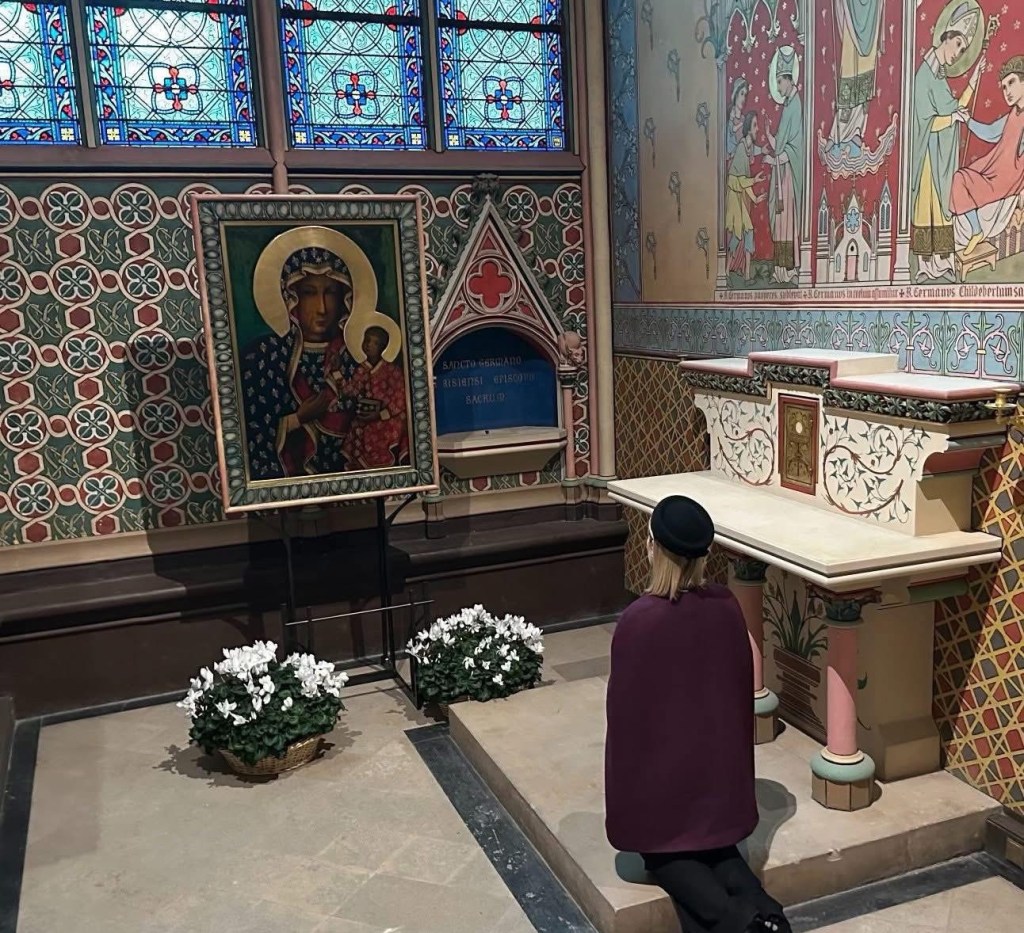
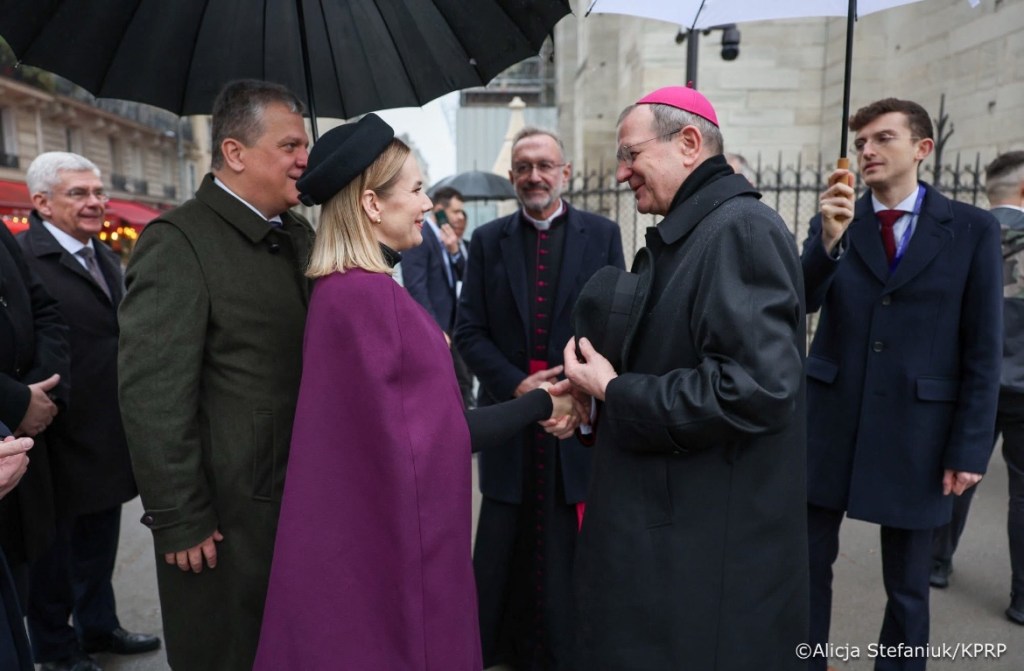
Dzisiaj Małżonka Prezydenta Rzeczypospolitej Polskiej, Marta Nawrocka, uczestniczyła w uroczystej inauguracji odrestaurowanej Kaplicy Polskiej w Katedrze Notre–Dame w Paryżu oraz w ceremonii ponownego wprowadzenia Ikony Cudownego Obrazu Matki Bożej Częstochowskiej.
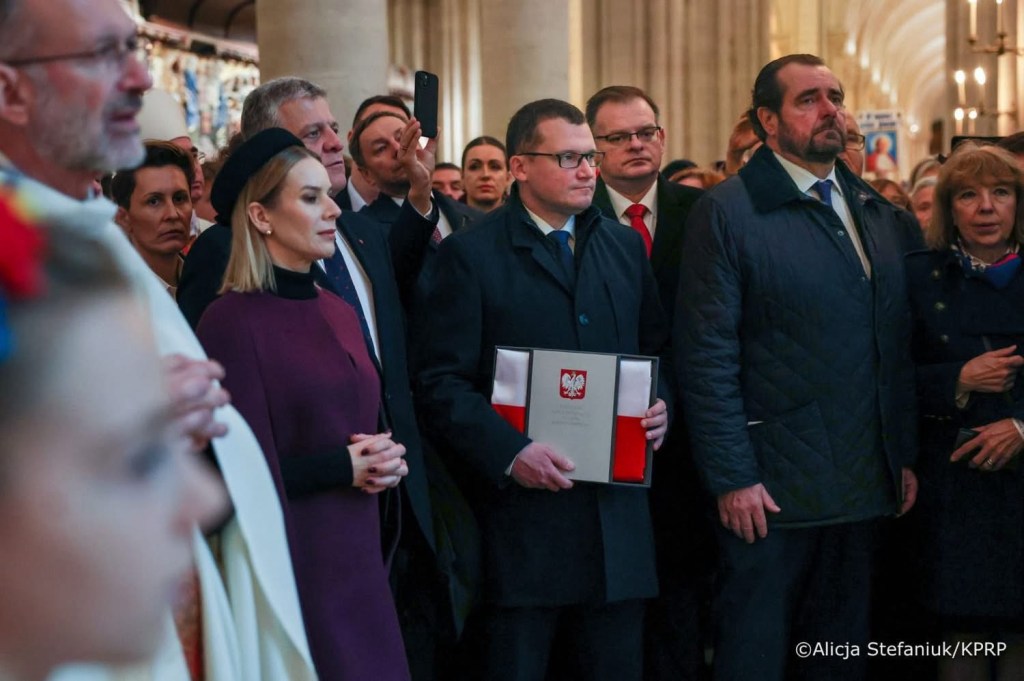
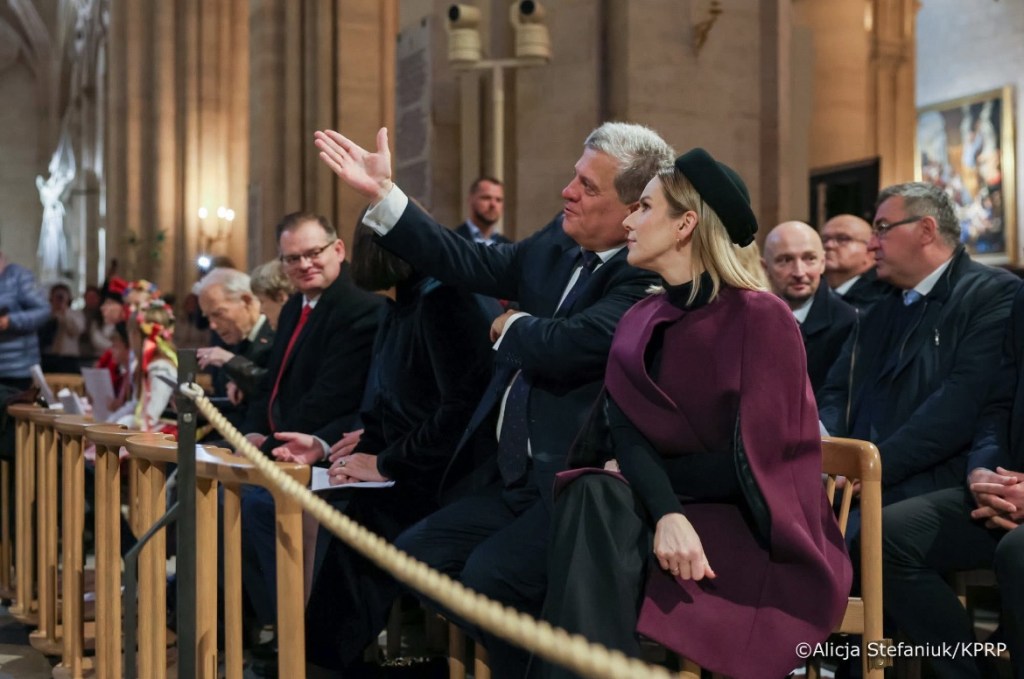
Wydarzenie miało wyjątkowy i głęboko symboliczny charakter – zarówno dla Polonii francuskiej, jak i dla całej wspólnoty wiernych. Uroczysta Msza Święta w języku polskim, sprawowana przez duchowieństwo polskie i francuskie, zgromadziła licznych przedstawicieli Polonii, duchowieństwa i dyplomacji. W liturgii uczestniczyli m.in. abp Tadeusz Wojda, Przewodniczący Konferencji Episkopatu Polski, ks. Olivier Ribedeau Dumas, Rektor Katedry Notre–Dame de Paris, oraz ks. Bogusław Brzyś, Rektor Polskiej Misji Katolickiej we Francji.
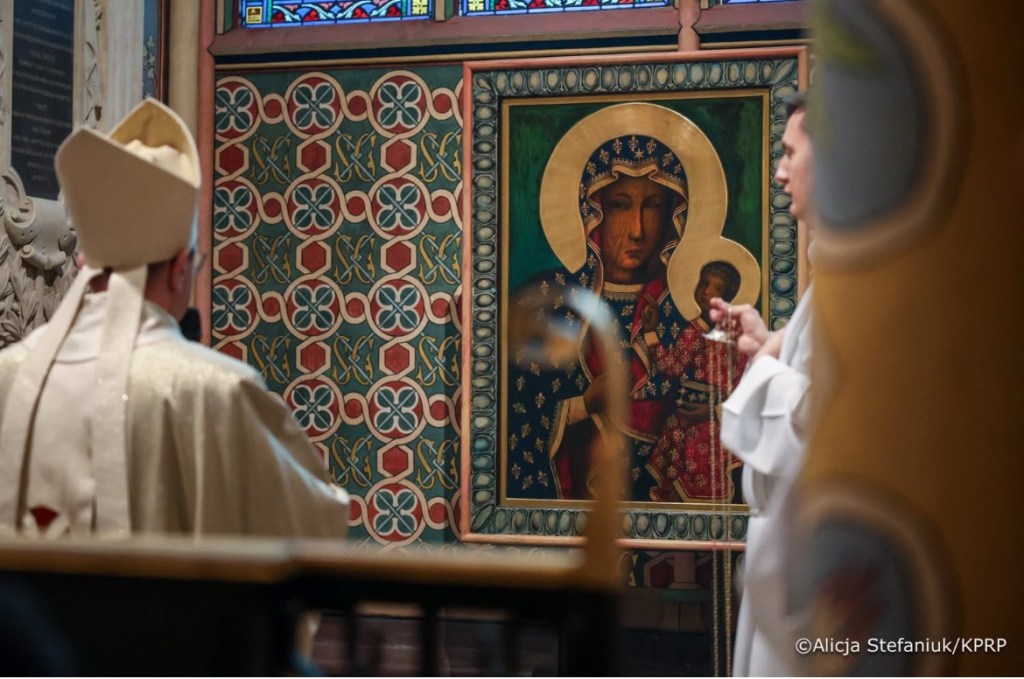
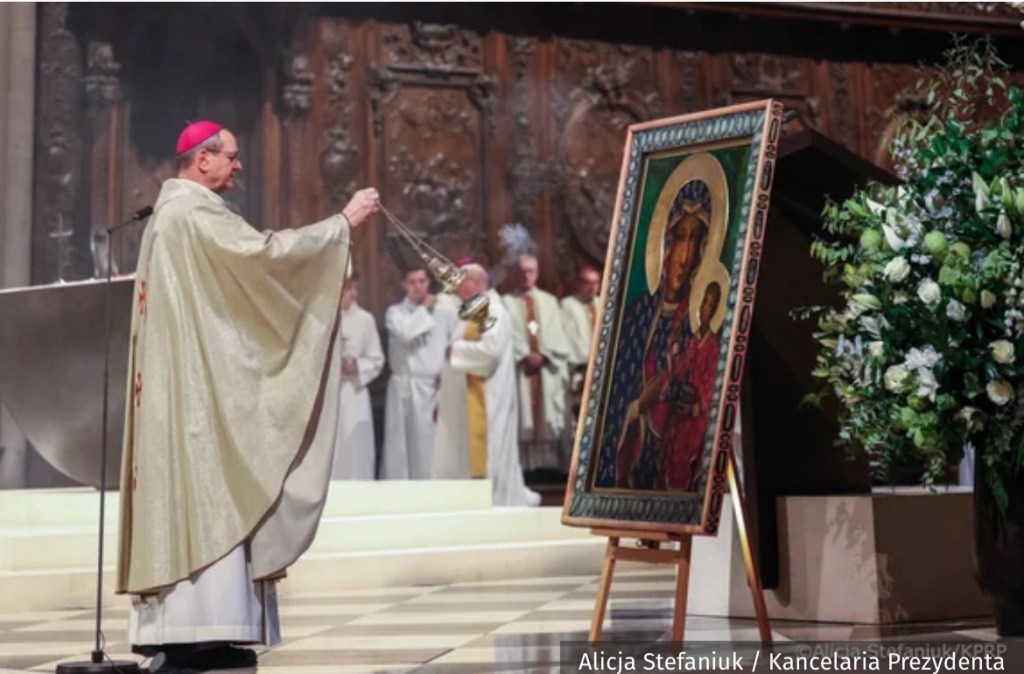
Po Mszy Świętej nastąpił moment szczególnie wzruszający – uroczyste ponowne wprowadzenie kopii Cudownego Obrazu Matki Bożej Częstochowskiej do Kaplicy Polskiej. To właśnie ten obraz, wraz z relikwiami św. Jana Pawła II, został uratowany z płonącej katedry podczas tragicznego pożaru 15 kwietnia 2019 roku. Kaplica Polska, jako jedna z nielicznych części świątyni, przetrwała kataklizm bez większych zniszczeń, co wielu wiernych odczytuje jako znak szczególnej opieki Matki Bożej.
Kaplica Polska w Notre–Dame jest jednym z najważniejszych polskich akcentów w paryskiej katedrze. Została poświęcona w 2018 roku z inicjatywy Polskiej Misji Katolickiej we Francji oraz przy wsparciu Episkopatu Polski.
Uroczystego poświęcenia dokonał wówczas arcybiskup Paryża Michel Aupetit w obecności przedstawicieli władz kościelnych i państwowych. Kaplica ta powstała jako wyraz wdzięczności i pamięci o wielowiekowych związkach Polski z Francją, a także jako duchowe miejsce spotkania dla tysięcy Polaków mieszkających we Francji.

To właśnie tutaj od 2018 roku znajduje się kopia Cudownego Obrazu Matki Bożej Częstochowskiej oraz relikwie św. Jana Pawła II, patrona polskiej wspólnoty emigracyjnej.
Wizyta Małżonki Prezydenta RP miała zatem głębokie znaczenie religijne, narodowe i symboliczne. Stanowiła wyraz wdzięczności wobec francuskiego Kościoła za troskę o polskie dziedzictwo w Katedrze Notre–Dame, a zarazem podkreślenie, że Polacy – niezależnie od miejsca na świecie – pozostają wierni swoim korzeniom, historii i wierze.
Matka Boża Częstochowska, zwana Czarną Madonną, jest Królową Polski i duchową opiekunką narodu polskiego. Jej wizerunek z Jasnej Góry w Częstochowie od wieków stanowi symbol nadziei, wiary i jedności Polaków – w chwilach triumfu i w momentach próby. Wprowadzenie jej obrazu do odnowionej Kaplicy Polskiej w Katedrze Notre–Dame to nie tylko gest religijny, ale także znak trwania polskiej tożsamości i duchowej wspólnoty w sercu Europy.
Związki Polaków z Katedrą Notre–Dame sięgają daleko wstecz. To właśnie tutaj modlili się polscy żołnierze i uchodźcy w czasie II wojny światowej, a po wojnie katedra była miejscem licznych polskich nabożeństw i uroczystości patriotycznych. W jej murach rozbrzmiewały pieśni „Boże, coś Polskę” i „Serdeczna Matko”, a modlitwy za Ojczyznę gromadziły pokolenia emigrantów. Dzięki Kaplicy Polskiej ta tradycja trwa do dziś – jako żywe świadectwo wiary, wdzięczności i duchowej obecności Polski w sercu Paryża.
W tym wyjątkowym dniu w Katedrze Notre–Dame zabrzmiały słowa modlitwy, które od pokoleń łączą Polaków na całym świecie:
„Maryjo, Królowo Polski, jestem przy Tobie, pamiętam, czuwam.”
Tekst: Iwona Golińska
Zdjęcia: KPRP
ŹRÓDŁO: KPRP
En.
Marta Nawrocka, Wife of the President of the Republic of Poland, at the ceremony of reintroducing the Icon of Our Lady of Częstochowa into the Polish Chapel at the Cathedral of Notre-Dame in Paris.
Today, Marta Nawrocka, Wife of the President of the Republic of Poland, participated in the ceremonial inauguration of the restored Polish Chapel at the Cathedral of Notre-Dame in Paris and in the ceremony of reintroducing the Icon of the Miraculous Image of Our Lady of Częstochowa.
The event had a unique and deeply symbolic character – both for the Polish diaspora in France and for the entire community of the faithful. The solemn Mass in Polish, celebrated by Polish and French clergy, gathered numerous representatives of the Polish diaspora, clergy, and diplomacy. Participating in the liturgy were, among others, Archbishop Tadeusz Wojda, President of the Polish Episcopal Conference, Fr. Olivier Ribedeau Dumas, Rector of the Cathedral of Notre-Dame de Paris, and Father Bogusław Brzyś, Rector of the Polish Catholic Mission in France.
After Mass, a particularly moving moment took place – the ceremonial reintroduction of a copy of the Miraculous Image of Our Lady of Częstochowa to the Polish Chapel. It was this image, along with the relics of St. John Paul II, that was saved from the burning cathedral during the tragic fire on April 15, 2019. The Polish Chapel was one of the few parts of the church to survive the cataclysm without major damage, which many faithful interpret as a sign of Our Lady’s special protection.
The Polish Chapel at Notre-Dame is one of the most important Polish features in the Paris cathedral. It was consecrated in 2018 at the initiative of the Polish Catholic Mission in France and with the support of the Polish Episcopate. The solemn consecration was performed by the Archbishop of Paris, Michel Aupetit, in the presence of representatives of church and state authorities. This chapel was created as an expression of gratitude and remembrance of Poland’s centuries-old ties with France, as well as a spiritual meeting place for thousands of Poles living in France.

Since 2018, a copy of the Miraculous Image of Our Lady of Częstochowa and the relics of St. John Paul II, patron saint of the Polish emigration community, have been located here.
The visit of the First Lady of the Republic of Poland therefore had profound religious, national, and symbolic significance. It was an expression of gratitude to the French Church for its care for Polish heritage at the Cathedral of Notre-Dame, and also an emphasis on the fact that Poles – regardless of their location in the world – remain faithful to their roots, history, and faith.
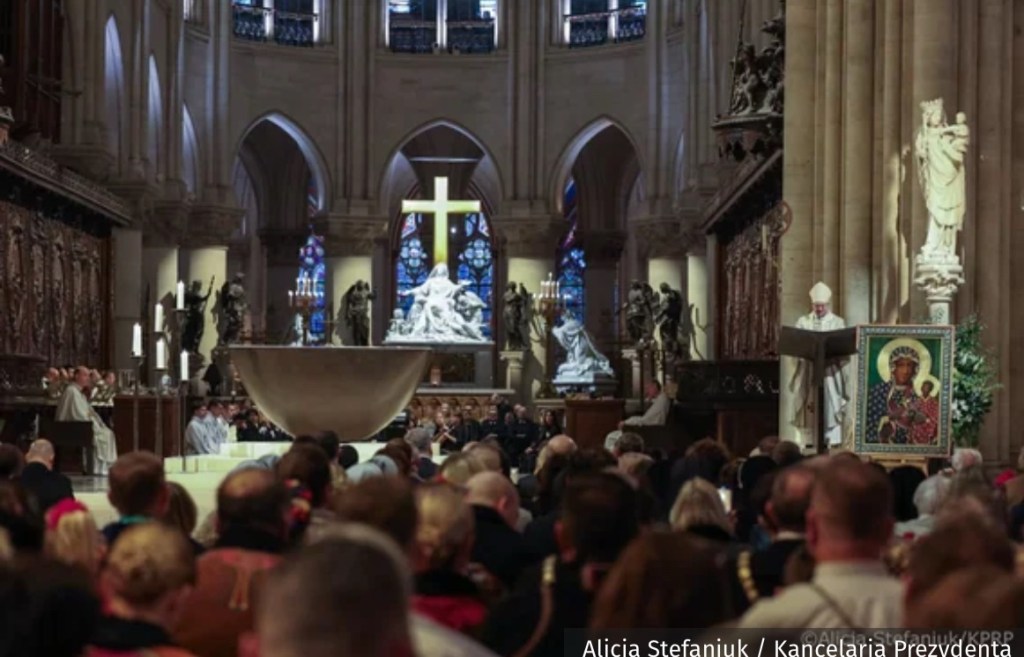
Our Lady of Częstochowa, known as the Black Madonna, is the Queen of Poland and the spiritual protector of the Polish nation. Her image from Jasna Góra in Częstochowa has for centuries been a symbol of hope, faith, and unity for Poles – in moments of triumph and in times of trial. The introduction of her painting to the renovated Polish Chapel in Notre-Dame Cathedral is not only a religious gesture but also a sign of the continuation of Polish identity and spiritual community in the heart of Europe.
Poles’ ties to Notre-Dame Cathedral go back a long way. It was here that Polish soldiers and refugees prayed during World War II, and after the war, the cathedral was the site of numerous Polish services and patriotic celebrations. Within its walls, the hymns “God Save Poland” and “Serdeczna Matko” resounded, and prayers for the homeland brought together generations of emigrants. Thanks to the Polish Chapel, this tradition continues to this day – as a living testimony of faith, gratitude, and Poland’s spiritual presence in the heart of Paris.
On this special day, the words of a prayer that has united Poles worldwide for generations were recited at Notre-Dame Cathedral:
“Mary, Queen of Poland, I am with you, I remember, I watch.”
Text : Iwona Golinska
Photos : KPRP
SOURCE: KPRP
 Polish Sue
Leave a comment