
Every Saturday, a solemn moment unfolds above the Presidential Palace in Warsaw, highlighting the enduring significance of Poland’s white and red colours.
Introduced for the first time in Poland by President Karol Nawrocki, the ceremonial changing of the national flag has become a new expression of respect for national symbols and the continuity of Polish statehood.
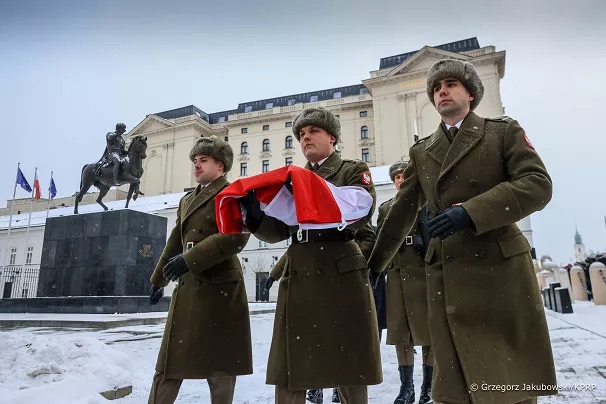
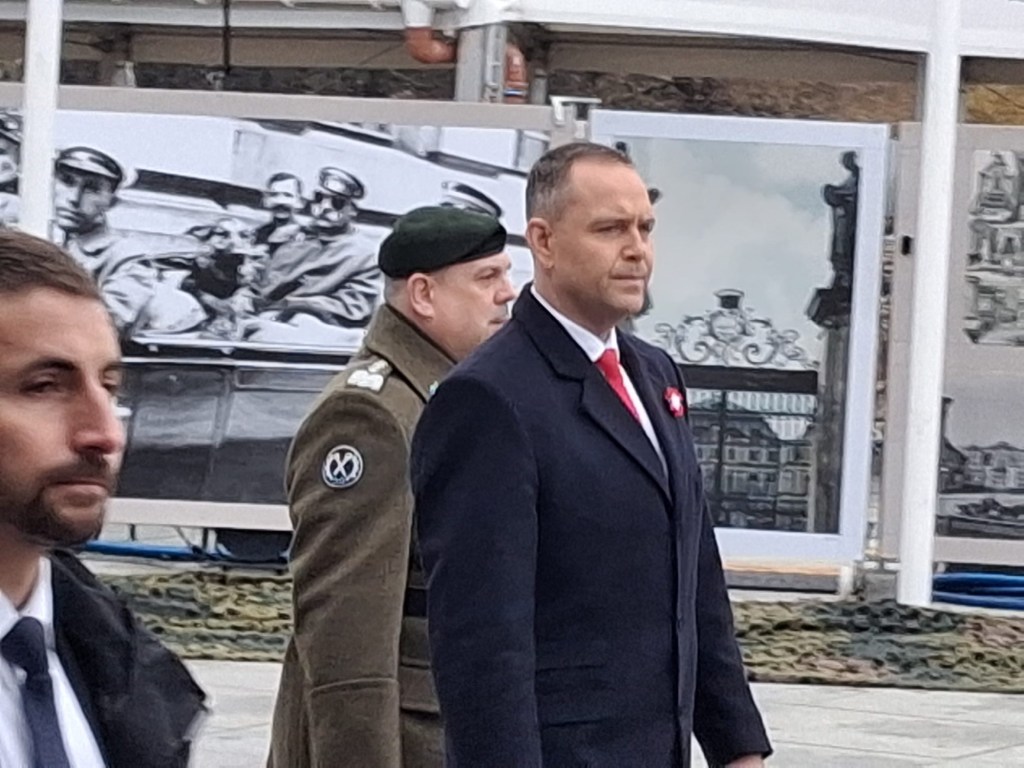
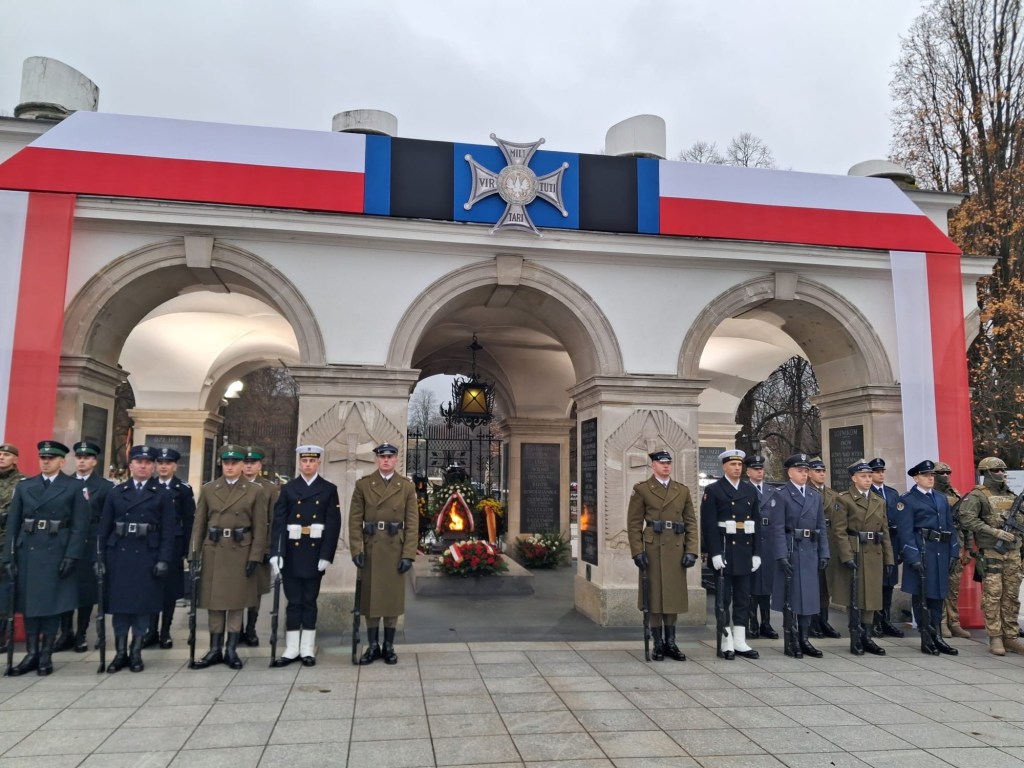
On Saturday at noon, a ceremonial changing of the Polish national flag took place at the Presidential Palace in Warsaw. The tradition was introduced for the first time in Poland by the President of the Republic of Poland, Karol Nawrocki, and will now be held on a regular basis — every Saturday.

The ceremony takes place each week at 11:45 a.m. and is open to the public. Members of the public are invited to attend and witness this symbolic event. The flags removed from the Presidential Palace are later distributed to local communities, schools across all sixteen Polish regions, and uniformed services, where they continue to serve an educational and commemorative purpose.

The new tradition aims to highlight the importance of national symbols and to foster respect for the white-and-red flag as a powerful sign of unity, sovereignty, and the continuity of the Polish state.
The national flag is one of the most important symbols of Polish statehood. For Poles, the white and red colours have never been merely ceremonial. They have long represented the endurance of the nation and the Republic — even during periods when the Polish state could not exist in a formal sense.
The flag flying above the Presidential Palace symbolizes the sovereignty of the Republic of Poland and the continuity of state authority. It signifies the presence of state institutions and the permanence of the office of the President.

The custom of raising and ceremonially changing the flag at the seat of the Head of State is a well-established element of constitutional order, symbolic culture, and state protocol.
In the Polish historical context, however, it carries a particularly profound meaning — deeply rooted in collective memory and in the long struggle for independence.
Author: Iwona Golińska, Polish Sue Portal.
Photos: KPRP
Pl
Nowa narodowa tradycja przy Pałacu Prezydenckim w Warszawie.
W każdą sobotę nad Pałacem Prezydenckim w Warszawie rozgrywa się uroczysty moment podkreślający znaczenie biało-czerwonych barw.
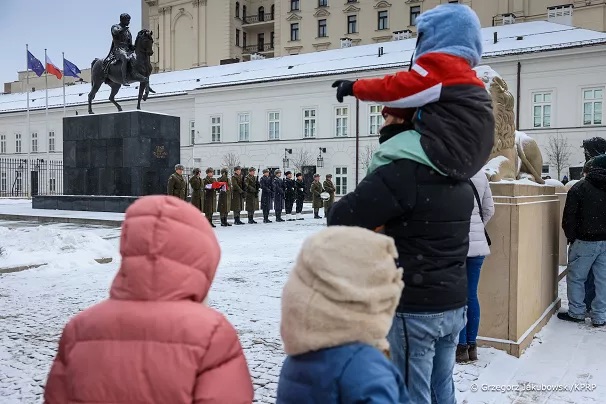
Ceremonialna zmiana flagi, po raz pierwszy wprowadzona w Polsce przez Prezydenta RP Karola Nawrockiego, staje się nowym symbolem szacunku dla narodowych znaków i ciągłości polskiej państwowości.
W sobotę w południe odbyła się uroczysta ceremonia zmiany flagi powiewającej nad Pałacem Prezydenckim w Warszawie.
Tradycja ta została po raz pierwszy wprowadzona w Polsce przez Prezydenta Rzeczypospolitej Polskiej Karola Nawrockiego i będzie kontynuowana regularnie – w każdą sobotę.
Uroczystość odbywa się zawsze o godzinie 11.45 i ma charakter otwarty – organizatorzy zapraszają wszystkich zainteresowanych do uczestnictwa w tym wydarzeniu. Zdjęte flagi narodowe trafiają następnie do wspólnot lokalnych, szkół we wszystkich szesnastu województwach oraz do służb mundurowych, gdzie pełnią dalszą rolę edukacyjną i symboliczną.
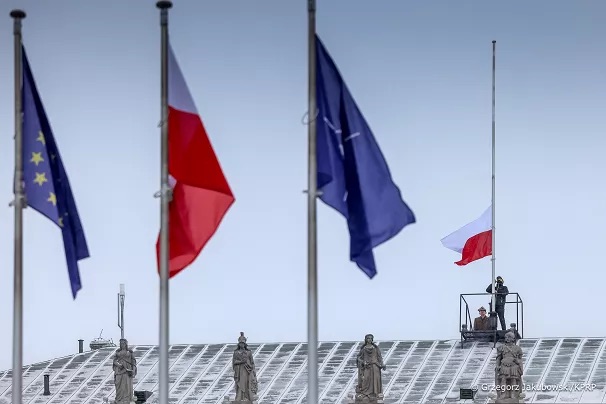
Nowy zwyczaj ma na celu podkreślenie znaczenia symboli narodowych oraz budowanie szacunku wobec biało-czerwonej flagi jako znaku jedności, suwerenności i ciągłości państwa polskiego.
Flaga narodowa jest jednym z najważniejszych znaków polskiej państwowości.

Dla Polaków biało-czerwone barwy nigdy nie były jedynie elementem ceremonialnym.
Były i pozostają symbolem trwania narodu oraz Rzeczypospolitej – także w okresach, gdy państwo nie mogło istnieć w sensie formalnym.
Flaga powiewająca nad Pałacem Prezydenckim symbolizuje suwerenność Rzeczypospolitej Polskiej oraz ciągłość władzy państwowej.
Oznacza obecność instytucji państwa i trwałość urzędu Prezydenta RP. Zwyczaj podnoszenia i zmiany flagi na siedzibie głowy państwa stanowi utrwalony element porządku konstytucyjnego, kultury symbolicznej oraz protokołu państwowego.
W polskich realiach ma on jednak znaczenie szczególne – głęboko zakorzenione w pamięci historycznej i doświadczeniu wieloletniej walki o niepodległość.
Autorka: Iwona Golińska, Portal Polish Sue.
Zdjęcia: KPRP
 Polish Sue
Leave a comment