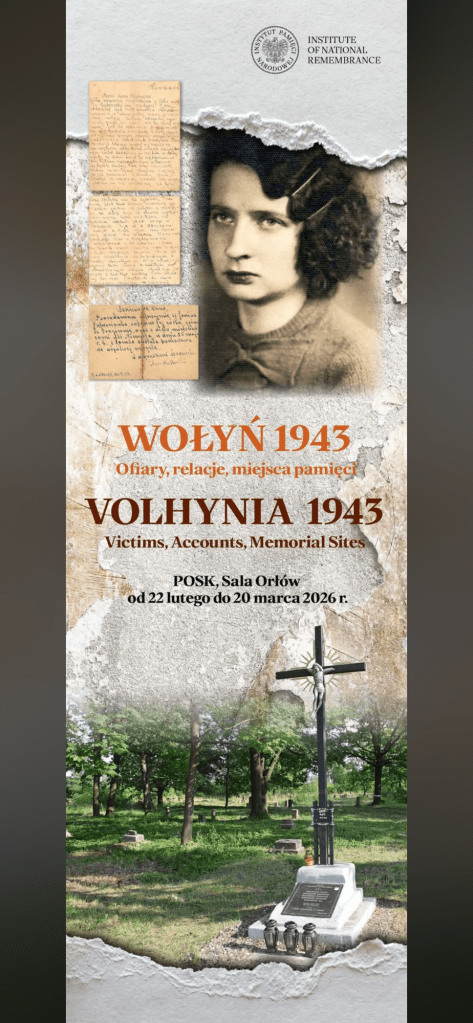
London became a space of reflection, testimony, and historical responsibility as the Lublin branch of Instytut Pamięci Narodowej (IPN) presented the moving exhibition “Volhynia 1943: Victims, Accounts, and Places of Memory.”
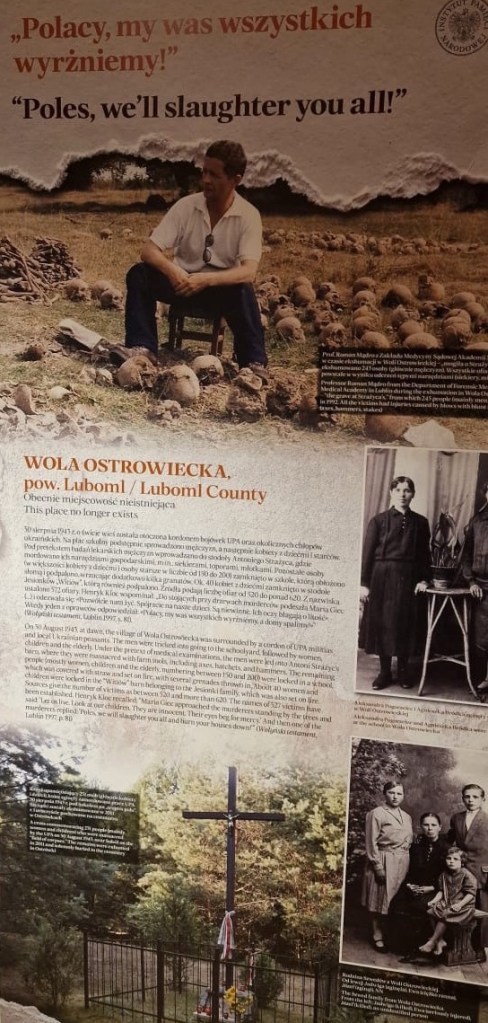
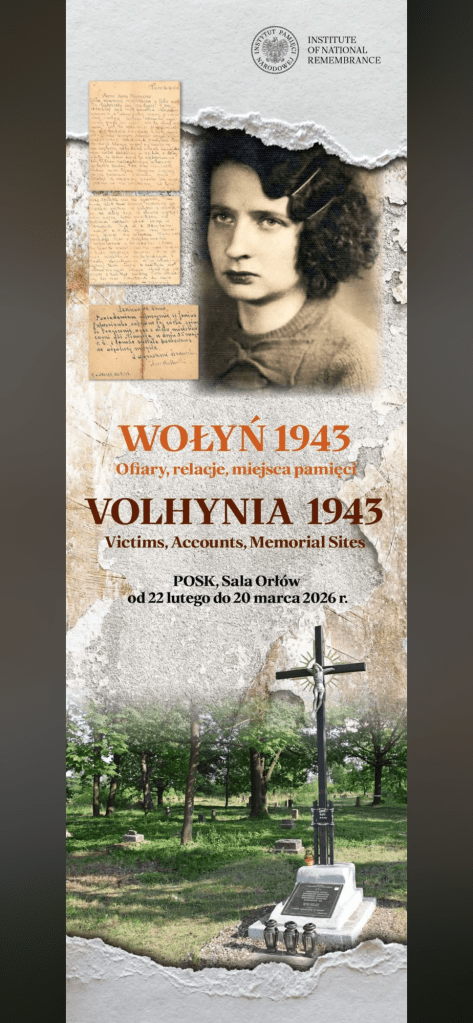
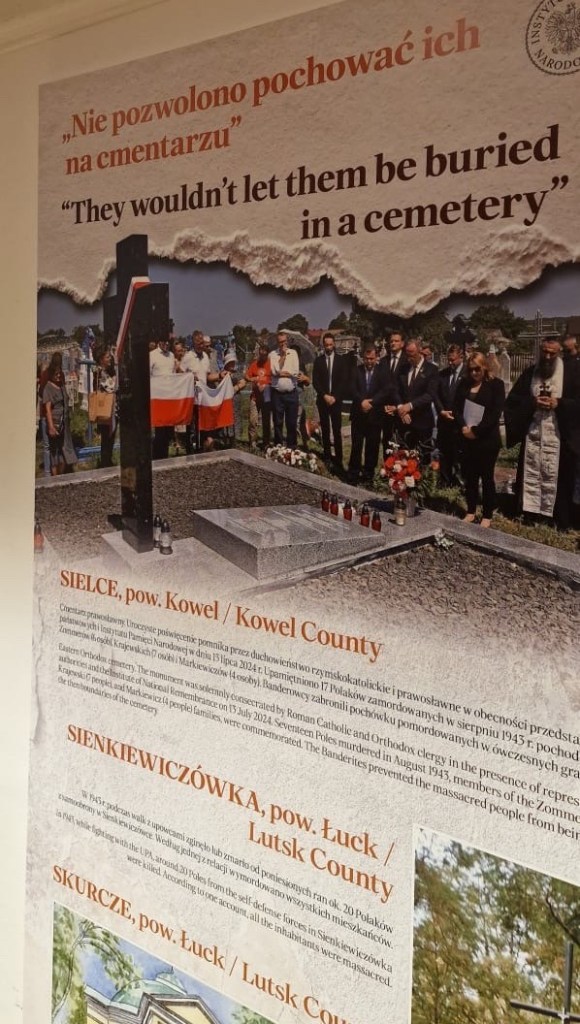

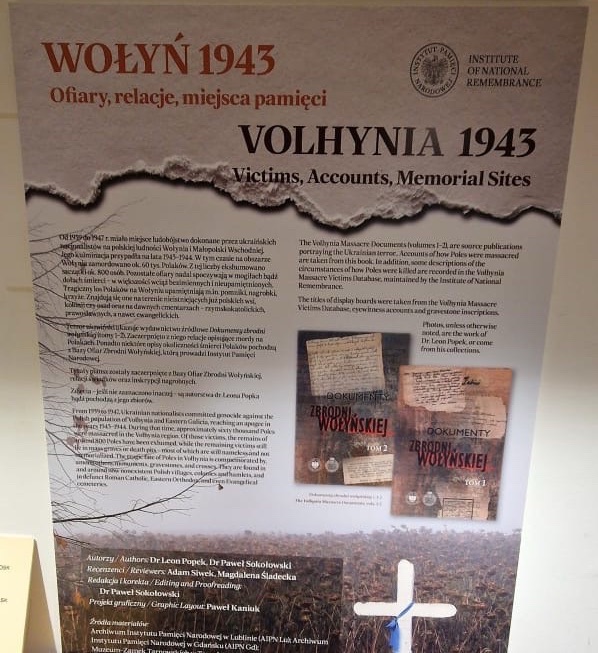
The exhibition is not merely a historical display — it is a powerful act of remembrance.
Through contemporary photographs of monuments, crosses, and graves located in former Volhynian villages — many of which no longer exist — visitors were confronted with the physical traces of a destroyed world.

Roman Catholic and Orthodox cemeteries, often standing alone in empty landscapes, testify to communities that were erased but not forgotten.
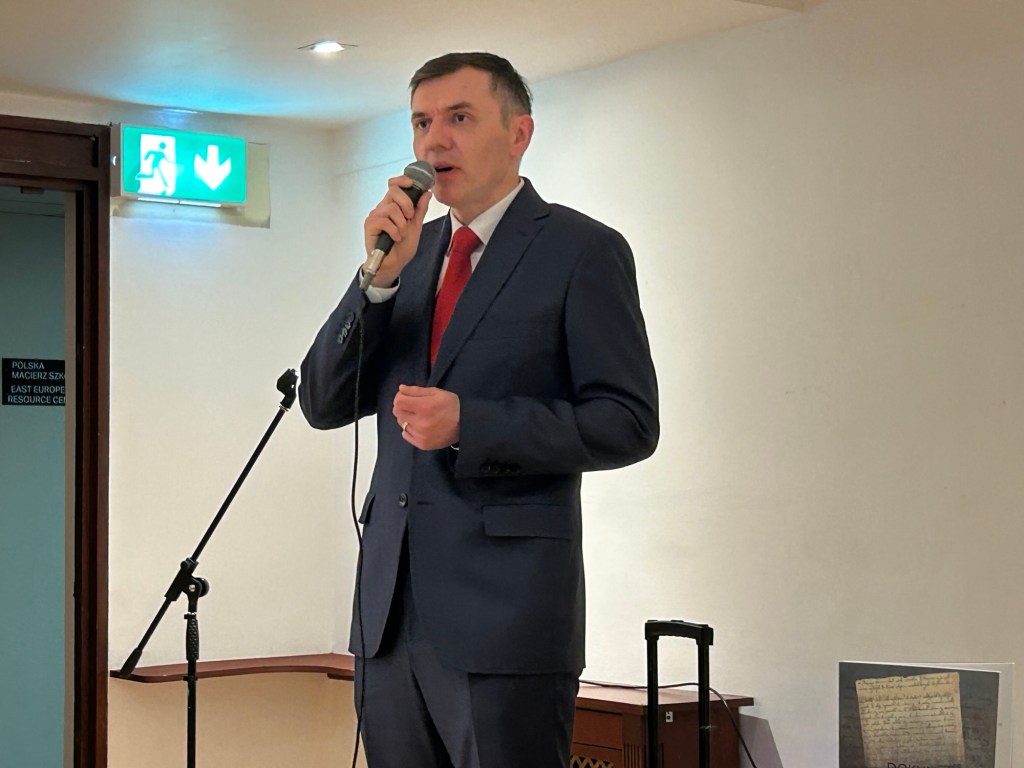
Guided by Paweł Sokołowski, co-author of the exhibition, guests were led through documented evidence, personal accounts, and archival materials drawn from the first two volumes of Documents of the Volhynia Crime.
The exhibition highlighted the tragic fate of Polish civilians — teachers, priests, families, and entire villages — murdered in 1943.
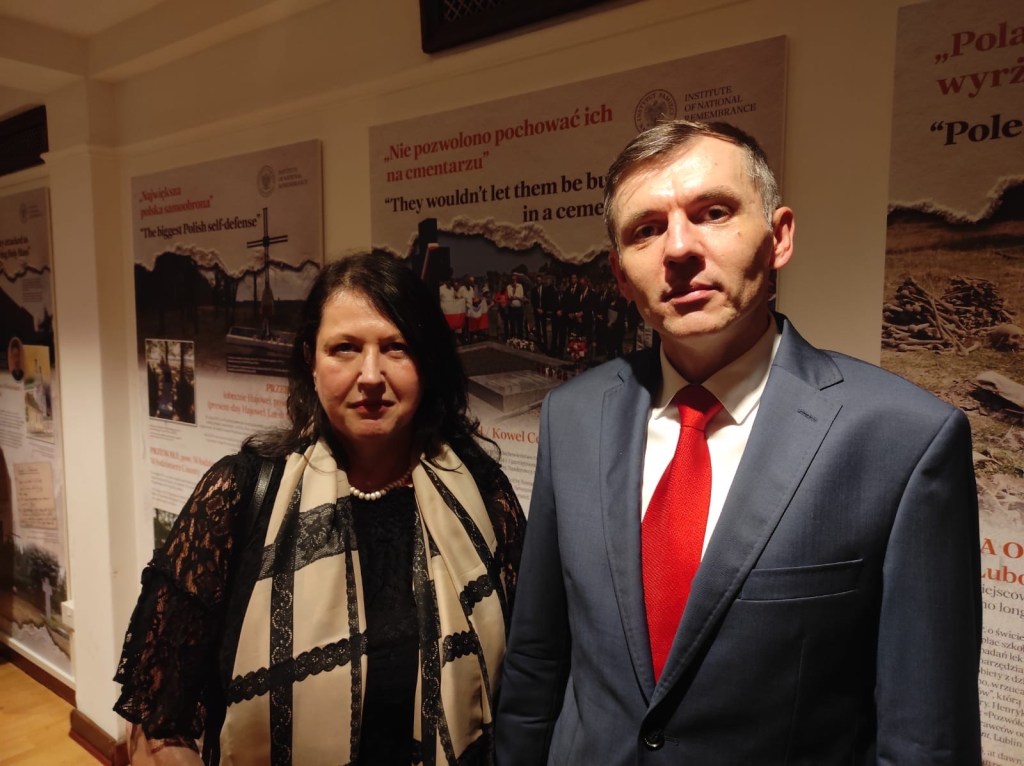
Particularly striking were the illustrations of pre-1939 Volhynian churches by Włodzimierz Sławosz Dębski. These delicate drawings reminded visitors of the spiritual and cultural life that once flourished in the region — a life violently interrupted.
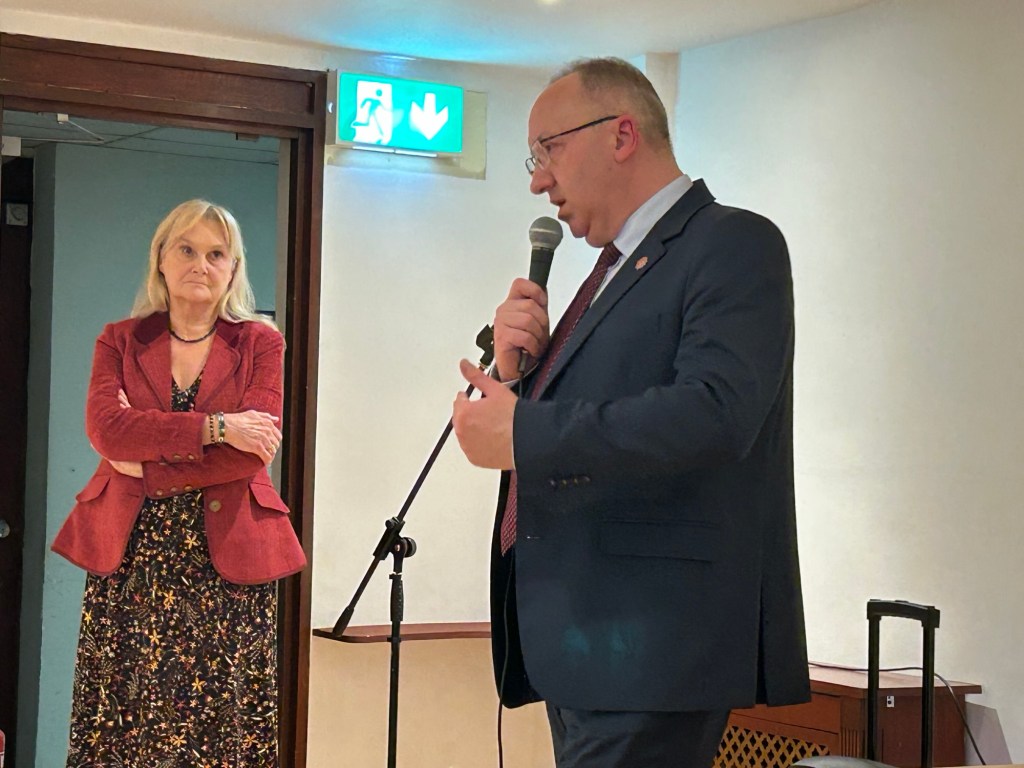
From Exhibition to Prayer: A Day of Remembrance
The visit of the IPN delegation to London carried deep symbolic meaning.
The delegation included:

Dr. Karol Polejowski Marek Jedynak, Director of the IPN President’s Office Mateusz Marek, Deputy Director of the IPN Office of International Cooperation.
They attended Holy Mass at the Polish parish in Ealing, uniting historical memory with prayer.
Following the Mass, flowers were laid at the memorial plaque of Józef Haller — a gesture linking the memory of Volhynia’s victims with the broader story of Poland’s struggle for freedom.
The delegation also met representatives of the Polish community in the UK, including:
Tomasz Muskus Bartosz Piasecki Dobrosława Platt, Director of POSK Library Iwona Golińska, President of the Polish Sue Association
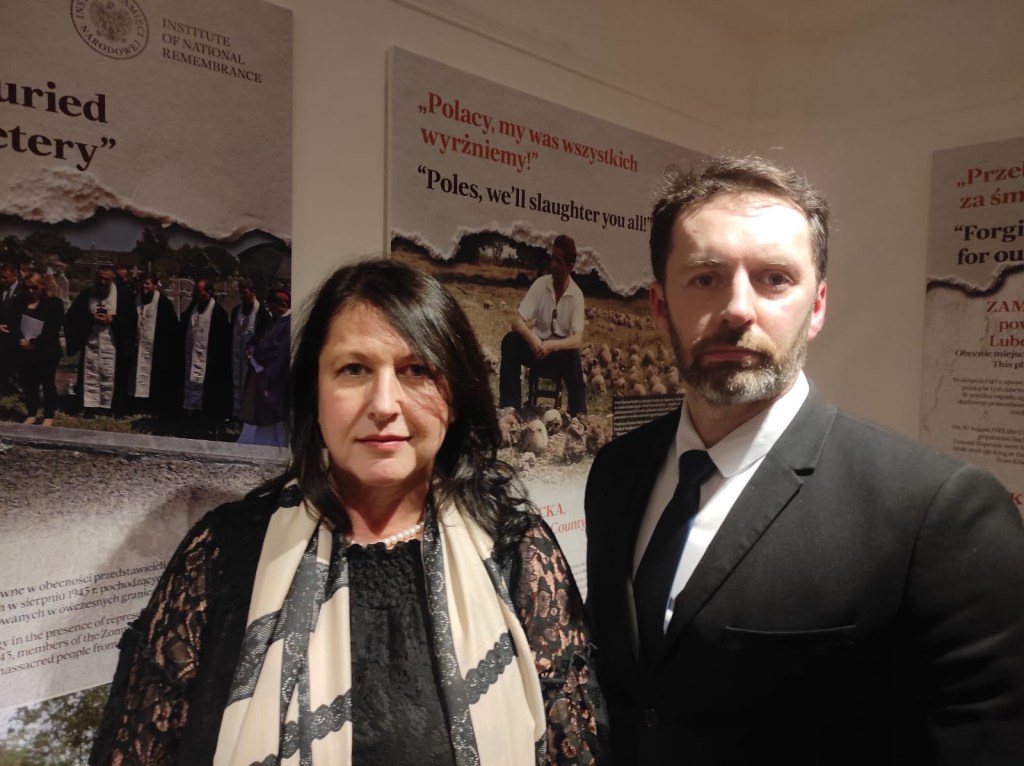
The conversations were thoughtful and substantive, focusing on historical truth, responsibility, and the importance of preserving memory among future generations of Poles living abroad.
Polish Sue: Memory Without Borders
For the Polish diaspora, events such as this are not only historical commemorations — they are declarations of identity.
At a time when historical narratives are often simplified or contested, the presence of IPN in London reaffirmed a shared commitment:
to seek truth, to honour victims with dignity, and to ensure that the tragedy of Volhynia is neither forgotten nor distorted.
Polish Sue proudly supports initiatives that connect history with community, scholarship with remembrance, and Poland with its diaspora.
Because memory does not end at borders.
And neither does responsibility.
Text: Polish Sue
Photos: Polish Sue, IPN
 Polish Sue
Leave a comment