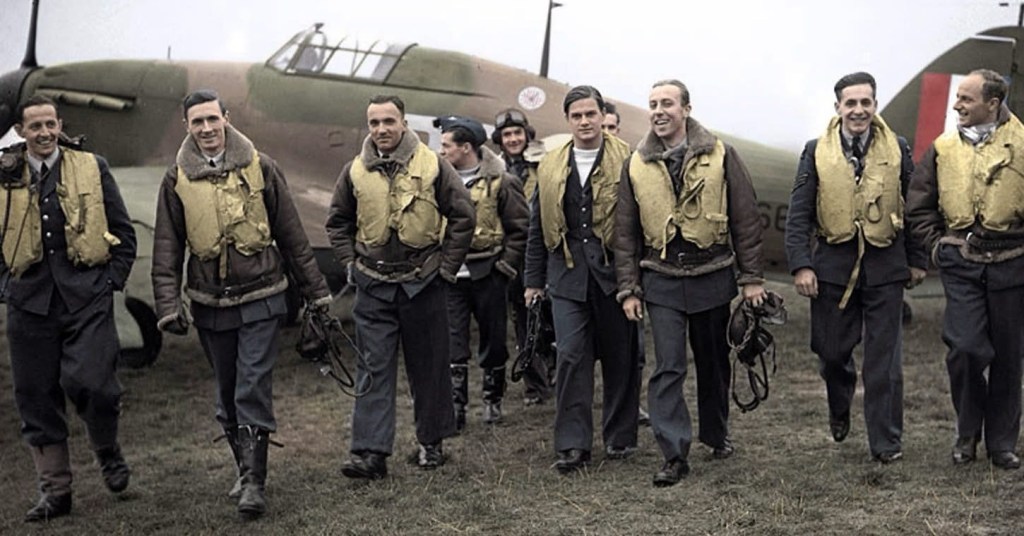
On 10 July 1940, the Battle of Britain began—the first major military defeat of Nazi Germany during the Second World War. Fought in the skies over Britain between July and October 1940, it marked a turning point in the conflict and proved that the seemingly unstoppable German war machine could be defeated.
In 2026, we commemorate the 86th anniversary of the beginning of the Battle of Britain and pay tribute to the extraordinary courage and sacrifice of the Polish airmen whose contribution helped secure one of the most important Allied victories of the war.
Poland’s Contribution to Britain’s Defence
The Battle of Britain involved 71 RAF fighter squadrons and around 3,000 pilots, of whom 1,839 were British. Alongside them fought airmen from across the Allied world, including New Zealand, Canada, Czechoslovakia, Australia, Belgium, France, Ireland, the United States—and Poland.
The Polish contribution was remarkable.
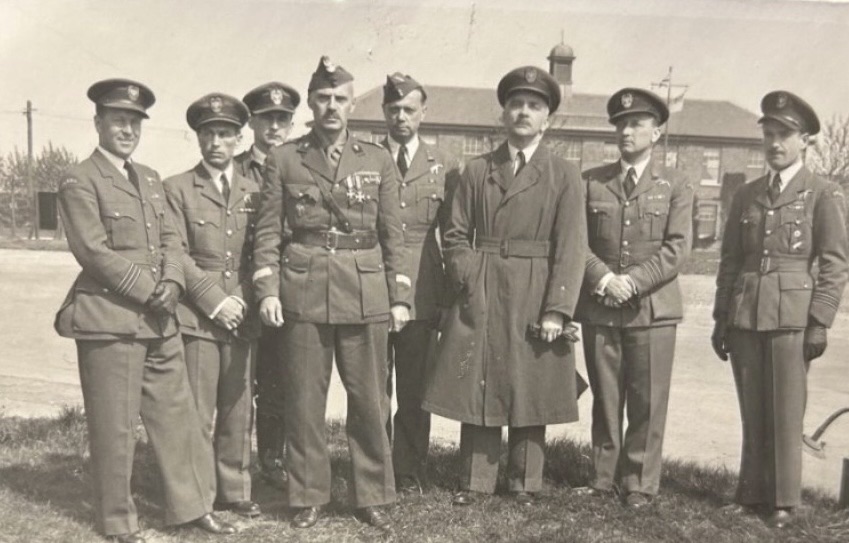
A total of 144 Polish fighter pilots took part in the battle, with more than 80 serving in British RAF squadrons. In addition, the Polish Air Force in Britain consisted of approximately 8,000 personnel, including mechanics, ground crews, armourers, radio operators and technical specialists whose dedication ensured aircraft remained combat-ready.
The No. 302 “Poznań” Polish Fighter Squadron became operational on 15 August 1940, followed by the legendary No. 303 “Kościuszko” Polish Fighter Squadron on 30 August 1940.
From Doubt to Admiration
At first, many British officers viewed the Polish pilots with scepticism. Poland’s defeat in September 1939 had unfairly led some to question their abilities, while the RAF believed its own training methods and combat procedures were superior.
The Polish pilots quickly proved otherwise.
Drawing upon their combat experience gained in Poland and France, they displayed exceptional skill, determination and courage. Their aggressive flying style, confidence and effectiveness soon earned them enormous respect throughout the RAF.
Their growing reputation was strengthened by Arkady Fiedler’s famous book Squadron 303, published in 1940. The book became an immediate bestseller in Britain and was secretly distributed in occupied Poland, helping to establish the legend of the Polish airmen.
The Legend of No. 303 Squadron
The most celebrated Polish unit was undoubtedly No. 303 “Kościuszko” Squadron, long regarded as one of the most successful fighter squadrons of the Battle of Britain.
During the war it was credited with 126 enemy aircraft destroyed. Modern historical research, however, suggests the true number of confirmed victories was closer to 50. This does not diminish its achievements, as overclaiming victories was common among virtually every fighter squadron during the campaign.
For comparison, Britain’s highly successful No. 603 Squadron is now believed to have achieved around 60 confirmed victories.
It is also worth remembering that No. 303 Squadron was not composed exclusively of Polish pilots. Its highest-scoring ace was the Czech pilot Josef František, who achieved 17 confirmed victories while serving with the Polish unit.
Among the Squadron’s distinguished Polish pilots were Jan Zumbach, Witold Łokuciewski, Mirosław Ferić, Zdzisław Henneberg, Bogdan Grzeszczak and Jerzy Radomski, whose names remain synonymous with courage and excellence.
A Victory That Changed the Course of the War
The Battle of Britain officially ended on 31 October 1940 with a decisive strategic victory for the Allies.
Germany failed to gain air superiority, making the planned invasion of Britain impossible. Although the Luftwaffe continued bombing British cities, these attacks became acts of terror rather than preparation for invasion. One of the most devastating examples was the bombing of Coventry on 14 November 1940.
Forgotten Heroes After Victory
Despite their outstanding contribution to Britain’s survival, the Polish airmen experienced a bitter injustice after the war.
At the Victory Parade in London in 1946, the Polish Armed Forces in the West were not officially invited to participate. Only a small number of Polish RAF personnel received permission to attend, but they were not allowed to march under the Polish flag. Many Polish veterans refused to take part under those conditions and instead watched the parade from the pavements.
It was a painful reminder of the political decisions made after the war, when Poland fell under Soviet domination despite having fought alongside the Allies from the very beginning.
Remembering Their Legacy
On the 86th anniversary of the Battle of Britain, we honour not only the Polish fighter pilots but also the thousands of Polish ground crew and support personnel whose dedication made victory possible.
Their courage, professionalism and sacrifice remain one of the finest chapters in the shared history of Poland and the United Kingdom.
For the Polish Sue Association, preserving the memory of these remarkable men is not simply about remembering history—it is about ensuring that future generations understand the vital role Poland played in defending Britain’s freedom.
Through commemorative ceremonies, educational programmes, exhibitions and historical initiatives, we continue to honour the legacy of the Polish Air Force in Britain and the heroes whose courage helped change the course of history.
“Never in the field of human conflict was so much owed by so many to so few.”
— Sir Winston Churchill
Text: Polish Sue.



Leave a Reply