
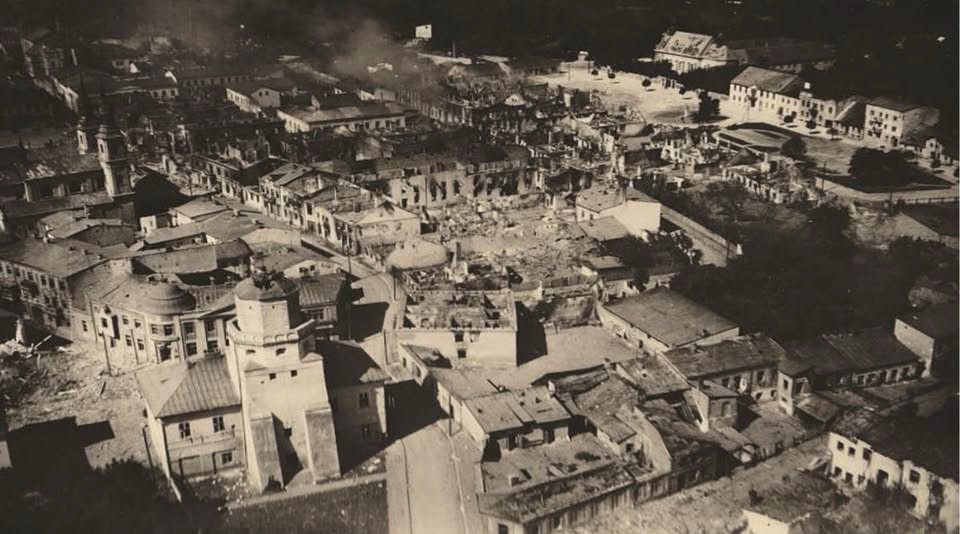
Between 5 and 7 August 1944, during the early days of the Warsaw Uprising, German forces carried out a mass extermination campaign against the civilian population of Warsaw’s Wola district. In a series of executions and acts of terror, between 38,000 and 65,000 people were murdered. The largest number of victims were killed on “Black Saturday”, 5 August 1944.
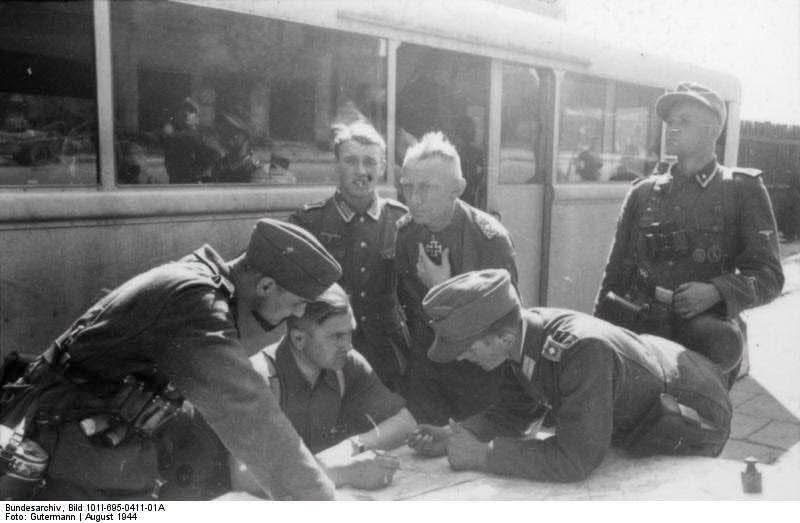
The massacre of Wola is regarded as one of the largest single massacres of civilians committed in Europe during the Second World War and remains one of the greatest individual crimes perpetrated against the Polish nation.
German forces arrive in Warsaw
On the evening of 4 August 1944, German reinforcements arrived in Warsaw with the objective of crushing the Polish uprising. Among them were approximately 1,700 soldiers of the collaborationist RONA formation, the notorious SS “Dirlewanger” Brigade, SS and Wehrmacht units sent from Poznań, the 608th Infantry Regiment under Colonel Schmidt, and a battalion of officer cadets from a military school in Poznań.
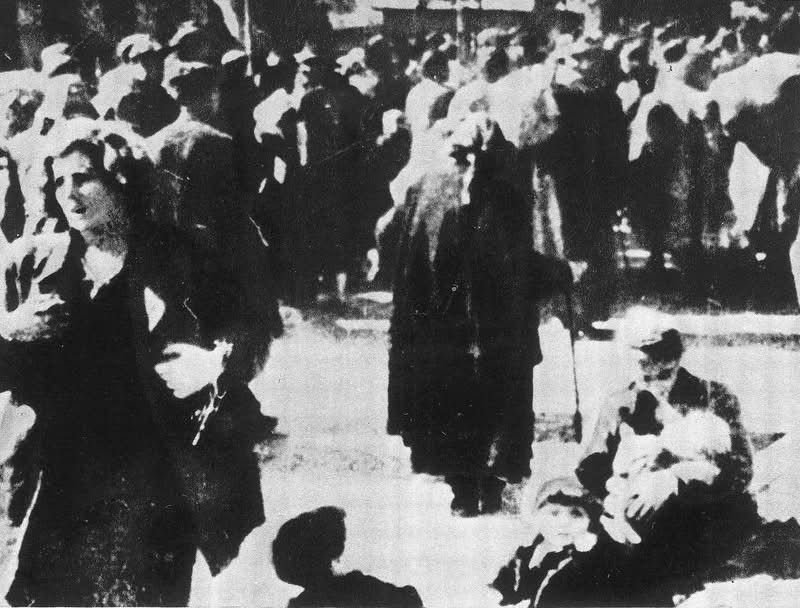
Additional forces included several companies of German police gathered from different towns of the Warthegau region. Command of the operation was given to SS-Gruppenführer Heinz Reinefarth, a German police general.
The beginning of the massacre
On the morning of 5 August, German forces launched their attack towards the centre of Warsaw, advancing mainly along Wolska Street and Górczewska Street.
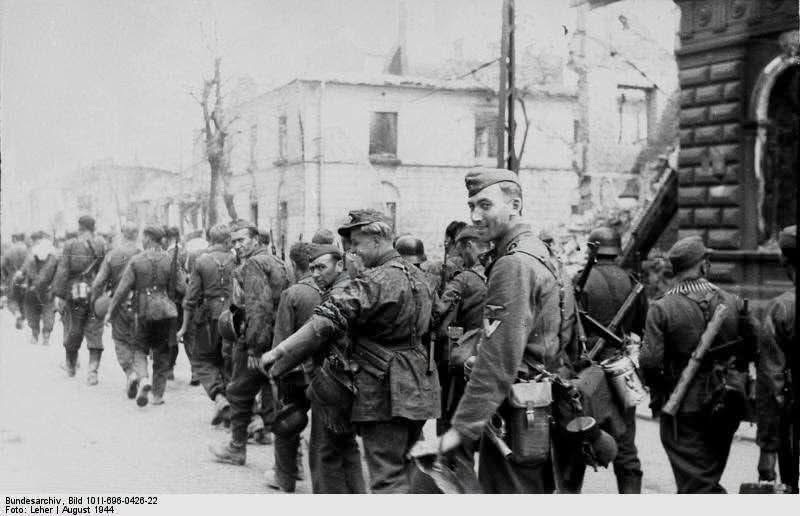
From the early hours of the offensive, a systematic massacre of Polish civilians began. SS troops and police units murdered everyone they encountered — regardless of age or gender. Entire groups of inhabitants of captured neighbourhoods were executed.
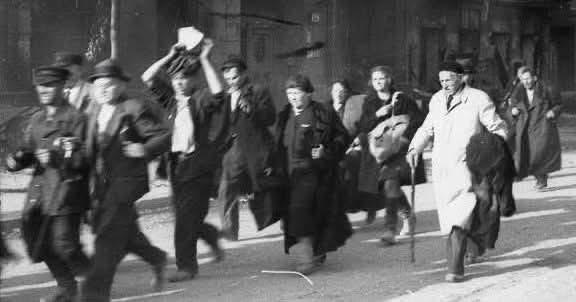
No one was spared: children, the elderly, nuns, nurses, doctors, hospital patients, people with disabilities and the wounded. Civilians were shot with machine guns, killed inside buildings with grenades, or burned alive when German troops set houses on fire. Those who attempted to escape were also murdered, and their bodies were thrown into burning buildings to destroy evidence.
One of the most horrific crimes took place at the Wola Hospital, where approximately 360 people, including patients and medical staff, were killed.
Terror, rape and destruction
The executions were accompanied by widespread sexual violence against women and girls, as well as systematic looting. During the afternoon of 5 August, German forces began gathering civilians into selected execution sites along Wolska and Górczewska Streets, where they were murdered by gunfire — often with shots to the back of the head or machine-gun bursts.
The largest killing sites included:
- the railway workshops near Moczydło Street, where between approximately 4,500 and 12,000 people were murdered;
- the Orthodox Cemetery, where several hundred victims were killed;
- Sowiński Park, where around 1,500 people were executed;
- the Józef Franaszek Factory of Wallpaper and Coloured Paper, where between 4,000 and 6,000 people were murdered;
- the Ursus Factory, where between 6,000 and 7,500 victims lost their lives.
Eyewitnesses described horrifying scenes: piles of bodies reportedly reached 25–35 metres in length, 15–20 metres in width and around two metres in height.
On 5 August alone, estimates suggest that between more than 20,000 and possibly as many as 45,500 Polish civilians were murdered.
The destruction of evidence
In an attempt to prevent epidemics and erase traces of their crimes, the Germans created the so-called Verbrennungskommando (“Burning Detachment”) on 6 August. It consisted of around 100 young Polish men who were spared execution but were forced to collect and burn the bodies of the murdered inhabitants of Wola.
These men were witnesses to one of the darkest crimes committed during the occupation of Poland.
No justice for the perpetrators
Despite the scale of the atrocity, many of those responsible for the Wola Massacre were never brought to justice.
The American occupation authorities refused to extradite Erich von dem Bach-Zelewski and Heinz Reinefarth to Poland. Reinefarth later pursued a political career in post-war Germany, serving as a member of parliament and mayor of Westerland.
Oskar Dirlewanger, commander of the infamous SS unit bearing his name, died in unclear circumstances in June 1945 in Altshausen, Germany. Alfred Spilker, another participant in the crimes, was killed in 1945.
The Wola Massacre remains a painful symbol of the suffering of Warsaw’s civilian population and a reminder of the brutality of Nazi Germany’s occupation of Poland.
Today, we remember the tens of thousands of innocent victims who lost their lives simply because they were Polish civilians living in a city fighting for freedom.
Never forget.
Source: Institute of National Remembrance (Instytut Pamięci Narodowej – IPN)
Photographs: IPN
Text: Polish Sue.



Leave a comment