New York, 23 September 2026 | Polish Sue
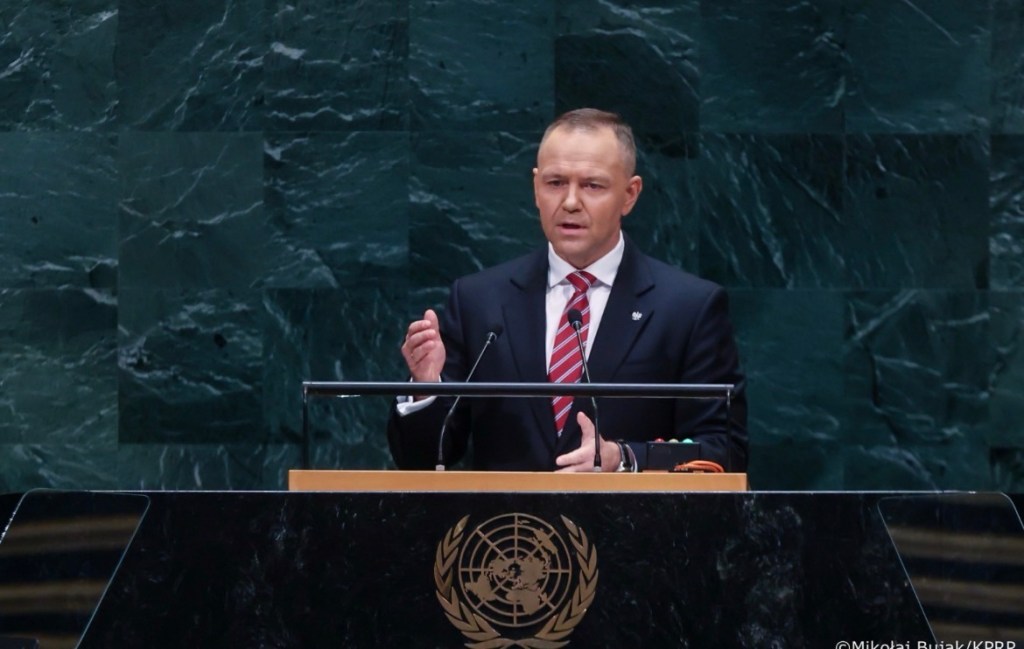
Polish Sue reports on the address by the President of the Republic of Poland, Karol Nawrocki, delivered during the 81st session of the United Nations General Assembly.
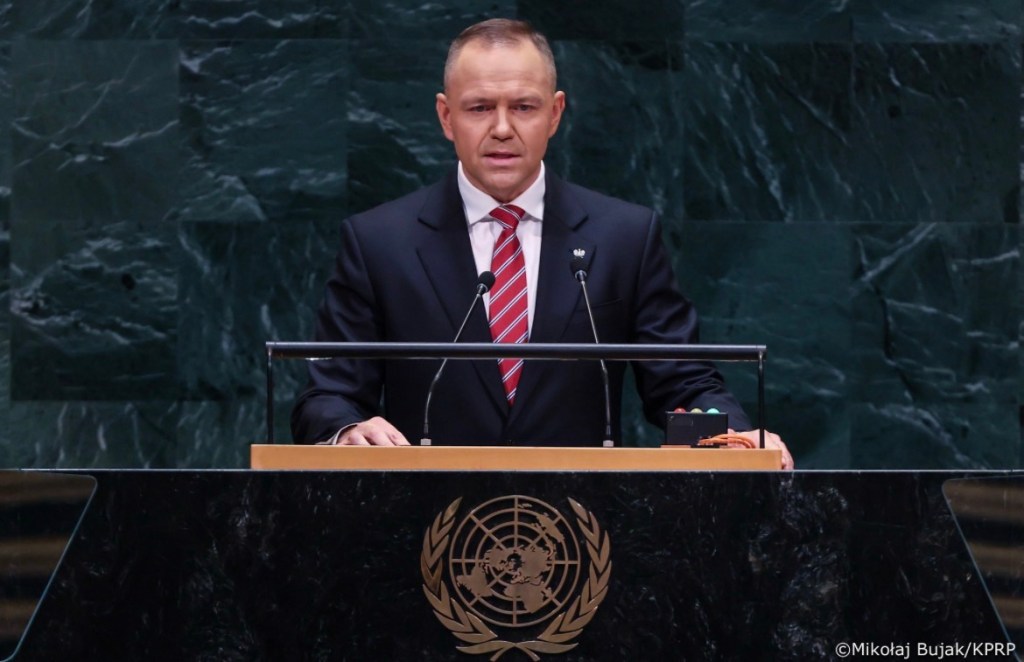
President of the Republic of Poland Karol Nawrocki addressed the 81st session of the United Nations General Assembly, presenting Poland’s perspective on the challenges facing the international community and calling for greater accountability, respect for international law and the protection of national sovereignty.
In his opening remarks, President Nawrocki reflected on the origins of the United Nations and Poland’s historical experience during and after the Second World War. He argued that the international order must be based not only on declarations and principles, but also on responsibility for violations of international law.
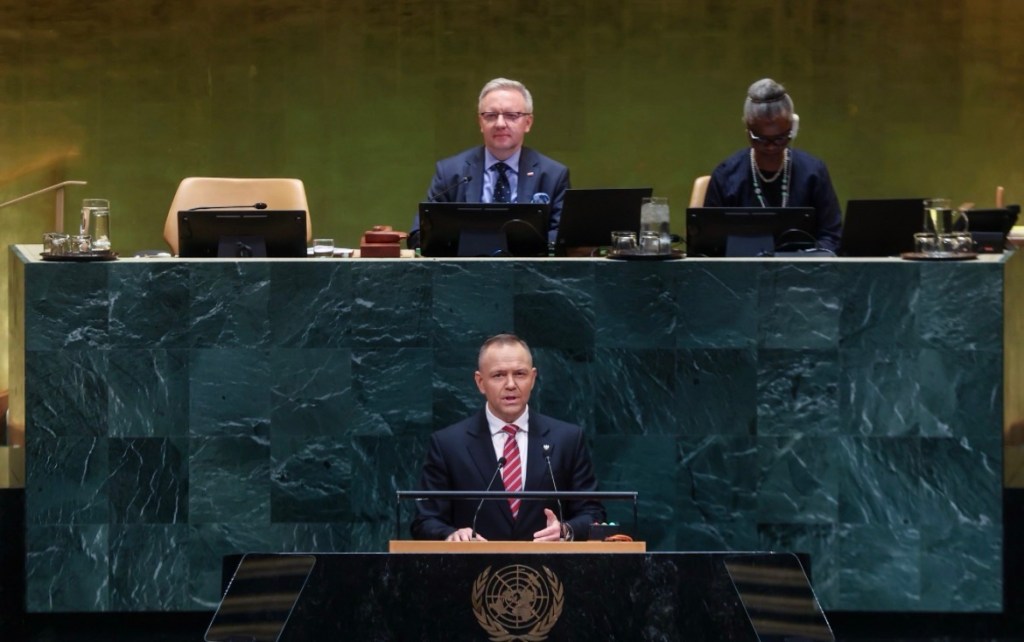
The President recalled that Poland, having suffered under both Nazi German and Soviet totalitarianism, emerged from the Second World War under Soviet domination. He argued that the failure to fully address the crimes and consequences of that period continues to influence perceptions of international justice and accountability.
International law, sovereignty and security
A significant part of the speech focused on Russia’s war against Ukraine and the broader implications for the international system. President Nawrocki described Russia’s actions as incompatible with the principles of the UN Charter and warned against a return to an international system in which stronger states determine the borders and future of weaker nations.
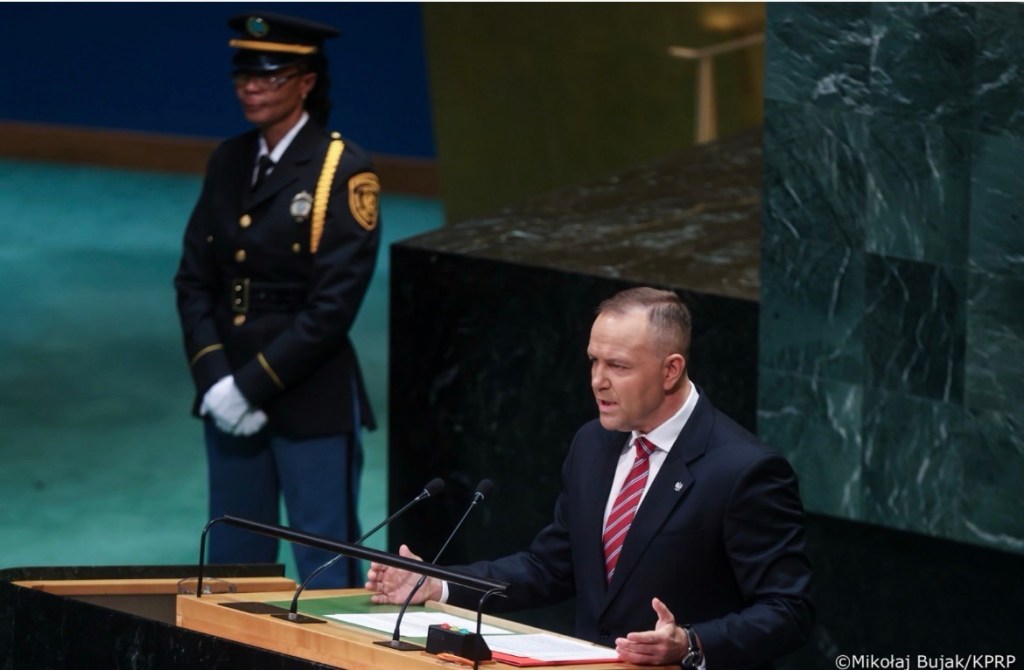
“It is the force of law that should decide, not the law of force,” the President stated.
He emphasised that Poland does not seek confrontation, but is strengthening its alliances and defence capabilities with the stated objective of deterrence and protection. He reaffirmed Poland’s commitment to NATO and described the Alliance as a fundamental guarantor of European security.
The President also addressed modern forms of warfare, including hybrid operations, destabilisation campaigns and threats to global food security. He stressed the importance of international cooperation, humanitarian law and the protection of civilian populations.
Poland and Central Europe
President Nawrocki also spoke about Poland’s economic position and its role in international cooperation. He highlighted Poland’s participation in the G20 and argued that Central Europe should have a stronger voice in global economic discussions.
He presented the Three Seas region as an increasingly dynamic part of Europe, emphasising its economic development, innovation and potential for further growth.
Demography, family and social cohesion
Another major theme of the speech was the demographic challenge facing many countries.
President Nawrocki referred to ageing populations, declining birth rates and what he described as the erosion of social bonds. He argued that economic measures alone cannot address these challenges and called for greater support for families, parenthood and social institutions.
He also connected demographic questions with wider issues, including migration and human trafficking.
Human rights and religious freedom
The President placed human rights at the centre of his address, referring to Poland’s experience of the Solidarity movement and the struggle against communist rule.
He also highlighted the situation of Christians in parts of the world where religious communities face discrimination, violence and attacks on places of worship. He called for greater international attention to the protection of religious freedom and human dignity.
Climate policy and economic security
President Nawrocki also addressed environmental policy, arguing that climate transformation should take account of economic competitiveness, industrial capacity and energy security.
He called for an approach that combines environmental responsibility with economic security and warned against policies that could encourage the relocation of production to countries with lower environmental standards.
Artificial intelligence and the future of humanity
One of the most contemporary themes of the speech concerned artificial intelligence and emerging technologies.
President Nawrocki questioned how humanity will maintain its role as technology develops rapidly, including through artificial intelligence and potential superintelligence.
He argued that technology should serve people rather than exploit their vulnerabilities and called for clear international rules governing the development and use of AI.
He also warned against the use of artificial intelligence for manipulation, destabilisation and undermining international order, stressing that technological development should remain connected to human dignity and truth.
A call for a more effective United Nations
Concluding his address, President Nawrocki argued that the United Nations must evolve in response to a changing world.
His central message was that the organisation should be capable not only of discussing international challenges but also of responding effectively to violations of international law and ensuring accountability.
For Poland, the speech placed particular emphasis on sovereignty, responsibility, international law, security, human dignity and the preservation of peace.
The President’s address also reflected Poland’s historical experience and its understanding of the importance of national independence, particularly in the context of the country’s history of occupation and domination by totalitarian powers.
As Poland continues to engage internationally, the speech at the UN General Assembly presented a message centred on sovereignty, responsibility, international law, human rights and peace.
Here is the link to the speech:
https://www.facebook.com/share/v/1QAHX1um6C/?mibextid=wwXIfr
© Polish Sue | 2026
Polish Sue – connecting Poland and the United Kingdom through history, culture and education.
Source: KPRP
Photo: KPRP



Leave a comment