23 October 2026 marks the 70th anniversary of the Hungarian Revolution of 1956, one of the most courageous uprisings against communist dictatorship and Soviet domination in post-war Europe. The Hungarian people took to the streets demanding freedom, national independence and the right to determine their own future. Although the revolution was ultimately crushed by Soviet military force, its spirit endured — as did the extraordinary solidarity shown by the Polish people.
For Poland and Hungary, October 1956 remains a powerful chapter in a shared history shaped by the struggle for freedom, national sovereignty and human dignity.
A revolution inspired by the struggle for freedom
The Hungarian Revolution began on 23 October 1956, following a period of growing public dissatisfaction with the communist regime and Soviet control. The workers’ uprising in Poznań in June 1956, brutally suppressed by Poland’s communist authorities, had become an important inspiration for those seeking political change in Hungary.
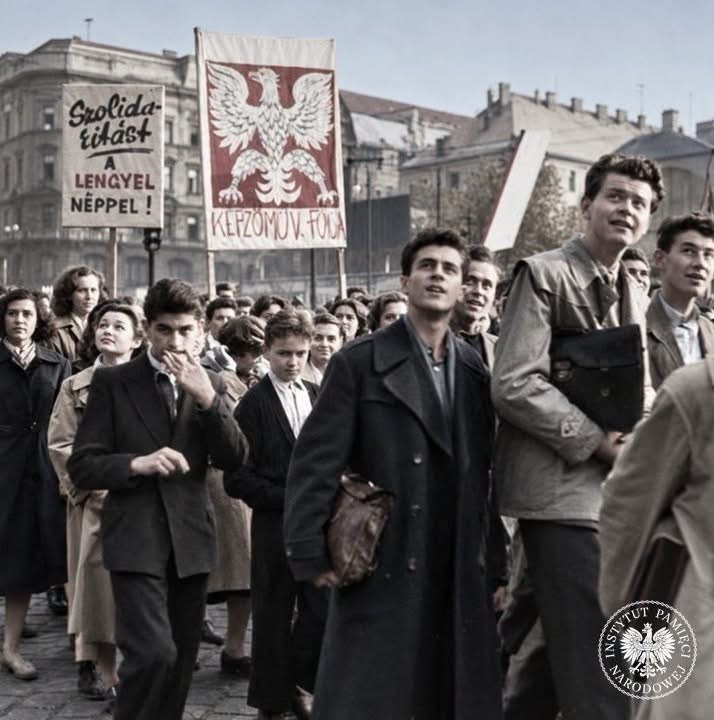
Hungarian students organised a demonstration in Budapest to express solidarity with Poland and demand political reforms, the withdrawal of Soviet troops and an end to repression.
One of the most significant gathering points was the monument to General Józef Bem, the Polish military commander who became a national hero in Hungary during the Hungarian struggle for independence in 1848–1849. His legacy symbolised the historic friendship between the two nations. On that October day, Polish and Hungarian flags flew side by side as demonstrators called for freedom.
What began as a demonstration soon became a nationwide uprising. Crowds pulled down the enormous statue of Stalin, while violent confrontations erupted outside the Hungarian Radio building after security forces opened fire on protesters.
Students, workers and ordinary citizens joined the resistance. Their demands went far beyond economic grievances: they wanted political liberty, an end to Soviet domination and the restoration of Hungary’s national independence.
The brief hope of freedom
In the days that followed, revolutionary groups fought Soviet troops and the communist security apparatus in the streets of Budapest and other Hungarian towns.
Imre Nagy, who became prime minister during the uprising, announced a series of political changes. On 1 November 1956, his government declared Hungary’s neutrality and its intention to withdraw from the Warsaw Pact.
For a brief moment, it appeared that Hungary might escape Soviet domination and establish an independent political future.
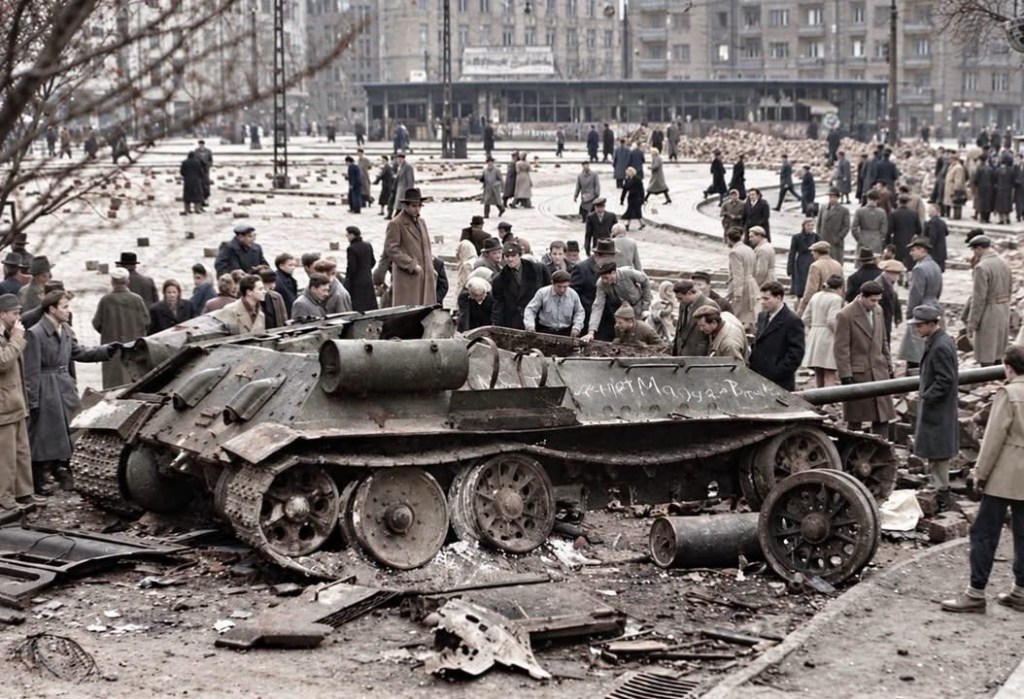
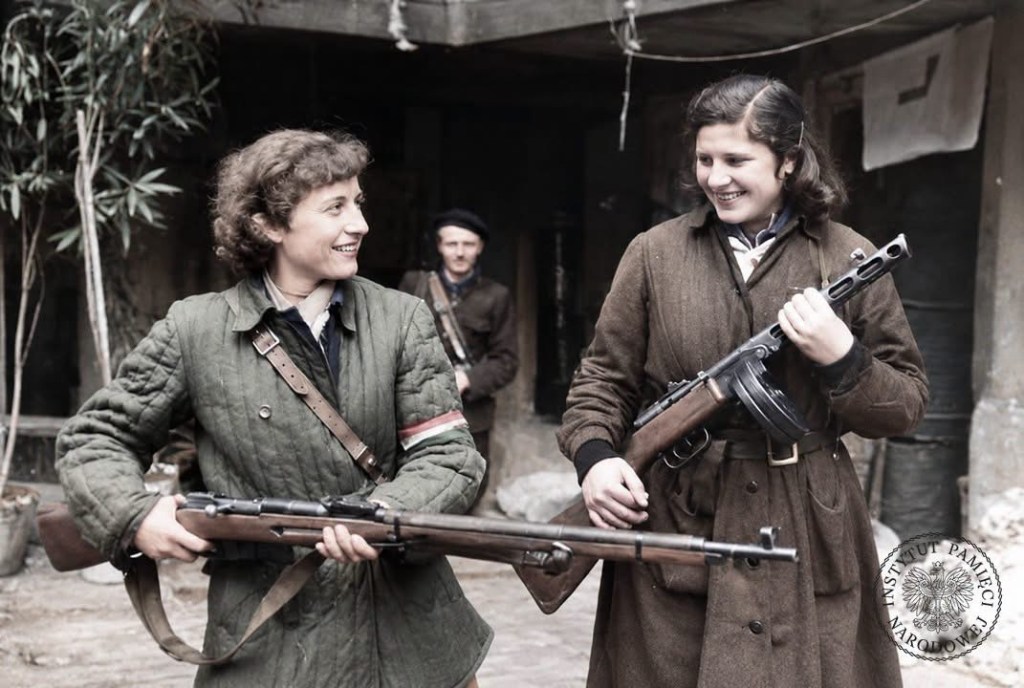
However, the Soviet leadership was determined to retain control over Hungary. On 4 November, Soviet forces launched a massive military offensive. Tanks and troops entered Budapest, meeting fierce resistance from Hungarian insurgents, many of whom were poorly armed but determined to defend their country.
The military imbalance was overwhelming. The revolution was crushed, but the courage of those who resisted became an enduring symbol of the struggle against tyranny.
The human cost of Soviet repression
The consequences of the revolution were devastating. Approximately 2,700 Hungarians were killed during the uprising and its suppression, while nearly 20,000 were wounded. Around 200,000 people fled Hungary, seeking refuge abroad.
The communist authorities subsequently launched a campaign of reprisals. Thousands faced prosecution, hundreds were sentenced to death, and many others were imprisoned or subjected to political persecution.
Imre Nagy was arrested, secretly tried and executed in June 1958. His fate became one of the most notorious examples of the regime’s determination to punish those who challenged Soviet control.
Among the victims of the post-revolutionary repression was Péter Mansfeld, a young participant in the resistance. He was executed in March 1959, shortly after turning 18. His story remains a particularly painful reminder of the price paid by young people who dared to resist dictatorship.
The revolution had been defeated militarily, but the memory of its fighters could not be erased.
While Hungarians fought Soviet tanks, Poles organised help
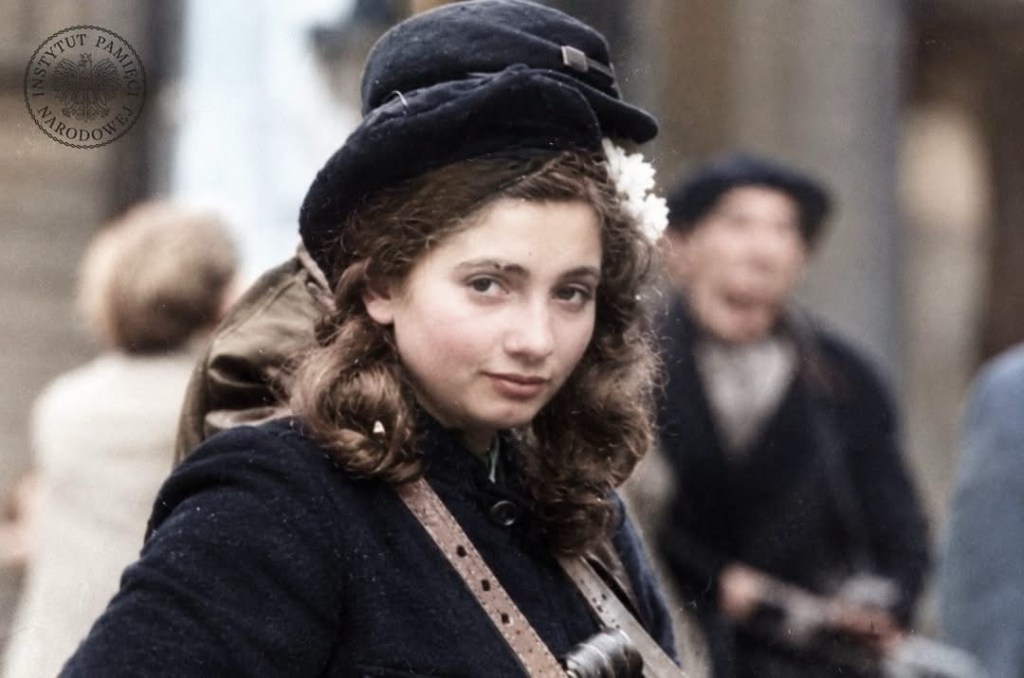
One of the most moving aspects of the Hungarian Revolution was the extraordinary response from Poland.
Only months earlier, Polish workers in Poznań had faced violent repression for demanding better living conditions and political change. Poles understood the dangers of challenging a communist regime, yet news of the Hungarian uprising inspired an exceptional wave of public solidarity.
Across Poland, people responded to appeals for humanitarian assistance. They donated blood, collected medicines and food, contributed money and helped Hungarian refugees.
The response was particularly strong in Poznań and the surrounding region. The city that had witnessed the bloody suppression of its own workers’ uprising now became a centre of assistance for the Hungarian people.
On 29 October 1956, the first two aircraft carrying humanitarian aid reportedly departed from Poznań for Hungary. Local communities mobilised substantial supplies, including approximately 20 tonnes of food, 100 kilograms of medicines and medical supplies, and 86 pieces of outpatient medical equipment. More than one million złotys were donated to the Polish Red Cross.
The generosity extended beyond material assistance. As many as 3,500 families in the Poznań region reportedly offered to take Hungarian children into their homes.
Blood donations became one of the most powerful expressions of Polish-Hungarian solidarity. Thousands of Poles volunteered to donate blood to help save the lives of people injured in the fighting. Their actions carried a profound message: a nation that had experienced communist violence was reaching out to another nation fighting for freedom.
This was solidarity expressed not merely in words, but through practical action, sacrifice and compassion.
A friendship stronger than oppression
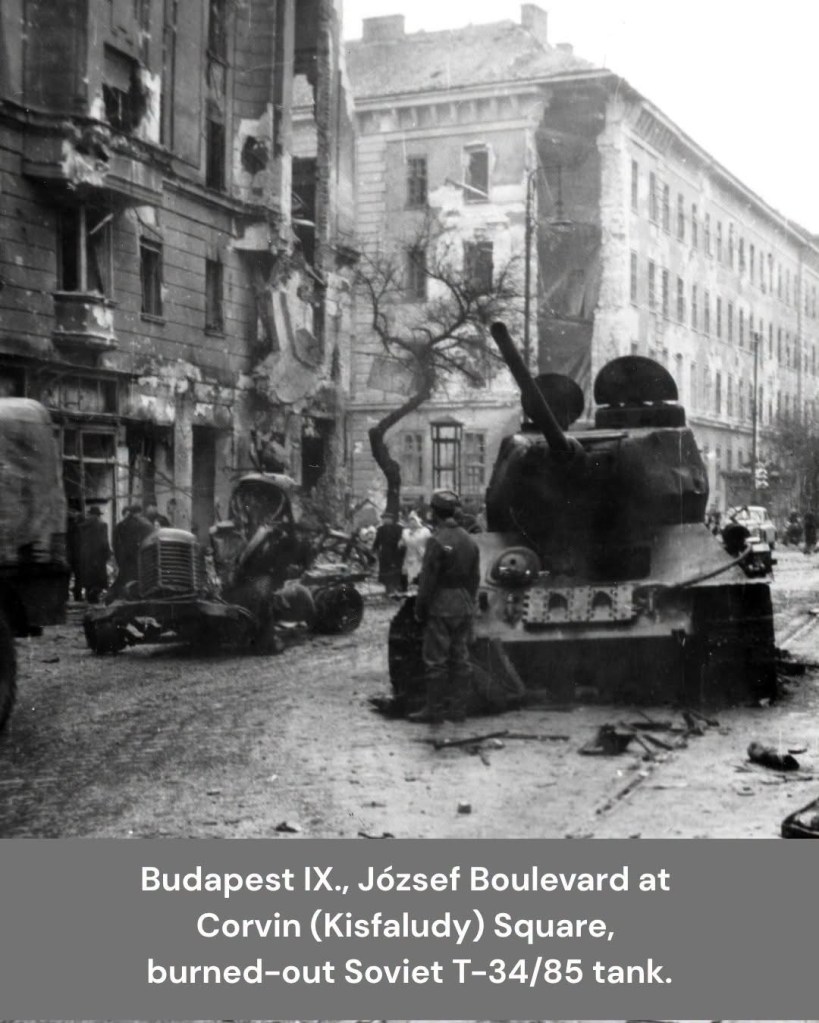
The Hungarian Revolution of 1956 was not an isolated event. It formed part of the wider struggle of Central and Eastern European nations against Soviet domination and communist dictatorship.
The revolution revealed the limits of the political freedoms permitted by the Soviet bloc. It also demonstrated that national identity, the desire for independence and the aspiration to live without fear could not be extinguished by military force alone.
For Poland and Hungary, the events of 1956 reinforced a friendship rooted in centuries of shared history. Despite political divisions imposed by communist rule, ordinary people continued to recognise one another’s aspirations and suffering.
The Polish response remains an outstanding example of international solidarity. It demonstrated that even under an authoritarian system, individuals and communities could find ways to support those fighting for freedom.
Seventy years on: remembering the courage of 1956
Seventy years after the Hungarian Revolution, we remember the men and women who stood against Soviet tanks, the young people who risked their lives, and the victims of the reprisals that followed.
We also remember the Polish citizens who donated blood, collected humanitarian supplies, gave money and offered their homes to Hungarian refugees. Their actions remind us that friendship between nations is built not only through diplomacy and official declarations, but also through the courage and generosity of ordinary people.
The Hungarian Revolution was suppressed, but its message survived. It became a lasting symbol of the determination of nations to live in freedom and to shape their own destinies.
For Polish Sue, which works to preserve historical memory and strengthen the bonds between Poland and the United Kingdom, the anniversary is also an opportunity to reflect on the universal values that connect the histories of European nations: freedom, solidarity, remembrance and respect for human dignity.
In October 1956, Hungary rose for freedom. Poland stood in solidarity. Seventy years later, we remember both the courage of the Hungarian people and the generosity of the Poles who answered their call for help.
🇭🇺🇵🇱 May the memory of 1956 remind future generations that freedom is never guaranteed — and that solidarity can endure even in the darkest times.
Fotos: IPN
Source: IPN
Polish Sue Association | October 2026
#HungarianRevolution #Hungary1956 #PolishHungarianFriendship #HungarianHistory #HistoricalMemory #PolishSue


Leave a Reply