History does not live only in textbooks, archives and museum display cases. It lives in family stories, photographs, personal keepsakes, places of remembrance and in the testimonies of those who experienced history themselves.
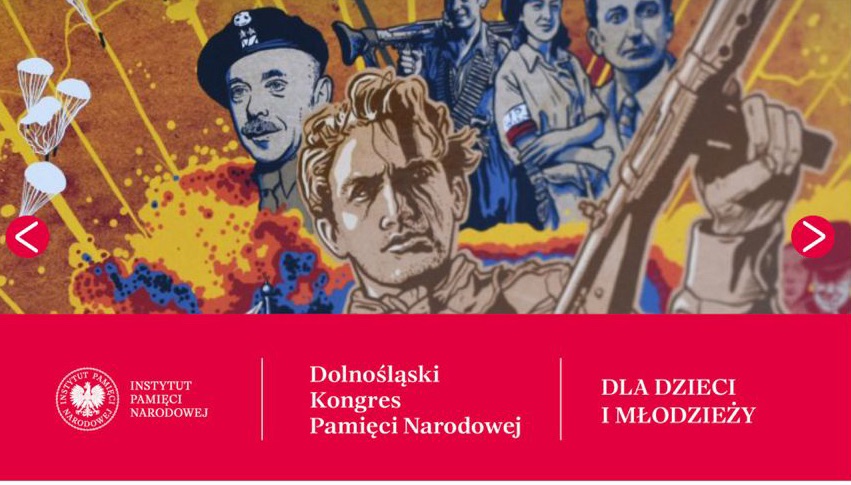
This is the kind of living, modern and engaging history that visitors will be able to discover during the Lower Silesian National Remembrance Congress, organised by the Wrocław Branch of the Institute of National Remembrance (IPN).
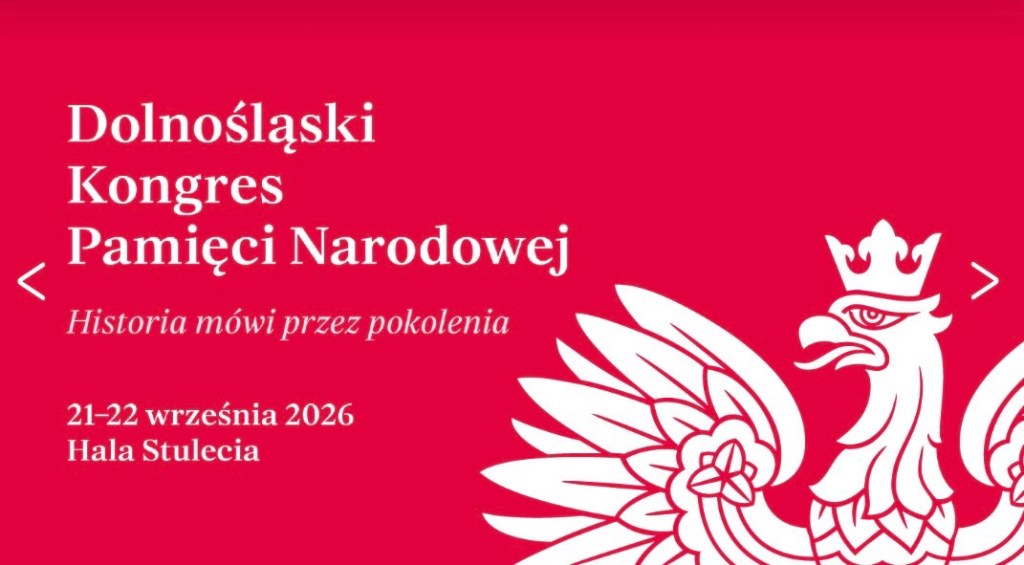
The Congress will take place on 21–22 September 2026 at Centennial Hall in Wrocław, under the theme:
“History Speaks Through Generations.”
The event is open to everyone – children, young people, families, teachers, students, history enthusiasts and those who remember the events of the 20th century from their own experience.
Admission is free, with prior registration required.
History in a Modern Form
The Lower Silesian National Remembrance Congress has been designed as an extraordinary, interactive journey through Poland’s recent history.
Across six main spaces, visitors will be able to explore exhibitions, meet witnesses to history, solve historical puzzles, play educational games, take part in workshops, watch films and performances, and experience history through modern technologies.
One of the key features of the Congress will be the immersive exhibition “Trails of Hope. The Odyssey of Freedom”, telling the story of the fate of Poles during the Second World War – from deportations deep into the Soviet Union, through the Middle East, Africa and Italy, to Great Britain and life in exile.
Presented since 2022 in more than 50 countries across six continents, the exhibition uses projections, light, sound and other modern forms of storytelling to bring the experiences of thousands of Poles closer to audiences around the world.
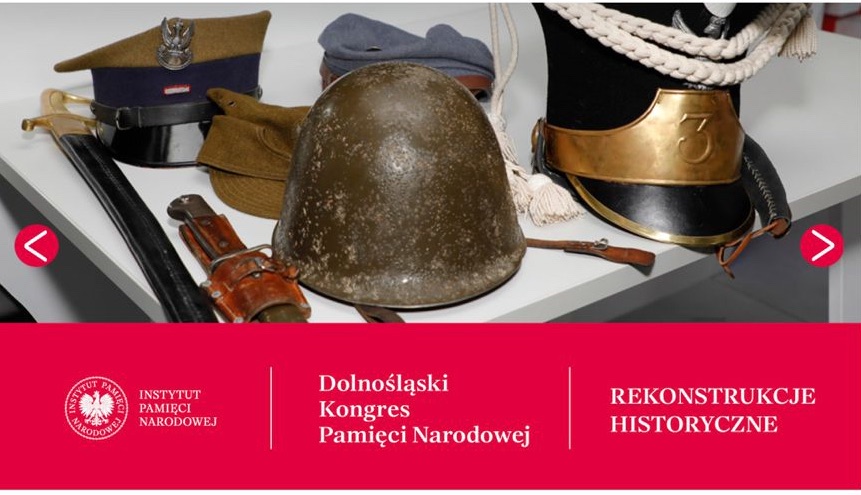
The exhibition will be complemented by authentic documents, photographs, fragments of military uniforms and personal objects belonging to soldiers of the Polish Armed Forces and civilians.
The Young Generation and New Technologies
A particularly important part of the Congress will focus on educating the younger generation.
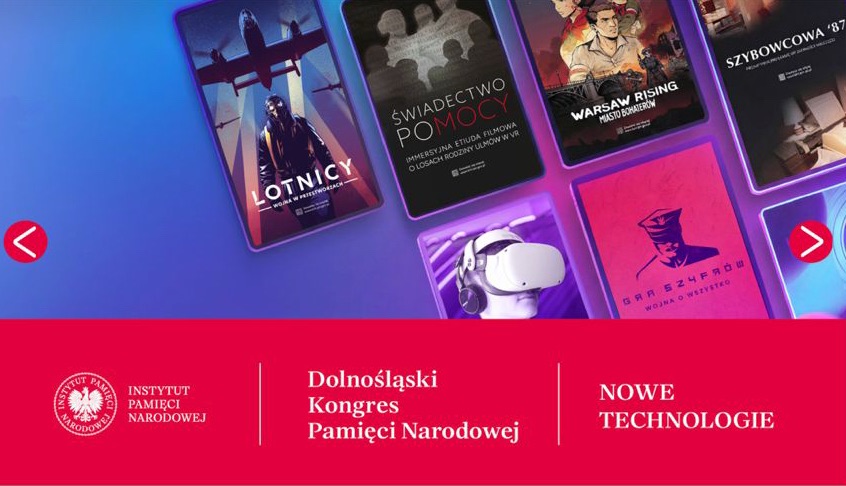
In the New Technologies Zone, visitors will be able to use computer games and virtual reality to explore the history of the Warsaw Uprising, Polish codebreakers and Polish airmen who fought during the Second World War.
The “Orbit of History” will feature a series of educational stations prepared by IPN branches from across Poland.
The history of Wrocław itself will also have a prominent place.
The Orange Alternative Zone will introduce visitors to the remarkable movement which, during the 1980s, used happenings, absurdity and humour to challenge and ridicule the reality of communist Poland.
Visitors will be able to see archival photographs and original memorabilia, as well as take part in workshops inspired by stencil graffiti and screen printing.
History Told by Those Who Lived It
One of the most important spaces will be “Told”, dedicated to witnesses of history.
Their testimonies cover deportations, the Katyń massacre, the Warsaw Uprising, the rescue of Jews, the tragedy of Volhynia, the Solidarity movement and the activities of the democratic opposition.
Another important element of the Congress will be the work of the IPN’s Office of Search and Identification.
In the “Restoring Them to Memory” zone, visitors will be able to learn about the work of specialists searching for victims of totalitarian regimes, conducting archaeological research and identifying people whose fate remained unknown for decades.
Polish Sue at the Congress – National Memory Has No Borders
For Polish Sue, one of the most significant elements of the Congress will be the panel dedicated to the work of Polish institutions and organisations outside Poland:
“The Role of Polish Diaspora Institutions: A Panel on Preserving National Memory Abroad, with Guests from the United Kingdom, Italy and Argentina.”
The panel will be moderated by Fr Dr Adam Szpotański (IPN).
Participants will include Iwona Golińska, President of the Polish Sue Association in the United Kingdom; Fr Tomasz Jarosz, Administrator of the Church and Hospice of St Stanislaus Bishop and Martyr in Rome; and Andrés Chowañczak of the Union of Poles in Argentina.
The participation of Polish Sue in this panel is particularly meaningful because the work of Polish diaspora organisations demonstrates that Polish memory can be preserved, cultivated and passed on to future generations thousands of miles away from Poland.
Polish schools, community organisations, parishes, cultural institutions, family archives, historical events and youth initiatives create a network through which the Polish language, history, traditions and awareness of Polish heritage remain alive beyond the country’s borders.
For Polish Sue, this is also a natural continuation of our work in the United Kingdom – connecting Polish history with British heritage, combining education with modern forms of communication, and bringing together successive generations of Poles living outside their homeland.
More Than Exhibitions and Panels
The Congress will offer much more than exhibitions and discussions.
Visitors will be able to take part in board games, explore historical comics and animations, solve puzzles and accept a range of historical challenges.
In the family education area, children will be able to build historical models in the LEGO Zone, paint, complete educational tasks and participate in workshops.
Older participants will have the opportunity to take part in a tournament of “Konspira”, a game dedicated to the activities of the anti-communist opposition.
History will also come alive through film and theatre.
As part of Cinema MEMORIA, visitors will be able to watch documentary productions created by the IPN, while younger audiences will discover Polish history through the animated series “Animal Brigade.”
A particularly memorable historical figure will also be Wojtek, the soldier bear who travelled with soldiers of the 2nd Polish Corps from the Middle East, through Italy and eventually to Scotland.
Memory That Builds the Future
The Lower Silesian National Remembrance Congress demonstrates that history can be both serious and engaging – firmly rooted in historical sources while also being communicated through the most modern technologies.
It is also a meeting of generations.
For some, the Congress will be an opportunity to revisit memories and stories they already know. For others, it may be their first encounter with important chapters of Poland’s history.
And the participation of Polish Sue in the panel devoted to preserving national memory outside Poland highlights another important dimension of Polish history:
Polish memory does not end at Poland’s borders.
It lives in London, Rome, Buenos Aires and in many other places around the world – in family stories, Polish schools, community organisations, parishes, museums and initiatives created by successive generations of Poles.
That is why history speaks through generations.
And that is why it is our shared responsibility to make sure that it continues to speak to the generations yet to come.
Polish Sue – London 🇵🇱🇬🇧
Photo: IPN

 Polish Sue
Leave a comment