
Polish Sue Association | 21 October 2026
For decades, the communist regime denied them a dignified burial, seeking not only to destroy those who fought for Poland’s independence but also to erase their memory. Today, 49 Polish independence fighters have finally been laid to rest with the honour they deserve.
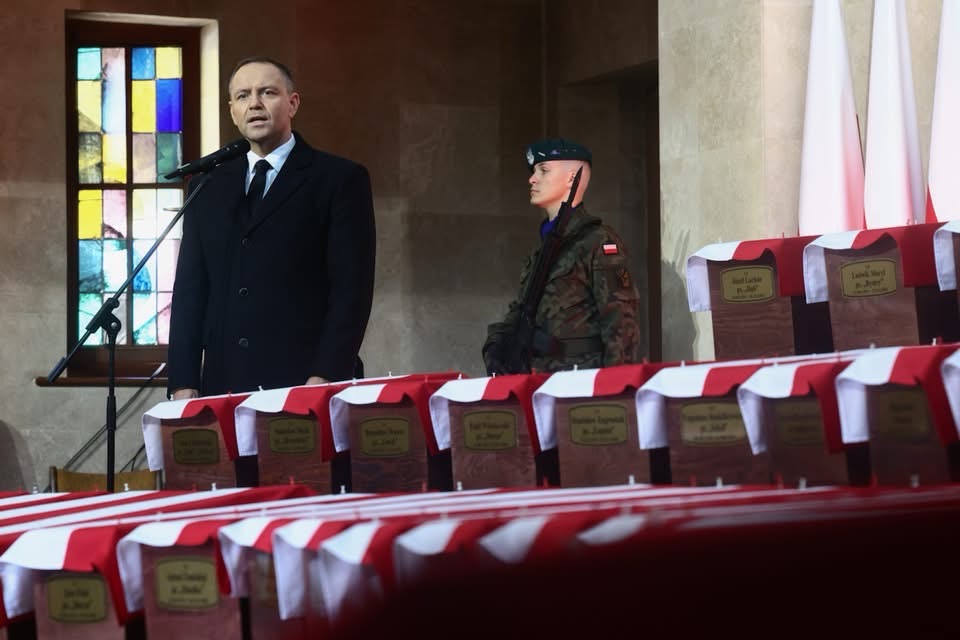
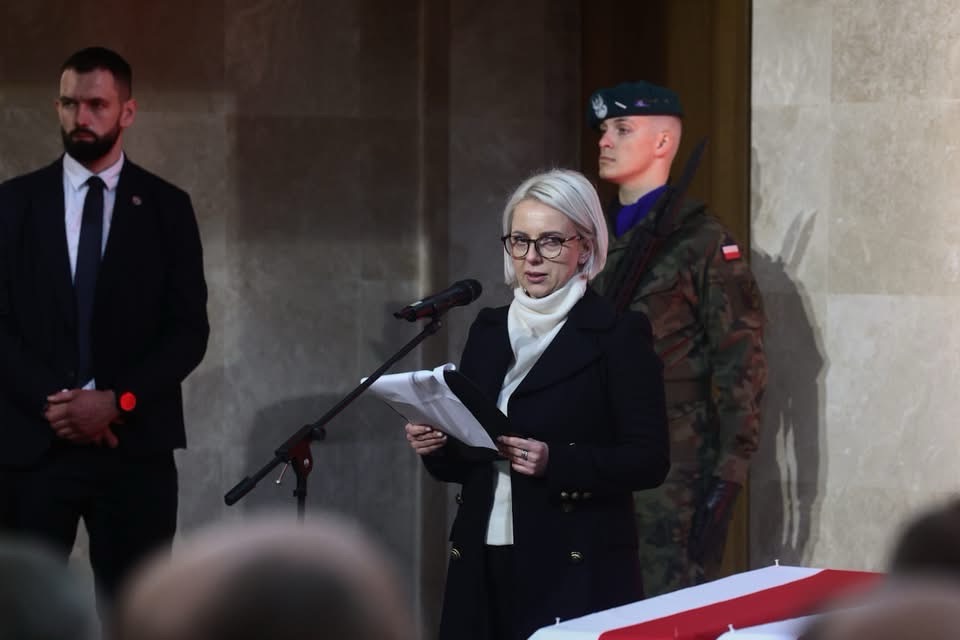
On 21 October 2026, a solemn funeral ceremony took place at Osobowice Cemetery in Wrocław, paying tribute to 49 soldiers and members of the Polish independence underground who fell victim to communist repression in post-war Poland.
The ceremony marked an important moment in Poland’s ongoing struggle to restore the names, dignity and memory of those who refused to accept the loss of their country’s sovereignty under Soviet domination.
A buried history of resistance
Following the Second World War, many members of the Polish wartime underground continued their struggle for an independent homeland. They opposed the communist authorities imposed on Poland under Soviet influence, believing that the end of Nazi occupation should have brought genuine freedom and national sovereignty.
Instead, the communist security apparatus subjected many of these patriots to arrest, imprisonment, interrogation, torture and execution. Some were sentenced to death following politically motivated trials. Others died in prison. Their bodies were frequently buried in secret, without proper identification, family notification or religious and military honours.
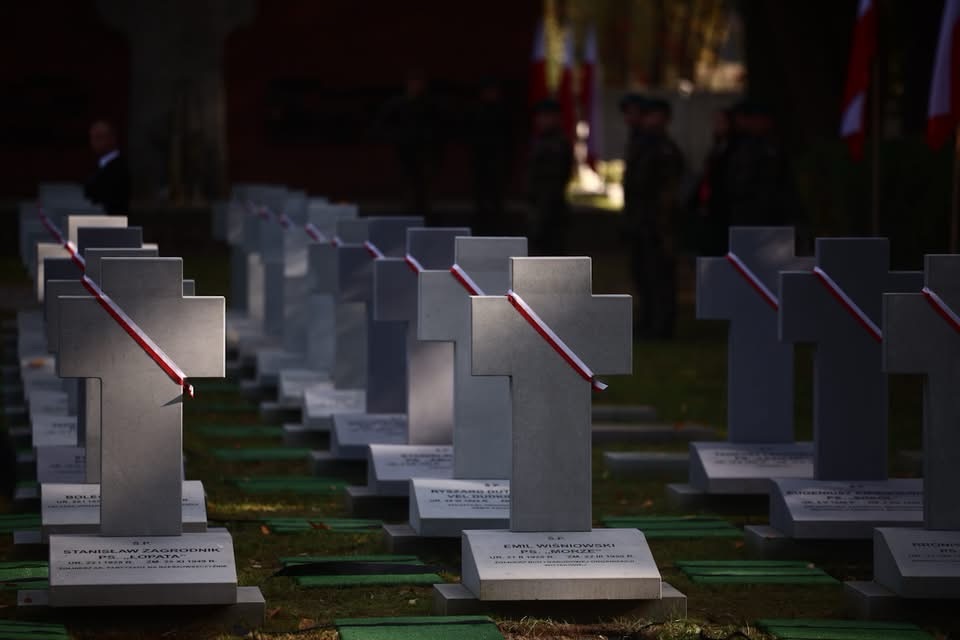
Osobowice Cemetery became one of the places where the communist authorities concealed the remains of their victims.
Between 1948 and 1956, prisoners executed or deceased in Wrocław’s prisons were secretly buried in sections 81A and 120 of the cemetery. Among them were members of the anti-communist independence underground, men and women whose commitment to a free Poland came at the cost of their lives.
For their families, the absence of a grave meant decades of uncertainty, grief and the denial of a place where they could mourn their loved ones. For the nation, it represented an attempt to suppress an essential chapter of Poland’s history.
Restoring dignity through historical remembrance
In 2023, the Institute of National Remembrance (IPN), working in cooperation with the municipal authorities of Wrocław and the Lower Silesian Voivodeship Office, began efforts to restore dignity to the burial grounds and establish a dedicated resting place for the victims.
Exhumation work carried out between 2024 and 2026 formed part of this wider initiative to recover the remains of those who had been secretly buried and to ensure that their sacrifice would no longer remain hidden.
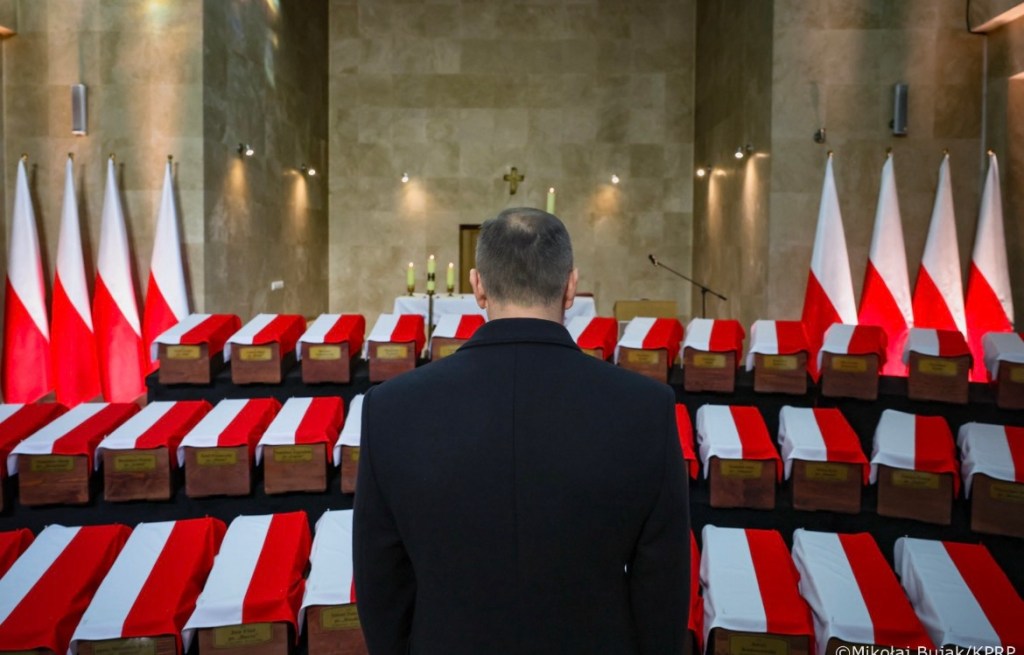
The solemn funeral on 21 October brought this work to a deeply symbolic moment. The remains of 49 victims were laid to rest in the Cemetery’s Section of the Steadfast Soldiers, accompanied by a military salute.
The ceremony began with Holy Mass celebrated by Bishop Wiesław Lechowicz, the Military Ordinary of Poland. Among those attending were the President of the Republic of Poland, Karol Nawrocki; IPN Deputy Presidents Karol Polejowski, Mateusz Szpytma and Krzysztof Szwagrzyk; members of the victims’ families; and representatives of state institutions, the military and veterans’ organisations.
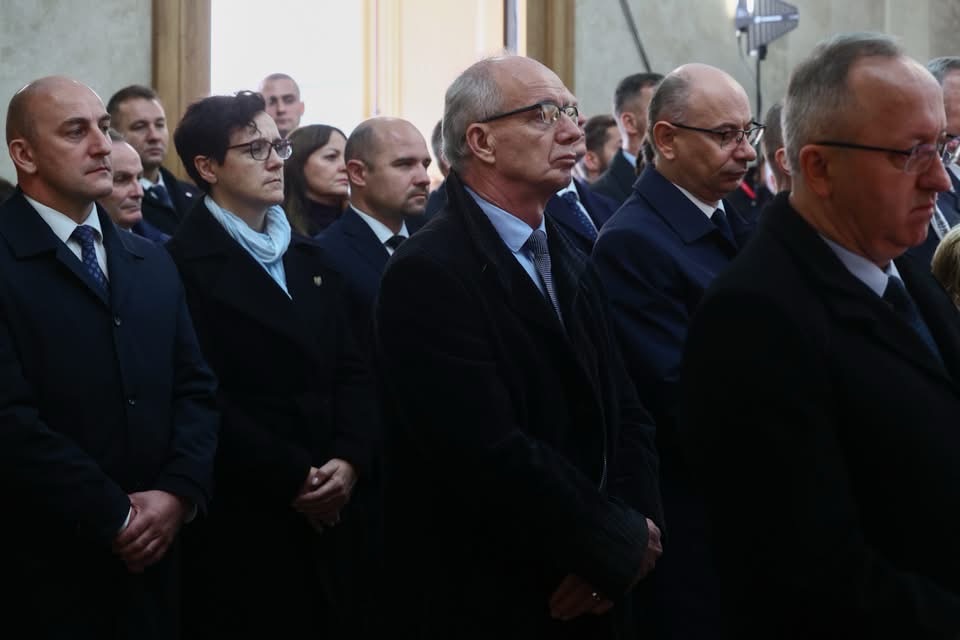
Their presence reflected the significance of this occasion not only for the families directly affected, but also for Poland’s national memory and historical conscience.
“To destroy their graves and the truth”
Addressing the gathering, President Karol Nawrocki emphasised that communist repression did not end with the deaths of its victims. The regime also sought to destroy the evidence of its crimes and prevent future generations from discovering the truth.
“The communist system is not satisfied merely with the deaths of its victims. It does everything it can to destroy their graves and the truth about those it murders – to kill their memory,” the President recalled.
These words capture the particular cruelty inflicted on Poland’s independence fighters. Their persecution extended beyond imprisonment and execution: it included an attempt to deny them the recognition traditionally accorded to those who sacrifice their lives for their country.
The recovery and dignified burial of their remains therefore represents more than an archaeological or historical achievement. It is an act of justice, a restoration of national memory and a recognition of the right of families to know the fate of their loved ones.
Behind every name, a family and a life
The human dimension of this history was powerfully expressed by Magdalena Ziółkowska, great-granddaughter of Lieutenant Colonel Ludwik Marszałek, nom de guerre “Zbroja”, who spoke on behalf of the victims’ families.
Her words reminded those present that the history of communist repression cannot be reduced to dates, military operations, prison records or death sentences. Each victim was also a son, husband or father, whose absence transformed the lives of those left behind.
“This is not merely the story of a man sentenced to death. It is the story of children deprived of their father, of a family torn apart, and of a longing that could find no solace. Behind every historical date and every name lies someone’s life, someone’s love,” she said.
Her testimony brought into focus the suffering endured by families who were deprived not only of their loved ones but also, for many years, of the truth about their fate.
The ceremony in Wrocław offered an opportunity for these families to see their relatives finally laid to rest with dignity and respect. It also served as a reminder that historical remembrance must encompass not only the victims themselves but also those who carried the burden of their loss across generations.
A duty to remember
The burial of the 49 independence fighters is part of Poland’s broader effort to uncover the truth about communist crimes and restore the memory of those who fought for freedom.
The work of the Institute of National Remembrance demonstrates the importance of historical investigation, exhumation, identification and the preservation of burial sites. Such efforts help recover evidence that was deliberately concealed and return the victims to the national narrative from which the communist authorities attempted to exclude them.
For Polish communities abroad, these events also carry a profound message. The struggle for Poland’s independence, the sacrifice of the anti-communist underground and the long pursuit of historical justice form an integral part of the heritage that must be passed on to younger generations.
Remembering these men and women is not simply an exercise in looking back. It is a commitment to historical truth, human dignity and the principle that no political regime has the right to erase the lives and sacrifices of those who oppose oppression.
On 21 October 2026, 49 Polish patriots received the solemn burial denied to them for decades. Their resting place at Osobowice Cemetery now stands as a testament to their courage and sacrifice, and to the enduring determination of Poland to reclaim its history.
They were denied honour in death, but they have not been forgotten. Their memory belongs to Poland – and to every generation that values freedom, truth and independence.
Polish Sue Association
Source: Institute of National Remembrance
Photo: Institute of National Remembrance



Leave a Reply