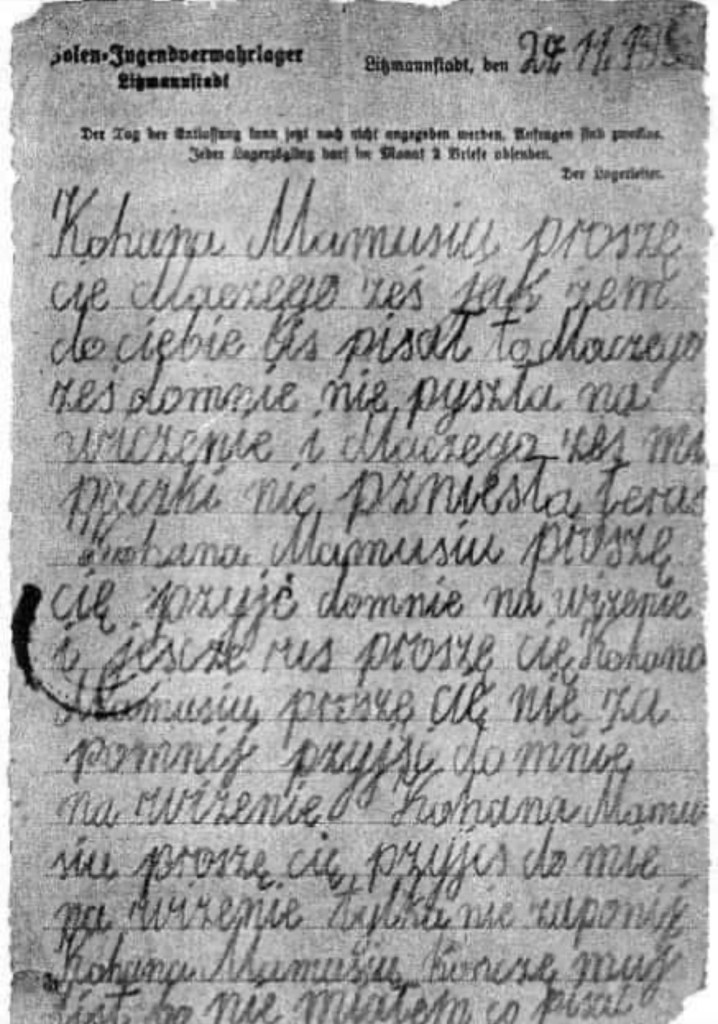
“Dear Mummy, please come and visit me… Dear Mummy, please don’t forget to come and visit me.”
A child’s handwriting.
A child’s plea.
A child’s desperate longing for his mother.
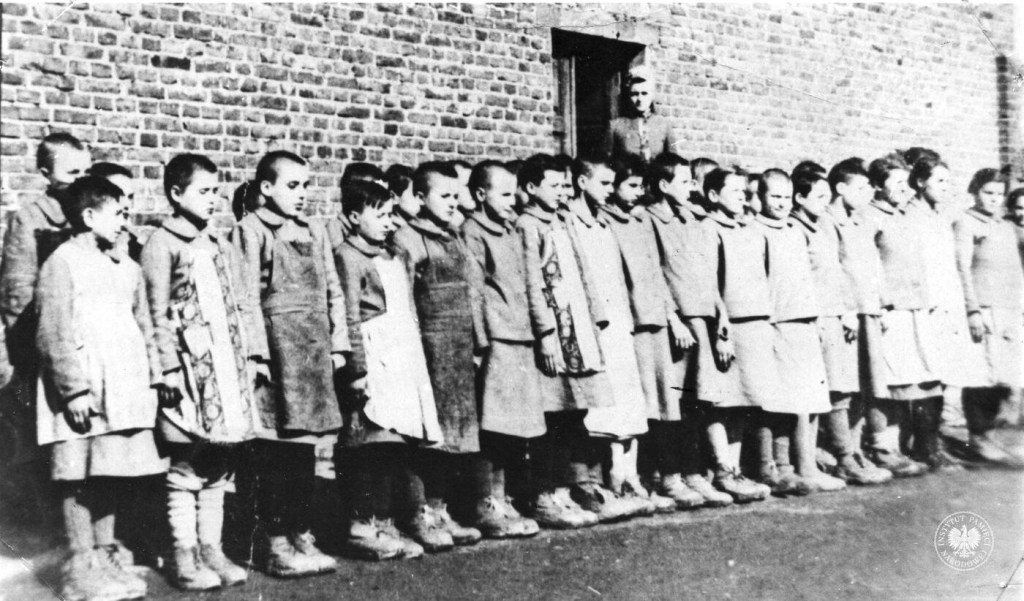
These words were written by a Polish child imprisoned in the German camp for Polish children at Przemysłowa Street in Łódź, during the Second World War.
The spelling is imperfect. The language is simple.
But the message is devastatingly clear.
“Mummy, please come. Please don’t forget me.”
Today, more than eight decades after the German occupation of Poland, ten children who died in that camp are finally being laid to rest with their names known.
Their funeral should have taken place in the 1940s.
Instead, it takes place in 2026.
A funeral 80 years too late.
A childhood stolen 80 years too soon.
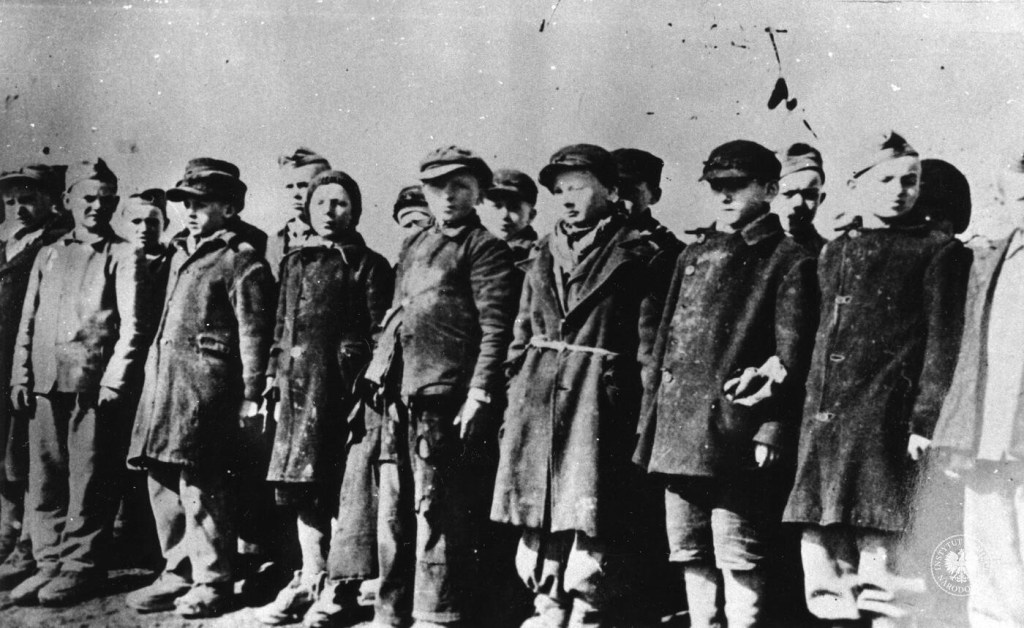
They were children — not numbers
The German camp at Przemysłowa Street was established in occupied Łódź specifically for Polish children and young people.
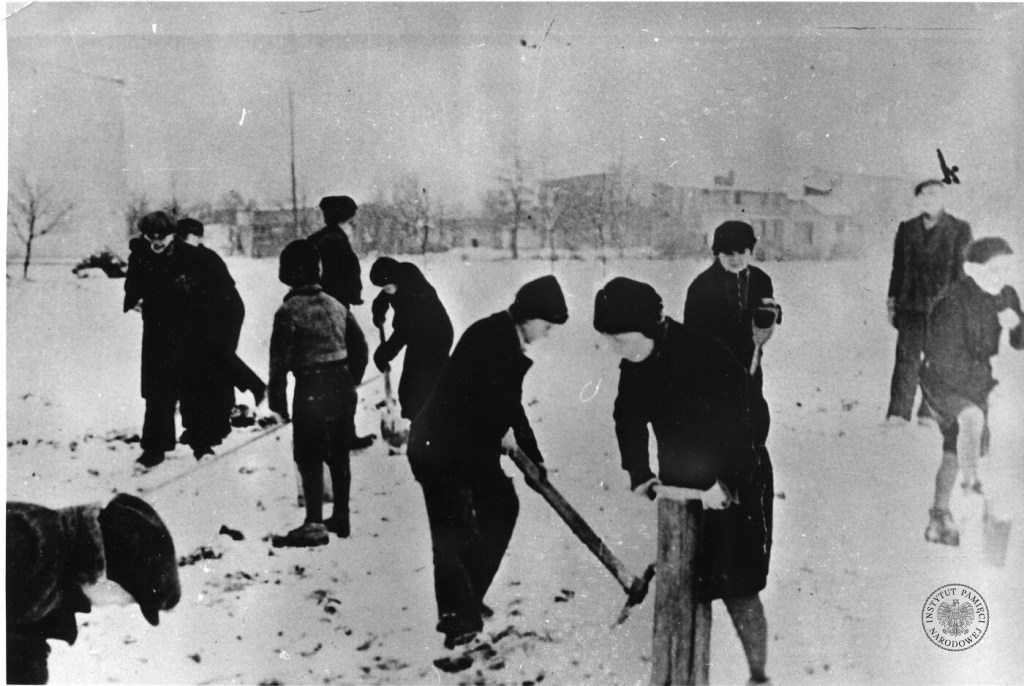
Behind its walls, children were subjected to hunger, forced labour, disease, violence and brutal punishment.
They were separated from their families and deprived of the most basic rights of childhood.
They should have been in school.
They should have been playing.
They should have been arguing with their brothers and sisters, celebrating birthdays and waiting for Christmas.
They should have been growing up.
Instead, they became prisoners.
For some, the camp became their final home.
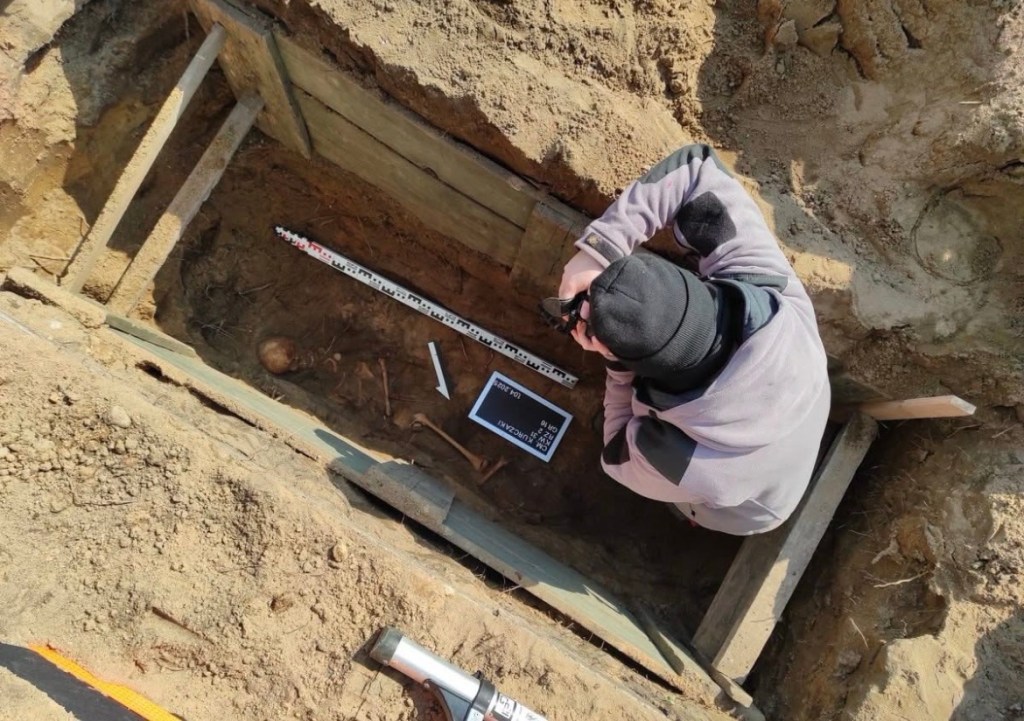
Ten names that must never disappear
The ten children whose remains have recently been identified and who are being buried today were:
Alojzy Magdans — aged 13
He died as a result of being beaten by a guard.
Edward Gąsiorek — aged 12
He was probably shot during an attempted escape.
Zdzisław Kafarski — aged 16
He was beaten by guards and suffered near-drowning in a pit containing human waste.
Edmund Agaciński — aged 15
He was shot during an attempted escape.
Zygmunt Olejniczak — aged 14
He died from exhaustion caused by forced labour and starvation, possibly also from typhus.
Stanisław Jagodziński — aged 16
He died from exhaustion caused by forced labour and starvation, possibly also from typhus.
Henryk Kadziński — aged 14
He died from exhaustion caused by forced labour and starvation, possibly also from typhus.
Tadeusz Kalbarczyk — aged 16
He died from exhaustion caused by forced labour and starvation, possibly also from typhus.
Henryk Słaboszewski — aged 15
He died from exhaustion caused by forced labour and starvation, possibly also from typhus.
Jan Frej — aged 15
He died from exhaustion caused by forced labour and starvation, possibly also from typhus.
Read those ages again.
12. 13. 14. 14. 14. 15. 15. 15. 16. 16.
These were not adults who had lived long lives.
They were children.
The youngest was twelve
Imagine being twelve years old.
Imagine being taken away from your family.
Imagine being hungry, cold and frightened.
Imagine being surrounded by guards and knowing that attempting to escape could mean death.
Now imagine writing to your mother:
“Please don’t forget to come and visit me.”
There is no political language here.
No ideology.
No military strategy.
Only a child asking his mother to come.
That is what makes these words so difficult to read more than eighty years later.
Because behind the history of the Second World War are millions of individual human stories.
And sometimes one child’s sentence can tell us more about the reality of war than pages of statistics.
Buried in anonymity
The German occupiers did not give these children the dignity of a proper burial.
Their bodies were buried anonymously.
Their names disappeared from public memory.
Their families were left without the certainty and dignity that every human being deserves.
Decades passed.
Generations passed.
But history did not disappear.
Through painstaking research and investigations, the Institute of National Remembrance (IPN) has helped restore the identities of these young victims.
This is more than archaeology.
It is more than historical research.
It is the restoration of identity.
A name matters.
A name tells us that this was not simply “another victim”.
This was Alojzy.
This was Edward.
This was Zdzisław.
This was Edmund.
This was Zygmunt.
This was Stanisław.
This was Henryk.
This was Tadeusz.
This was Henryk.
This was Jan.
They existed.
They mattered.
They belonged to someone.
And today, they finally have a grave bearing their names.
A funeral 80 years too late
There is something profoundly painful about today’s ceremony.
It is a funeral that should have happened in the 1940s.
Their families should have been able to mourn them then.
Flowers should have been placed on their graves.
Their names should have been carved into stone.
Instead, their remains waited for decades to be found.
And yet today’s ceremony is also an act of justice.
Because although we cannot give them back their lives, we can give them back their names.
We can give them a place in history.
We can ensure that their stories are taught to future generations.
And we can refuse to allow their suffering to disappear into statistics.
They should have been grandparents
Perhaps the greatest tragedy is not only that these children died.
It is that we know what their lives should have become.
The twelve-year-old Edward Gąsiorek should have grown into an old man.
The thirteen-year-old Alojzy Magdans should have had decades ahead of him.
The fourteen- and fifteen-year-olds should have become fathers, perhaps grandfathers.
They should have worked.
Loved.
Travelled.
Built homes.
Raised families.
Held their grandchildren.
They should have experienced the ordinary things that make up a human life.
Instead, their lives ended inside a German camp.
They did not die of old age. They did not complete their lives. Their lives were taken from them.
Memory is a duty
For Polish Sue, remembering history is not simply about looking backwards.
It is about understanding what happens when human dignity is destroyed and when children become victims of an ideology that denies their humanity.
It is also about ensuring that the victims are remembered as individuals.
Not merely as numbers.
Not merely as statistics.
Not merely as “victims of the war”.
But as children with names, families, faces, hopes and futures that were stolen from them.
Their story belongs not only to Łódź.
It belongs to Poland.
And it belongs to the history of Europe.
We have not forgotten
Today, we bow our heads before ten Polish children.
Alojzy Magdans. Edward Gąsiorek. Zdzisław Kafarski. Edmund Agaciński. Zygmunt Olejniczak. Stanisław Jagodziński. Henryk Kadziński. Tadeusz Kalbarczyk. Henryk Słaboszewski. Jan Frej.
May their names never again be anonymous.
May their memory remain alive.
May future generations know what happened to Polish children under German occupation.
And may the words of that little prisoner continue to speak to us across more than eight decades:
“Dear Mummy, please don’t forget to come and visit me.”
We have not forgotten.
We remember.
We honour.
We will tell their story.
We Remember. Cześć Ich Pamięci.
More:
Polish Sue Association — preserving Polish history, honouring those who were silenced, and building a bridge between Poland and Britain.
Based on historical information concerning the German camp for Polish children at Przemysłowa Street in Łódź and information regarding the recent identification and funeral of the victims by the Institute of National Remembrance (IPN).



Leave a Reply