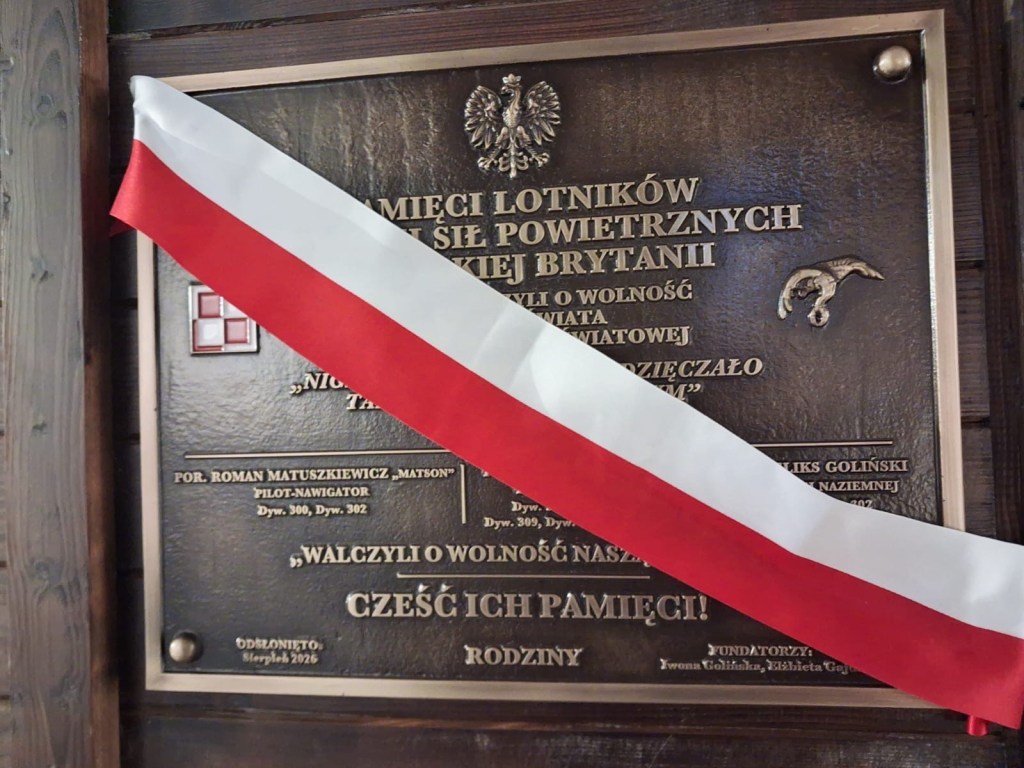
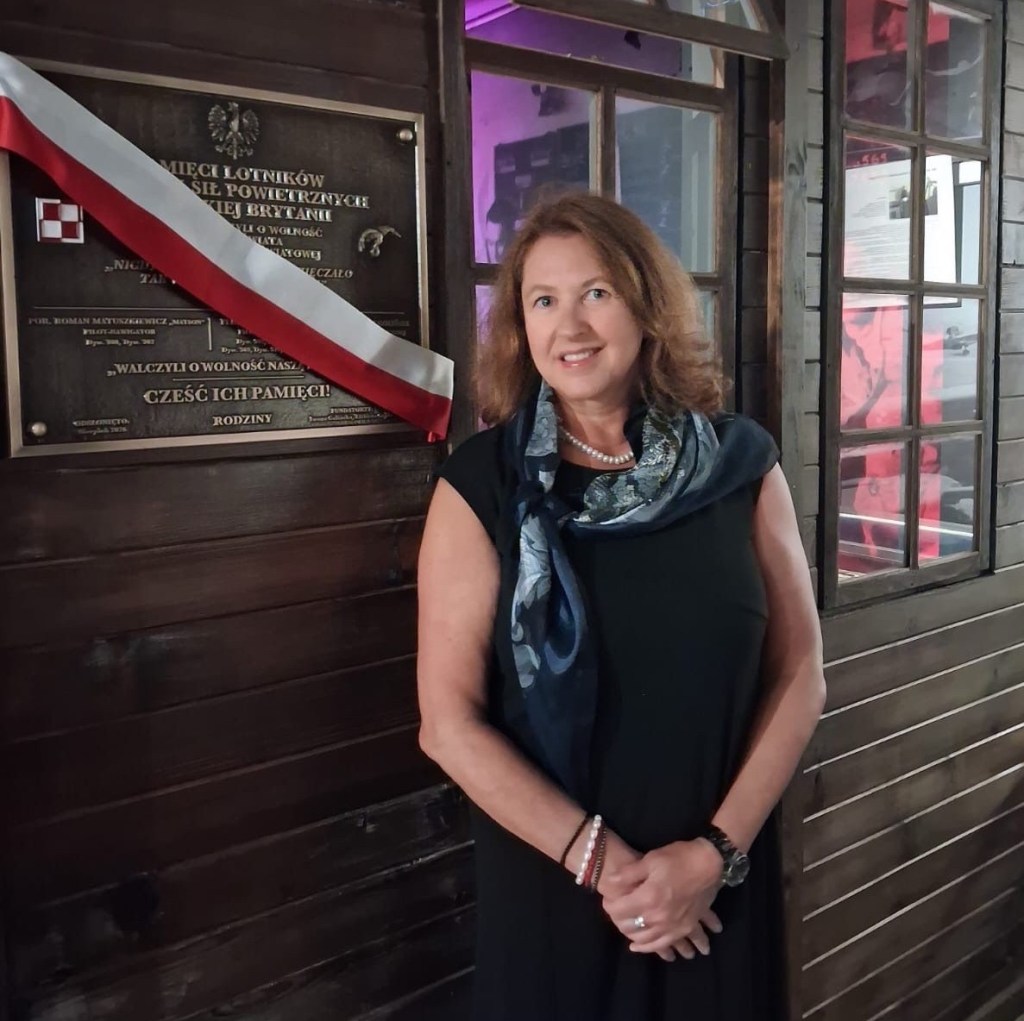
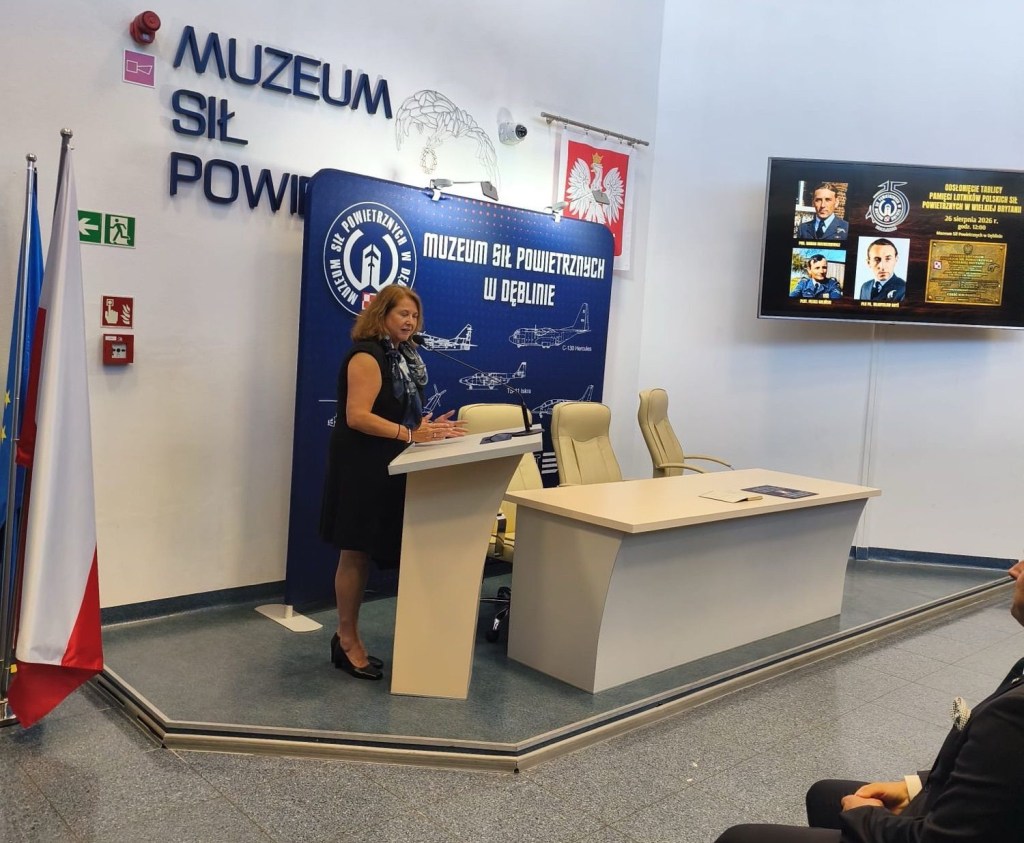
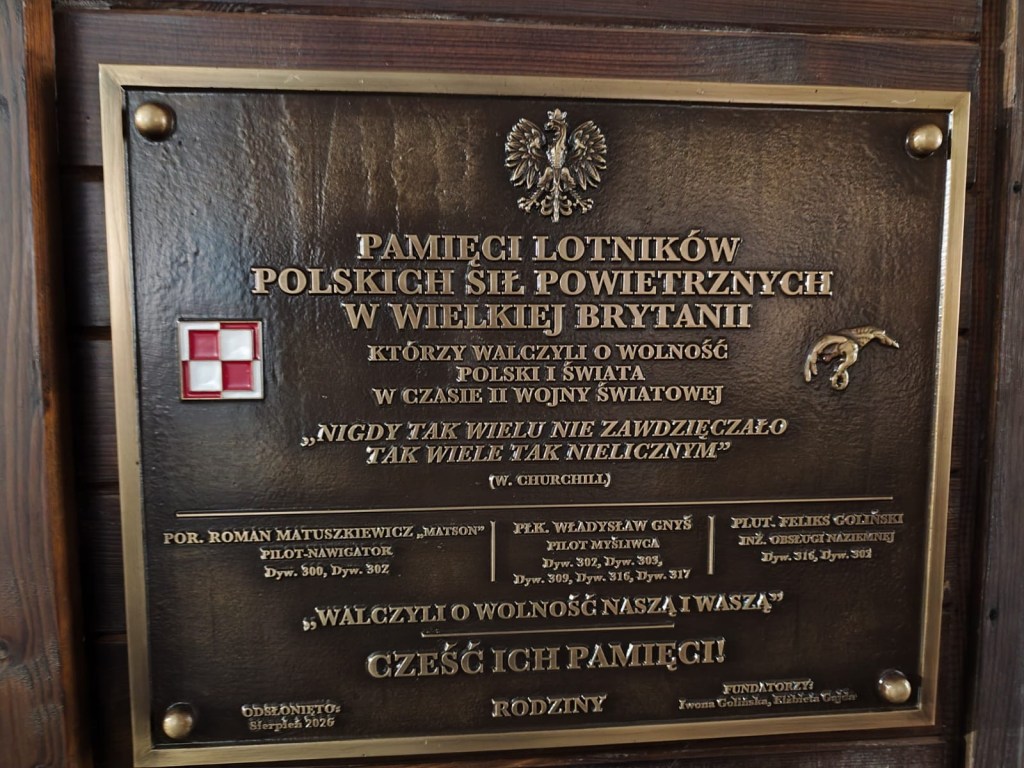
A memorial plaque honouring three Polish servicemen who served with the Polish Air Force in Britain during the Second World War was unveiled at the Polish Air Force Museum in Dęblin on 26 August 2026.
The plaque commemorates Pilot Officer Władysław Gnyś, Pilot Officer Roman Matuszkiewicz and Corporal Feliks Goliński. Jointly funded by Iwona Golińska and Elżbieta Gajda, it is both a family tribute and a memorial to the wider generation of Polish airmen and ground crews who fought for the freedom of Poland and Europe.
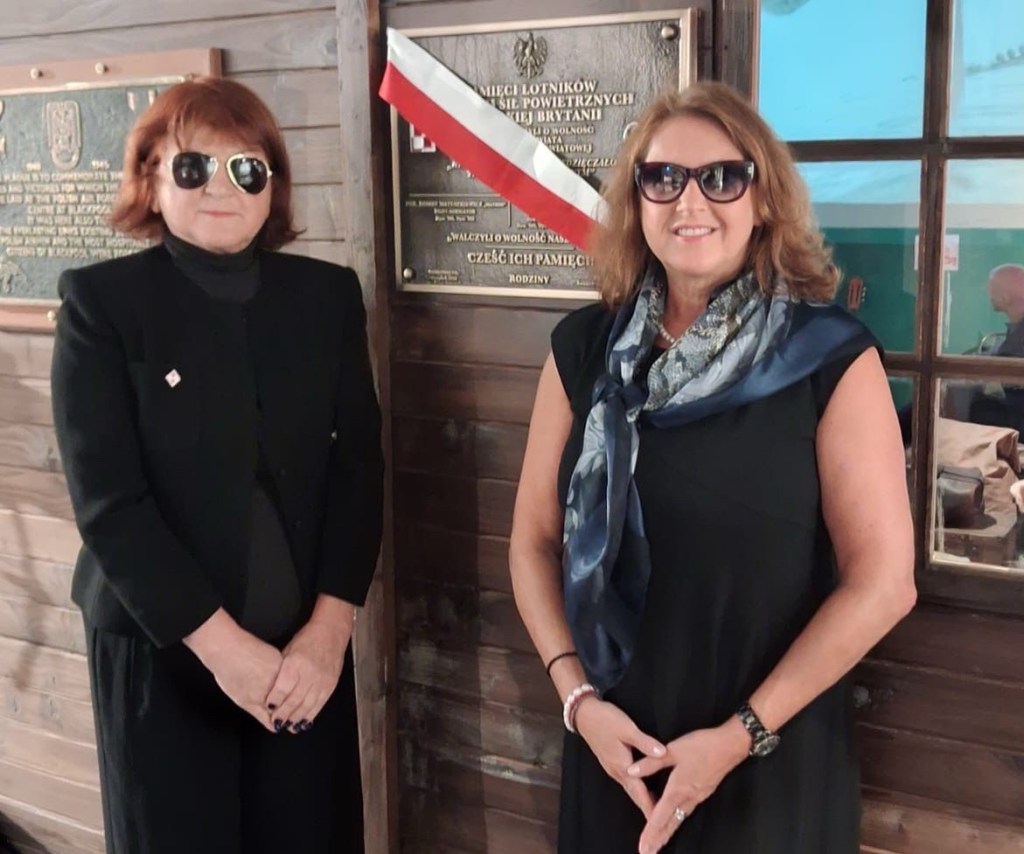
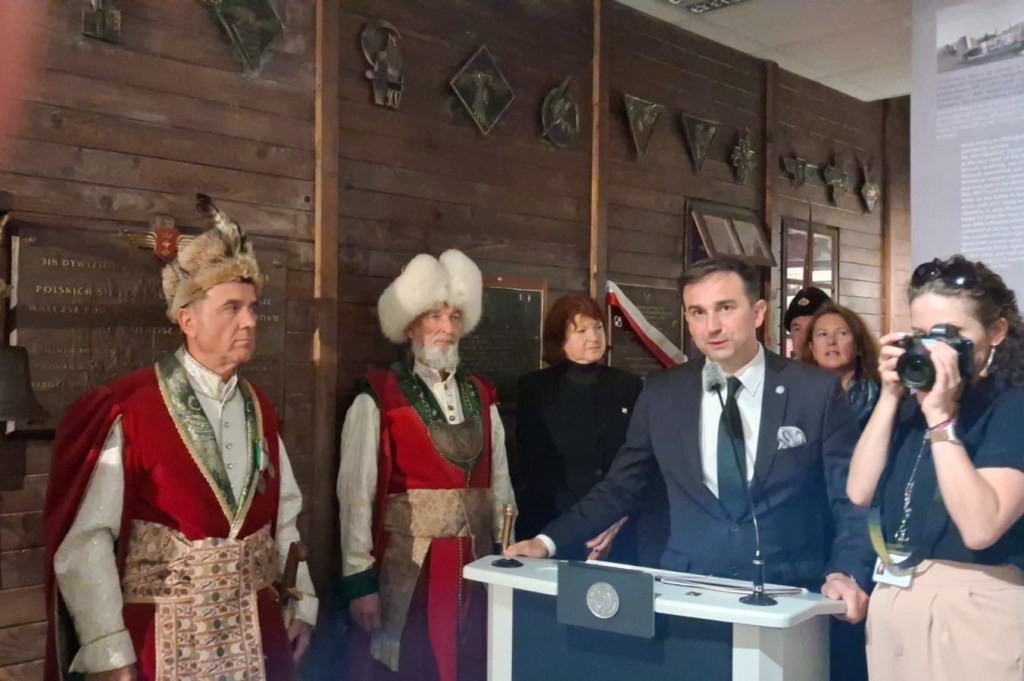
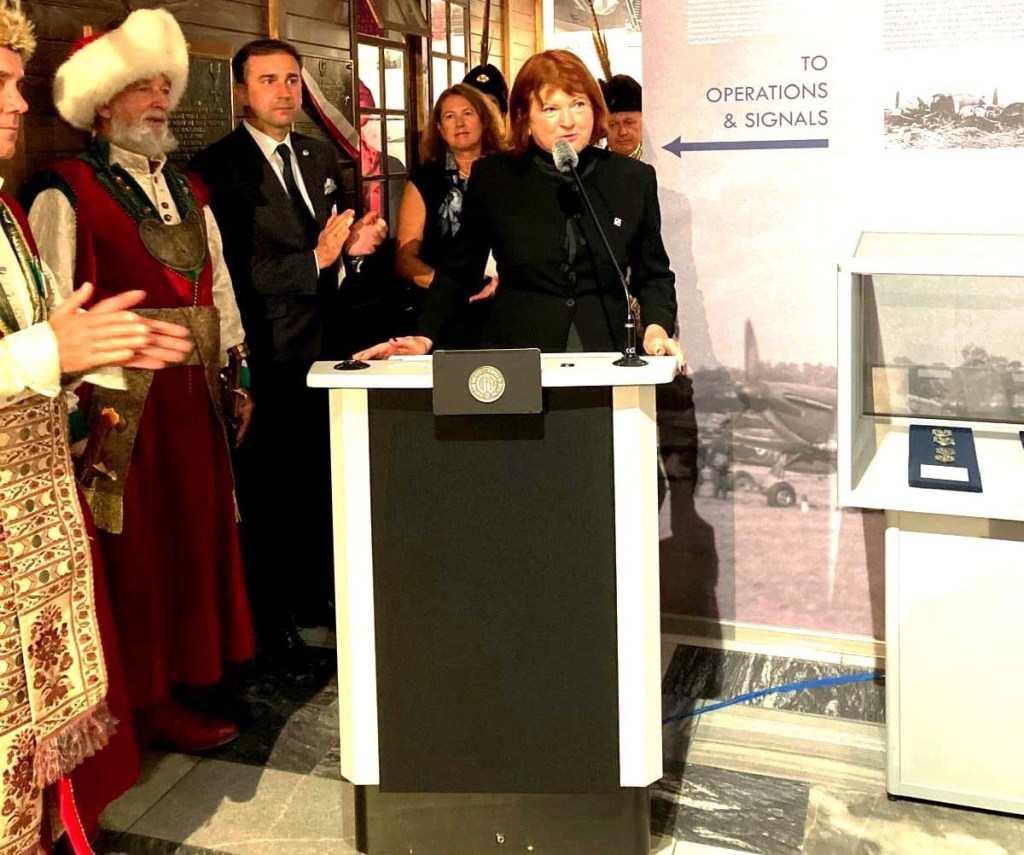
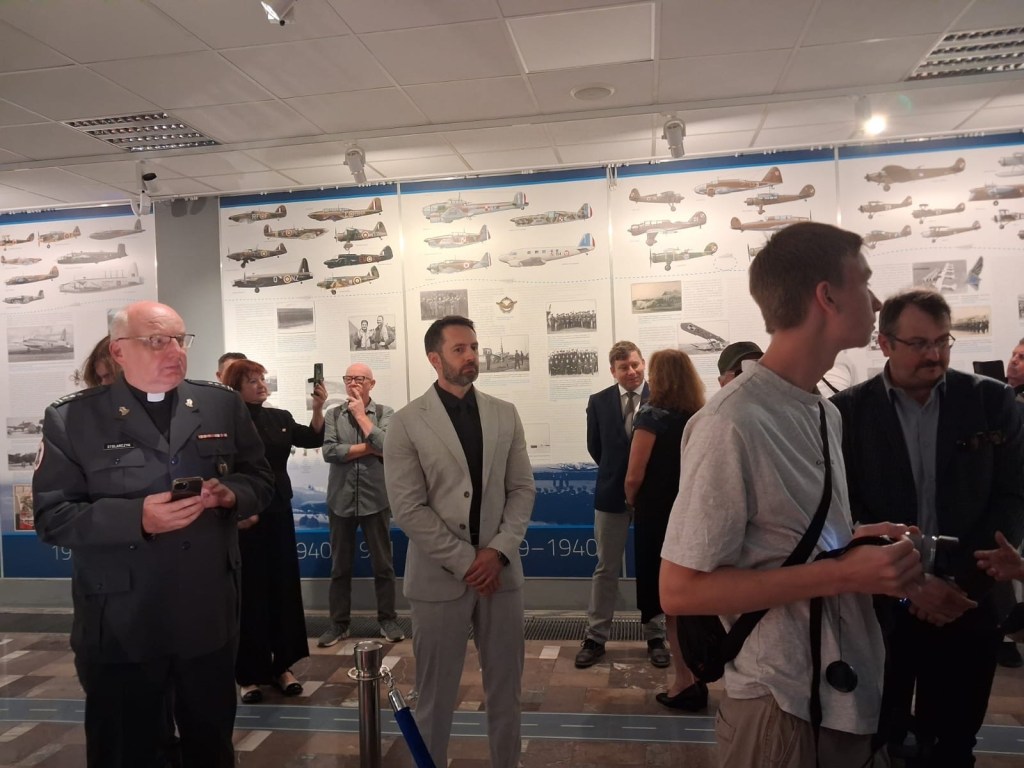
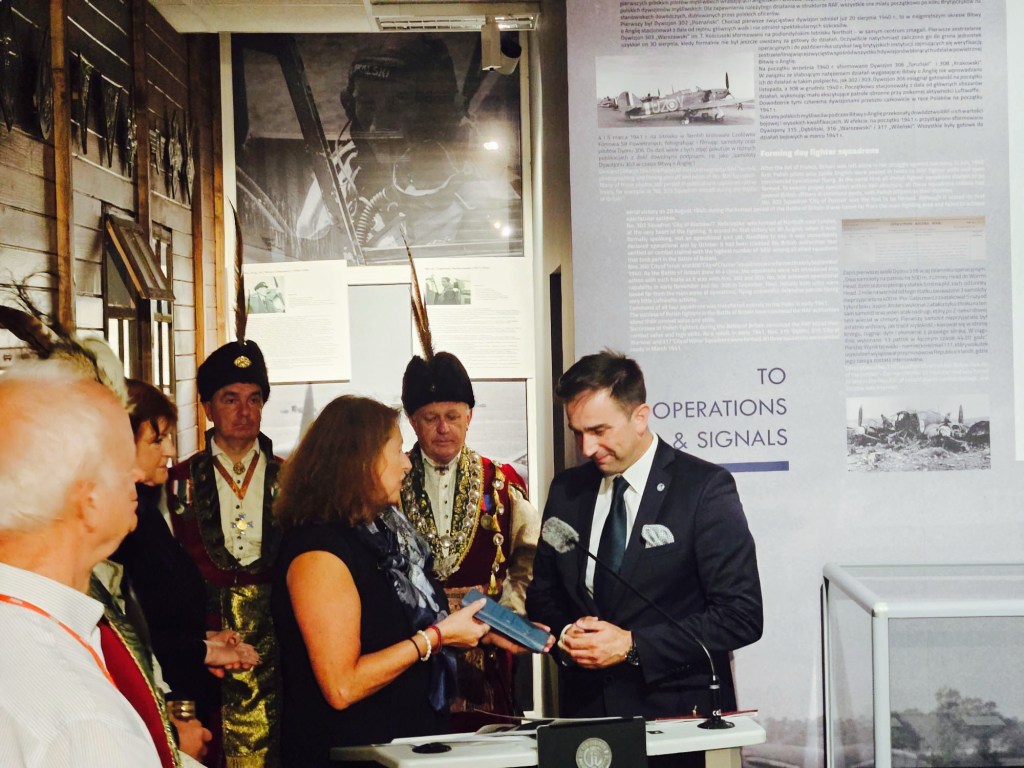
The ceremony brought together relatives, representatives of state institutions and the armed forces, historians, members of the Polish community and other distinguished guests.
Iwona Golińska attended the ceremony on behalf of the Goliński and Matuszkiewicz families from Great Britain and the United States.
A particularly moving moment was the participation of Joseph Felix Goliński—Feliks Goliński’s great-grandson from Great Britain, who bears his great-grandfather’s middle name.
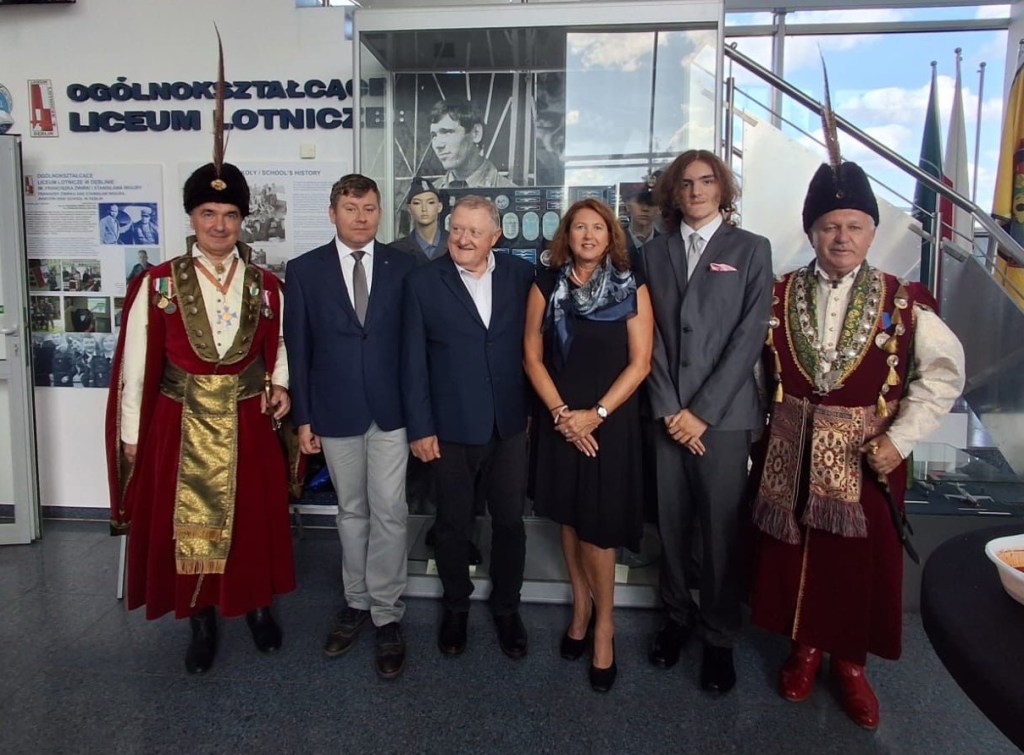
The Gnys family was represented by Elżbieta Gajda, Jan Gajda, Marek Gozdalik, Ewa and Mirek Podgajny, Basia Kilianek (niece of Colonel Pilot Władysław Gnys), Joanna and Zdzisław Kowalski, Barbara, Cezary, and Alan Ciężki, and Marcel Dec.
A Presidential Message on Service and Sacrifice.
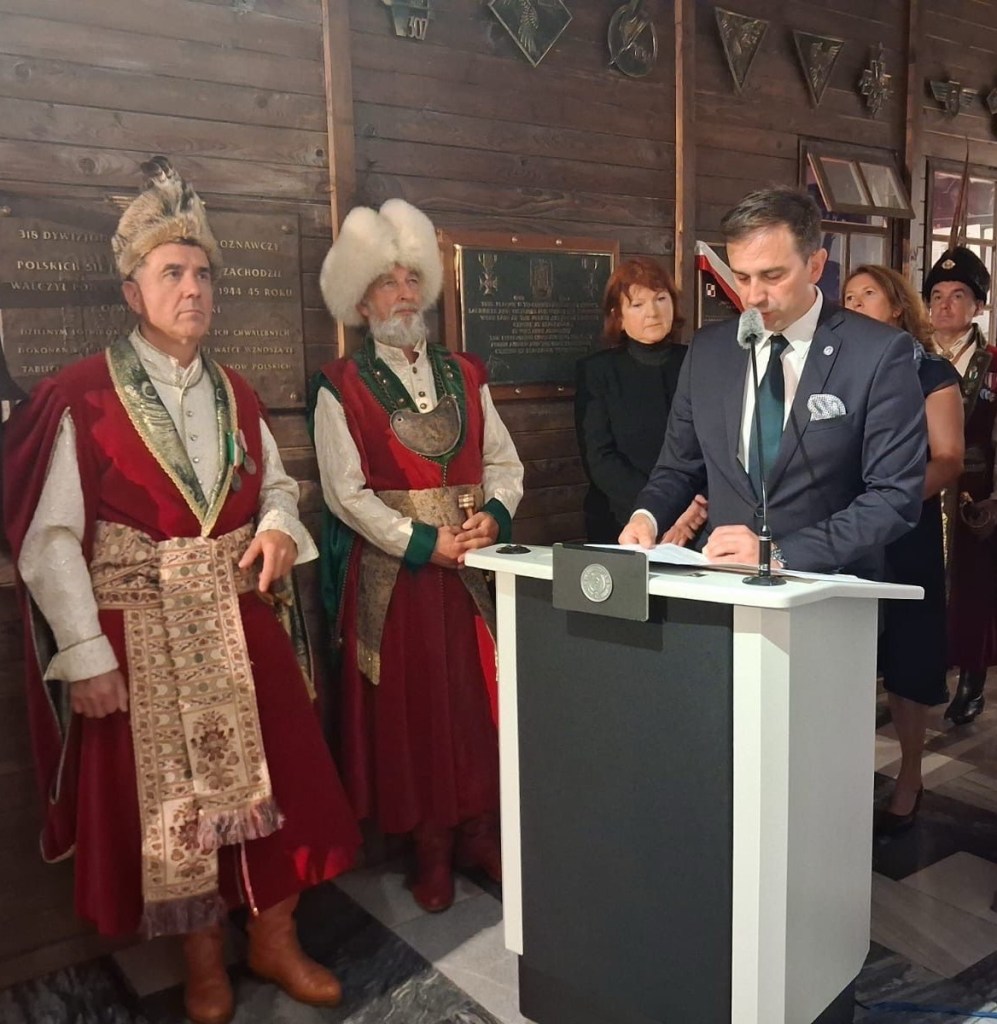
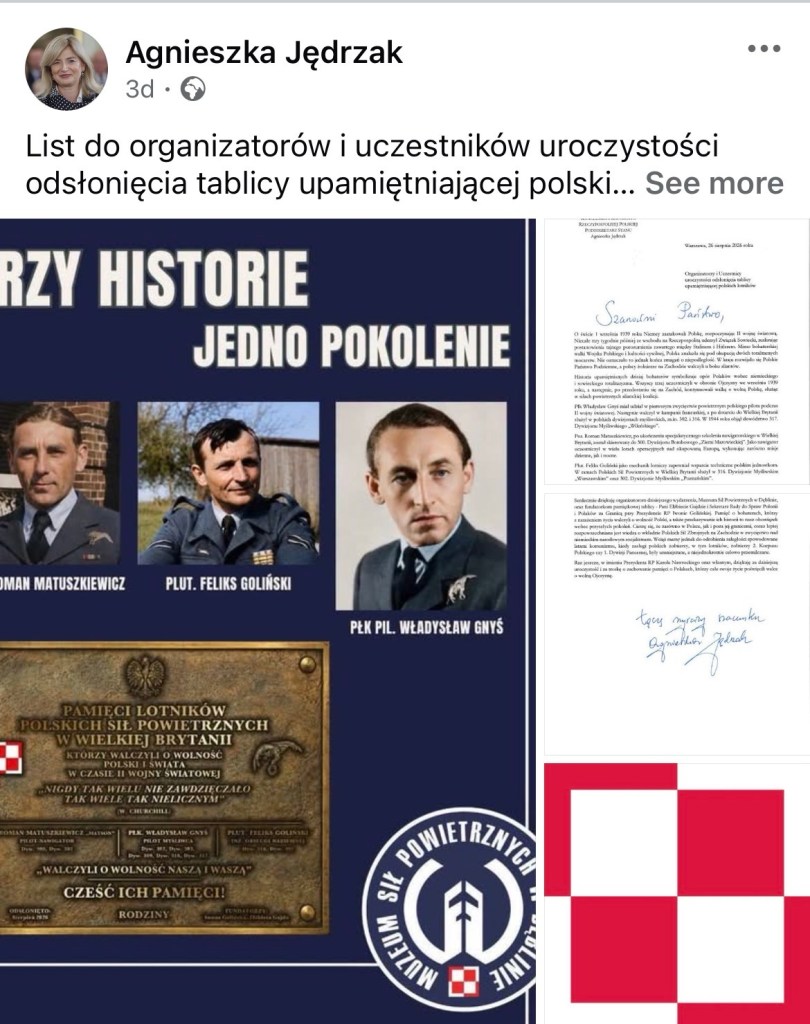
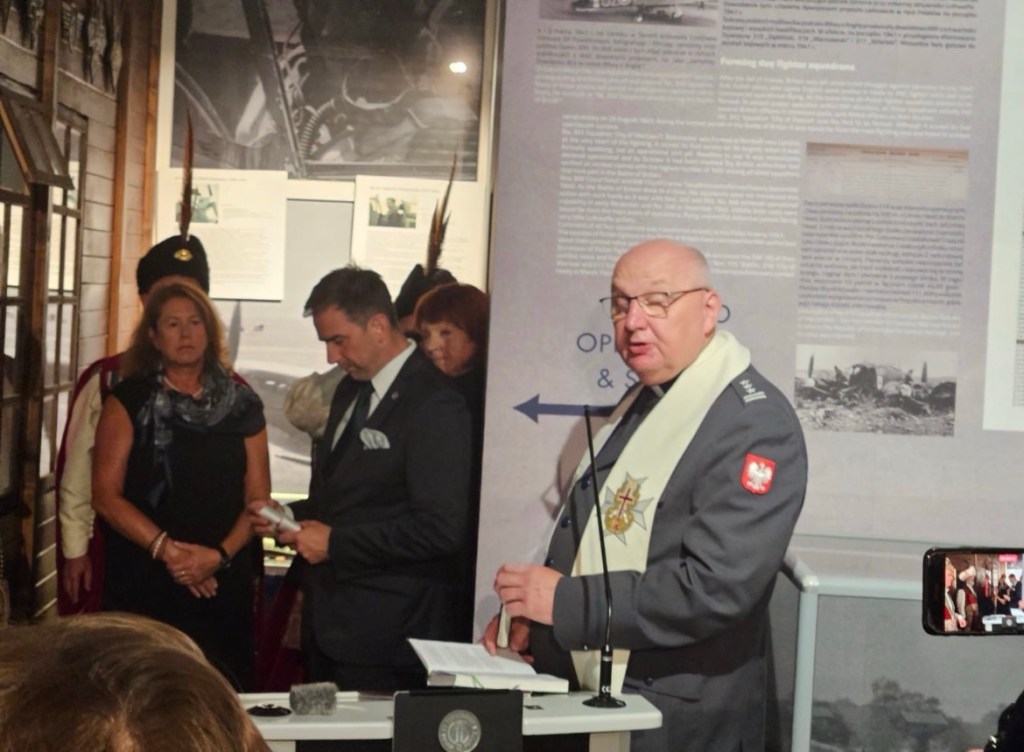
A central moment was the reading of a letter from the Chancellery of the President of the Republic of Poland, signed by Undersecretary of State Agnieszka Jędrzak on behalf of President Karol Nawrocki and in her own name. It was read by Jakub Mitek, Deputy Director of the Polish Air Force Museum in Dęblin.
The letter recalled the invasion of Poland and the continuation of the struggle for independence:
“At dawn on 1 September 1939, Germany attacked Poland, beginning the Second World War. Less than three weeks later, from the east, the Soviet Union attacked the Republic of Poland, implementing the provisions of the secret agreement concluded between Stalin and Hitler. Despite the heroic struggle of the Polish Army and civilian population, Poland found itself under the occupation of two totalitarian powers. This did not, however, mean the end of the struggle for independence. The Polish Underground State developed within the country, while Polish soldiers in the West fought alongside the Allies.”
It continued:
“The history of the heroes commemorated today symbolises the resistance of Poles to German and Soviet totalitarianism. All three took part in the defence of their homeland in September 1939 and subsequently, after reaching the West, continued the struggle for a free Poland, serving in the Allied air forces.”
The letter highlighted their wartime service:
“Colonel Władysław Gnyś took part in the first aerial victory achieved by a Polish pilot during the Second World War. He subsequently fought in the French campaign and, after reaching Great Britain, served in Polish fighter squadrons, including Nos. 302 and 316. In 1944, he took command of No. 317 ‘Wilno’ Fighter Squadron.”
“Pilot Officer Roman Matuszkiewicz, after completing specialist navigator training in Great Britain, was assigned to No. 300 ‘Mazovia’ Bomber Squadron. As a navigator, he took part in numerous operational flights over occupied Europe, carrying out both day and night missions.”
“Corporal Feliks Goliński, as an aircraft mechanic, provided technical support to Polish units. As part of the Polish Air Force in Great Britain, he served with No. 316 ‘Warsaw’ Fighter Squadron and No. 302 ‘Poznań’ Fighter Squadron.”
The letter also addressed the post-war fate of Polish servicemen:
“Unfortunately, the capitulation of Germany on 8 May 1945 did not bring sovereignty to Poland. Our country found itself within the Soviet sphere of influence, and power was taken by a communist regime subordinated to Moscow.
The officers commemorated today, like many other veterans, decided not to return to Poland, where they could have faced repression and marginalisation. They began new lives in Canada, the United States and Great Britain. They did not, however, sever their ties with their homeland and remained faithful patriots until the end of their lives.”
It thanked the Museum and plaque founders, Elżbieta Gajda and Iwona Golińska, Secretary of the Council for Polonia and Poles Abroad under the President of the Republic of Poland, and stressed the duty to preserve their stories:
“Remembering the heroes who risked their lives fighting for Poland’s freedom, and passing their stories on, is our duty to future generations.”
The letter further called for recognition of the Polish Armed Forces in the West:
“I am pleased that both in Poland and beyond its borders, knowledge of the contribution of the Polish Armed Forces in the West to the victory over German National Socialism is becoming increasingly widespread. We still have much to make up for, however, after the years of communism, when the achievements of Polish soldiers, including airmen, soldiers of the 2nd Polish Corps and the 1st Armoured Division, were diminished and, on many occasions, deliberately suppressed.”
It concluded:
“Once again, on behalf of President of the Republic of Poland Karol Nawrocki and on my own behalf, I thank you for today’s ceremony and for your commitment to preserving the memory of Poles who devoted their entire lives to the struggle for a free homeland.”
Prayer, Blessing and Family Remembrance
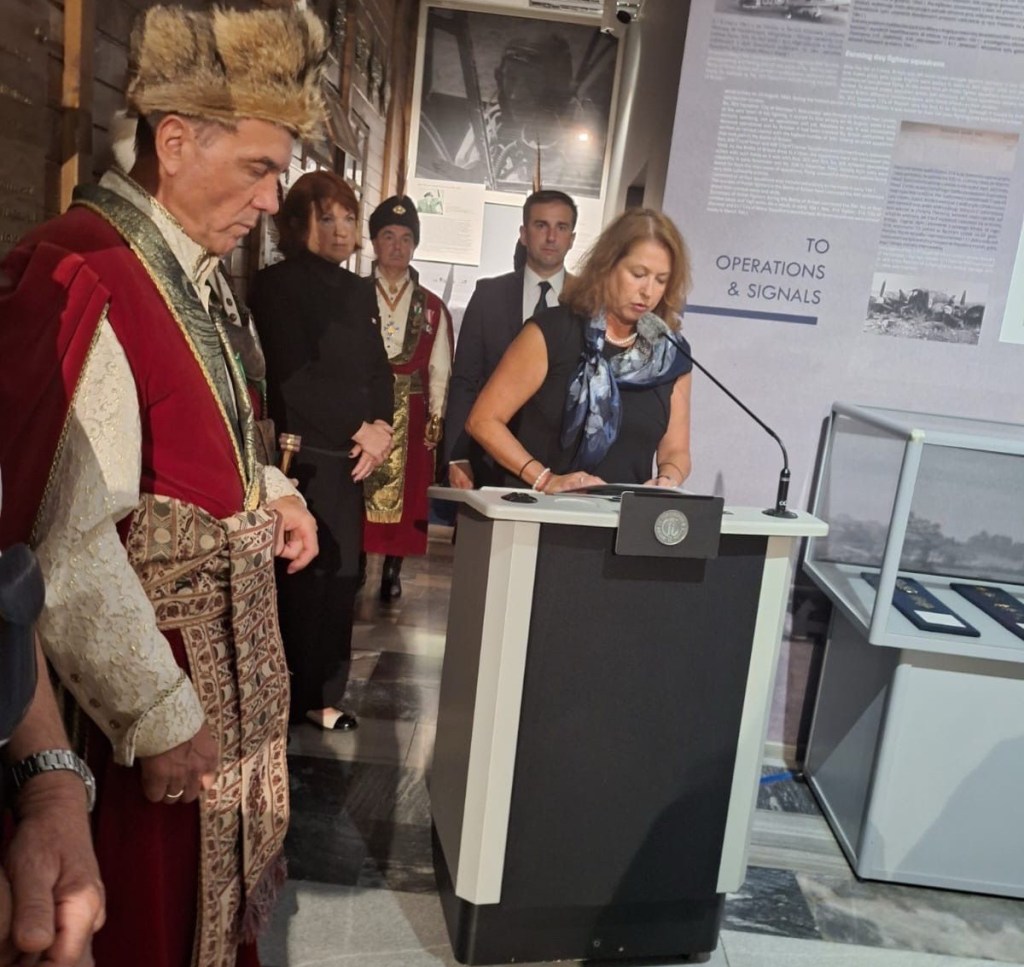
The chaplain of the military garrison church in Dęblin Fr. Colonel Mariusz Stolarczyk blessed the plaque and led a prayer for those who fought for freedom and the security of future generations. The ceremony’s spiritual dimension linked family remembrance with the wider history of the Polish Air Force.
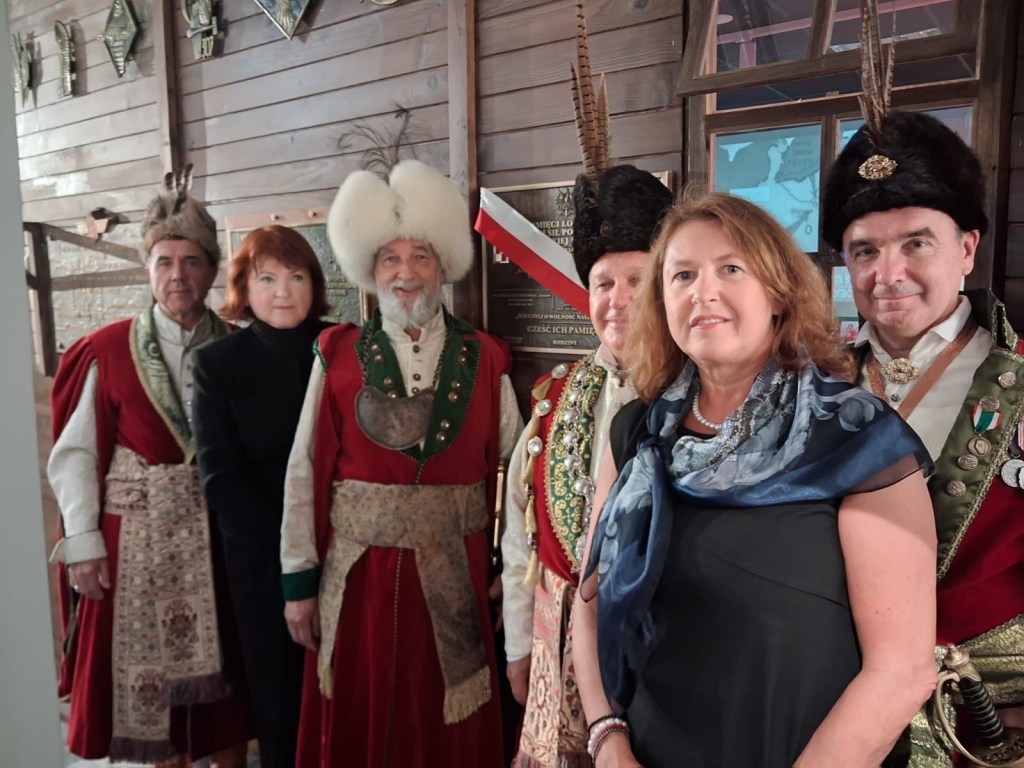
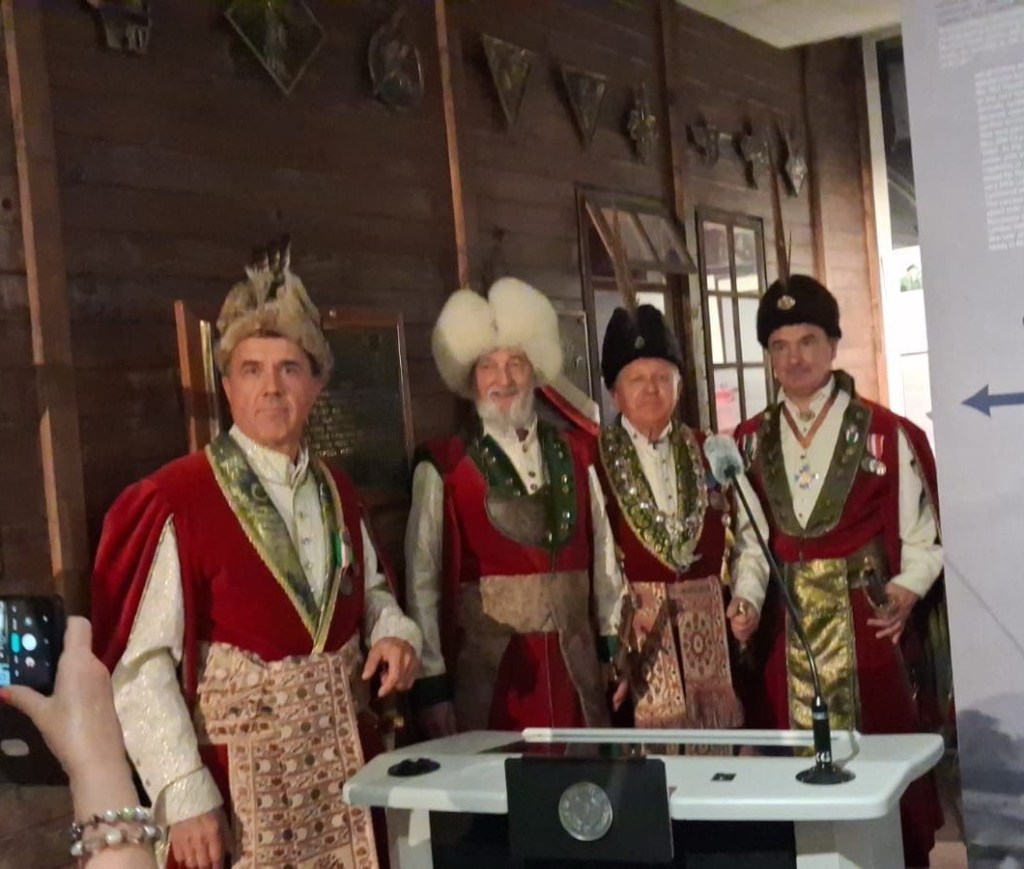
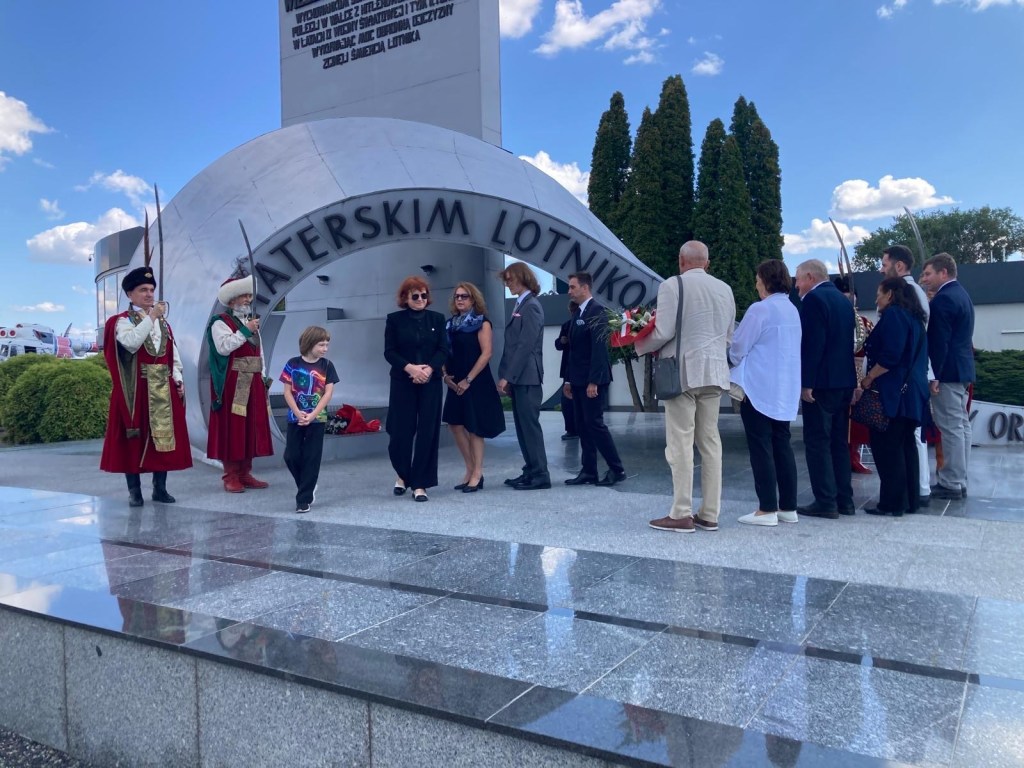
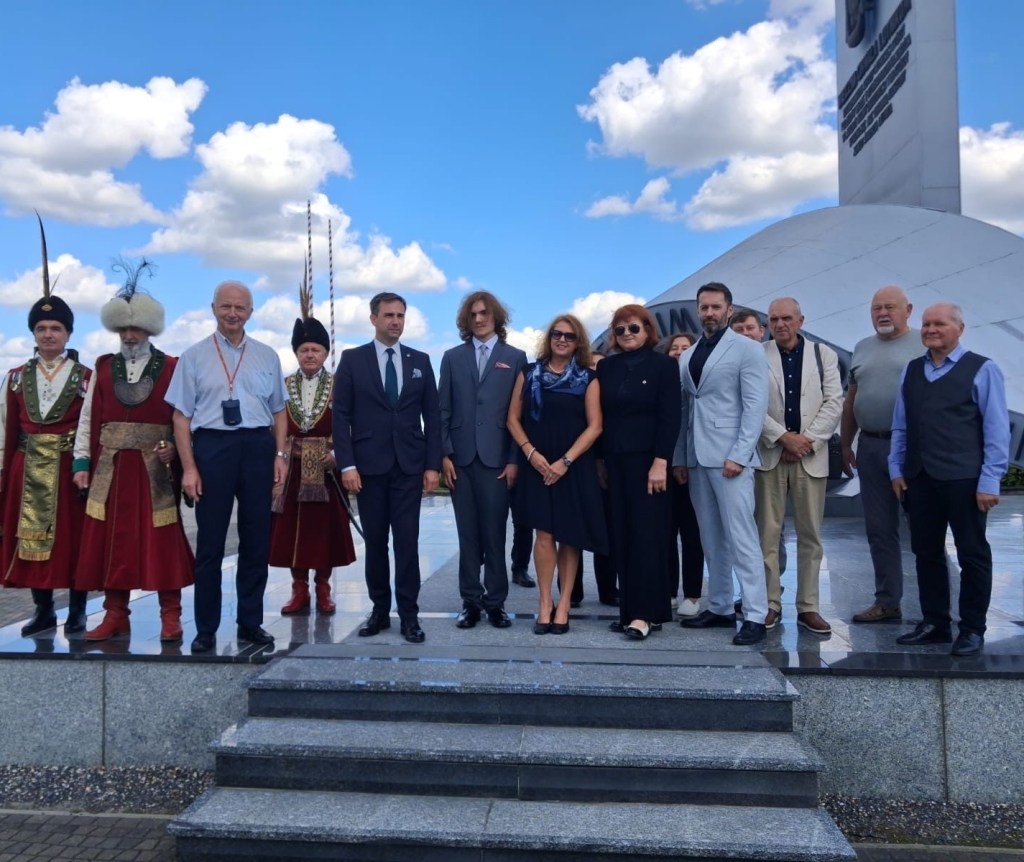
Members of the Lublin Marksmen’s Brotherhood (Lubelskie Bractwo Kurkowe) also paid special tribute during the ceremony—led by Consul-Secretary Piotr Semeniuk, the 2026 Lublin Marksmen’s King Robert Lipski “the Prudent,” and Marshal-Armorer Marek Kłodziński—appearing in ceremonial historical attire and carrying sabers.
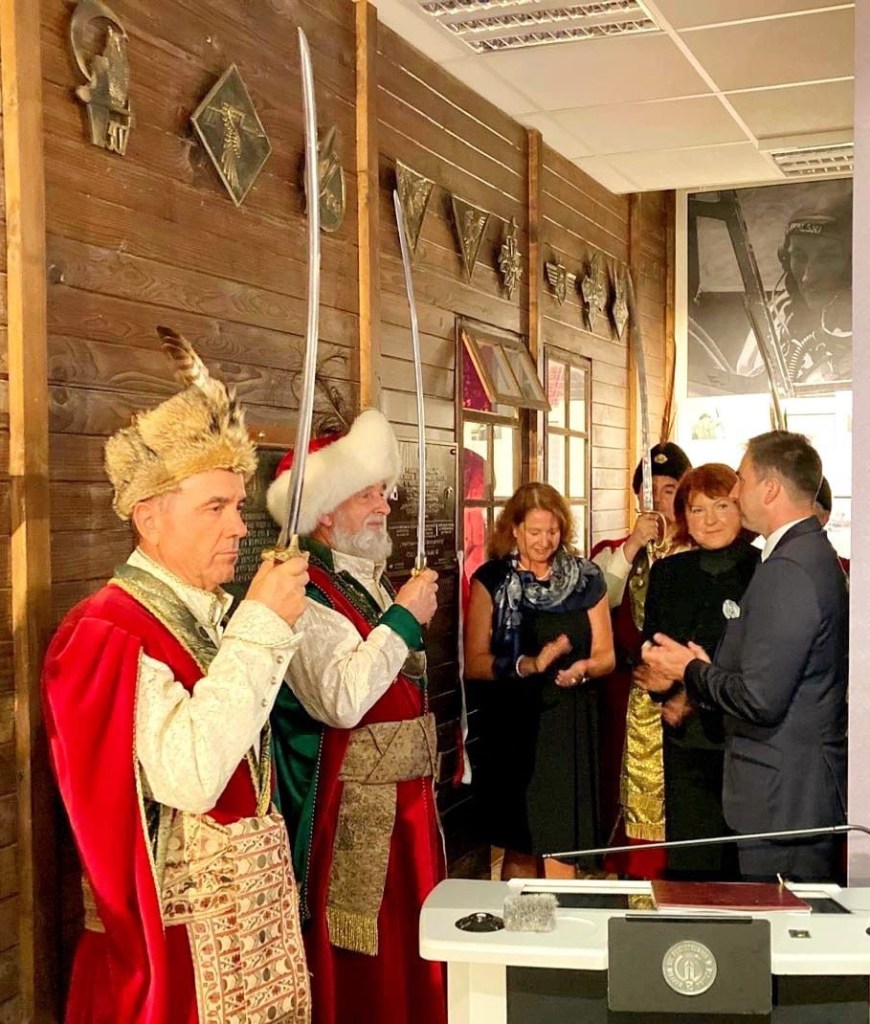
Their presence lent a particularly solemn character to the event. Marksmen’s brotherhoods represent one of Poland’s oldest organizational traditions, with roots reaching back to the Middle Ages.
After the blessing, Jakub Mitek read a letter from Stanisław Gnyś, the son of Władysław Gnyś.
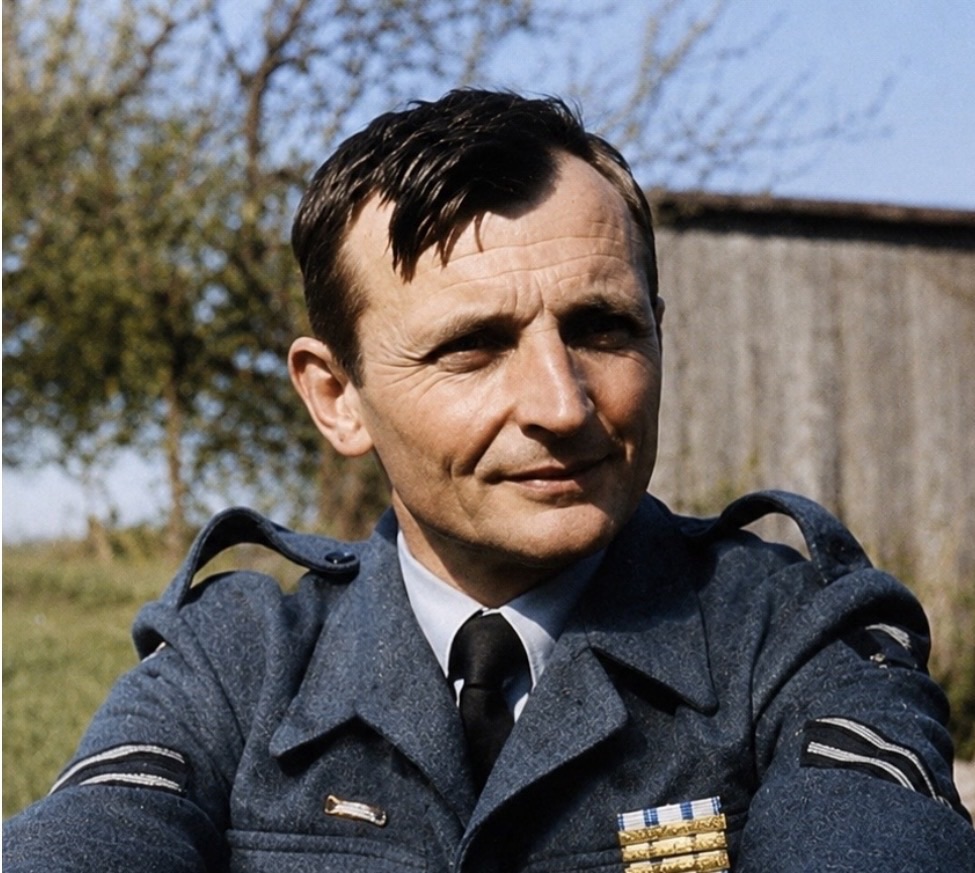
On 7 September 1939, during the Polish September Campaign, Władysław Gnyś achieved the first aerial victories credited to a Polish pilot in the Second World War. He later fought in France, reached Great Britain and served in Nos. 302 and 316 Polish Fighter Squadrons. In 1944, he became commanding officer of No. 317 ‘Wilno’ Fighter Squadron.
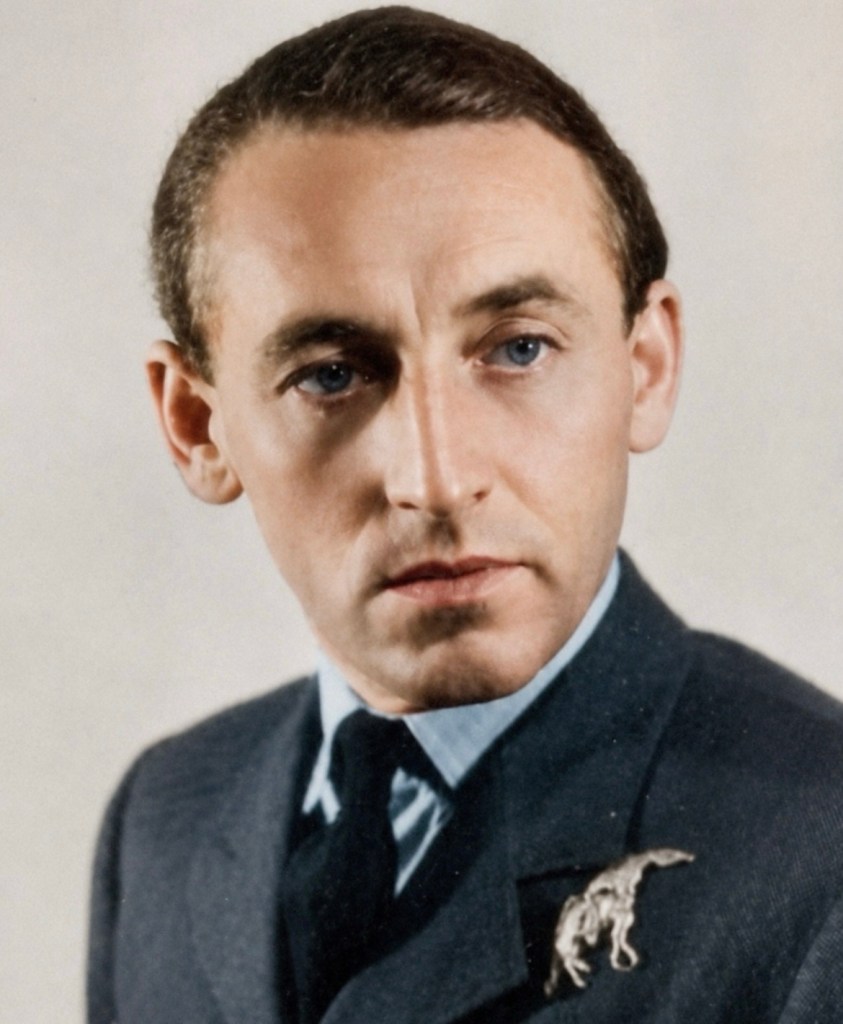
His career embodied the determination of Polish airmen who continued the fight in the West after the defeat of September 1939.
Roman Matuszkiewicz’s Logbook Returns to Poland
The ceremony also saw the presentation of Pilot Officer Roman Matuszkiewicz’s original wartime flying logbook to the Polish Air Force Museum.
A letter from Richard Matson, Matuszkiewicz’s eldest son, was read by Iwona Golińska, who donated the logbook on behalf of the Matuszkiewicz–Matson family.
The document records Matuszkiewicz’s training, service and operational flights. He trained in Canada, Scotland and England and flew aircraft including the Avro Anson, Wellington, Halifax and Lancaster.
With No. 300 ‘Mazovia’ Bomber Squadron, he completed 28 operational missions over occupied Europe and Germany, including a night flight over German-occupied Szczecin lasting more than ten hours.
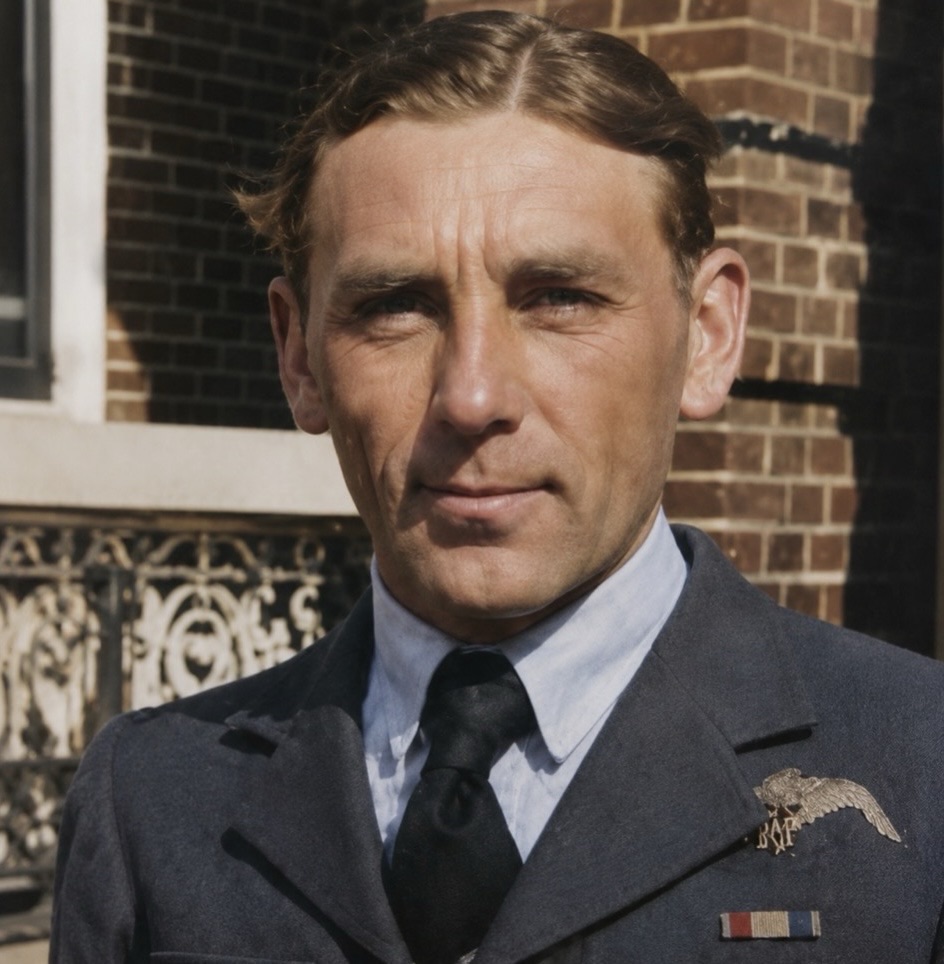
As a navigator, he relied on maps, instruments, calculations, experience and concentration to guide his crew safely to its target and back without modern navigation systems. The logbook was formally received by Deputy Director Jakub Mitek.
After decades in family possession, it had returned to Poland and would now preserve a personal record of Polish service in the West.
The Forgotten Work Behind Every Sortie
In her address, Iwona Golińska recalled Feliks Goliński and Roman Matuszkiewicz, as well as Władysław Gnyś, while emphasising the often-overlooked contribution of mechanics and ground personnel.
“We are not merely unveiling a plaque bearing three names. We are restoring the memory of people who sacrificed their youth, their families and often their entire lives to the struggle for the freedom of Poland and Europe.”
Born in 1905, Feliks Goliński ran a motor workshop in Toruń before the war. In 1932, he began military service with the 4th Air Regiment in Toruń as an aircraft mechanic. After war broke out, he travelled through Romania to France and then Great Britain, arriving at RAF Eastchurch in February 1940.
He later served with No. 316 ‘Warsaw’ Fighter Squadron and No. 302 ‘Poznań’ Fighter Squadron. He was not a fighter pilot and did not fly combat missions, but mechanics repaired damaged aircraft under intense pressure and dangerous conditions, making every subsequent sortie possible.
Goliński received the Medal Lotniczy on three occasions, along with the 1939–1945 Star, France and Germany Star, Defence Medal and War Medal 1939–1945. After the war, he remained in exile in London, helped build Polish community life and passed his love of Poland to his children and grandchildren.
Golińska stressed the interdependence of pilots, navigators and ground crews:
“A pilot could not fly without a mechanic. A mechanic’s work could only achieve its purpose through the pilot. A navigator could not complete his mission without the rest of his crew.”
Polish airmen played a significant role in the Battle of Britain, with Nos. 302 and 303 Polish Fighter Squadrons among the units that fought in it.
Remembering their pilots also means remembering the mechanics, engineers, technicians, armourers and airfield personnel who made every mission possible.
“After Many Years, You Have Symbolically Returned to Your Homeland.”
Golińska described the plaque as both a memorial and a commitment:
She concluded:
“Grandfather Feliks.
Uncle Roman.
Pilot Officer Władysław Gnyś.
After many years, you have symbolically returned to your homeland today.
Your service has not been forgotten.
Your names will remain here for generations to come.
Let everyone who stops before this plaque remember that freedom can never be taken for granted, and that it was secured through the courage of people like you.
Glory to your memory.”
A Wider Tribute to Polish Aviation
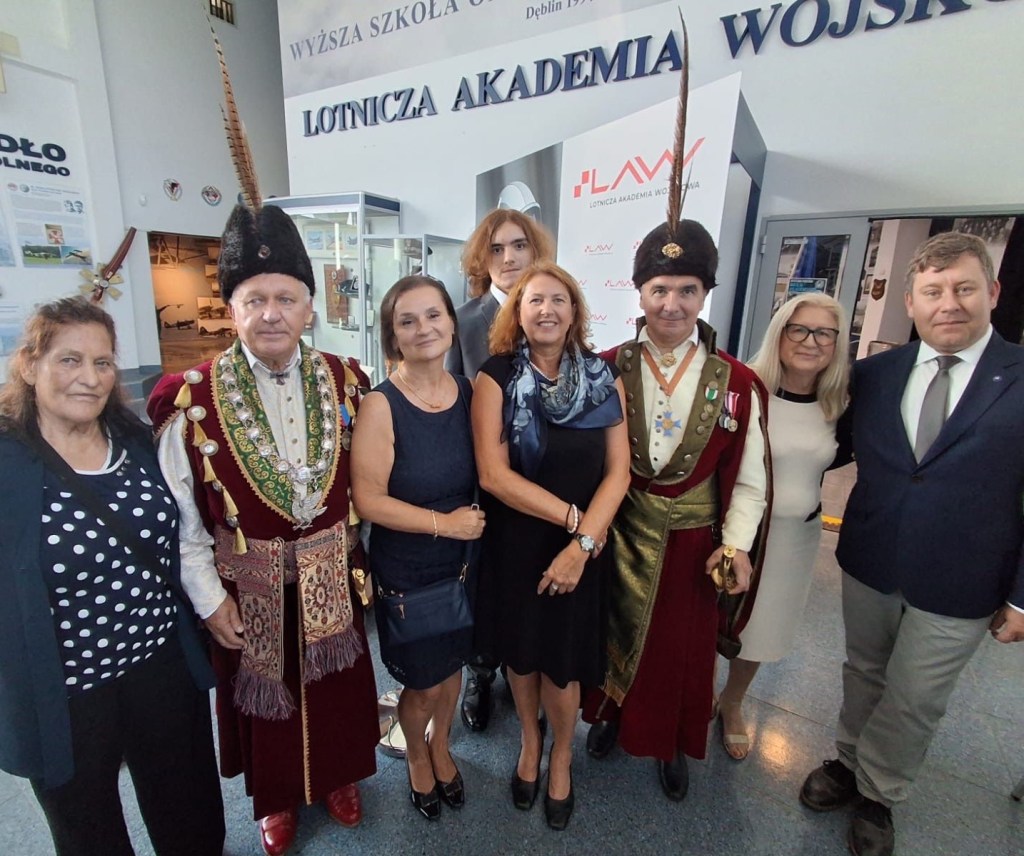
After the ceremony, guests gathered in the Museum auditorium for a presentation about the three airmen. Iwona Golińska discussed her family history and surviving documents and memorabilia.
A key highlight of the meeting was a presentation by Marek Siuta, an expert from the Aviation Museum in Kraków, who shared insights into the history of Polish aviation and the importance of preserving material evidence of the past; the event was also attended by Jacek Zagożdżon—Head and Curator of the Aviation History and Education Department at the Dęblin Museum.
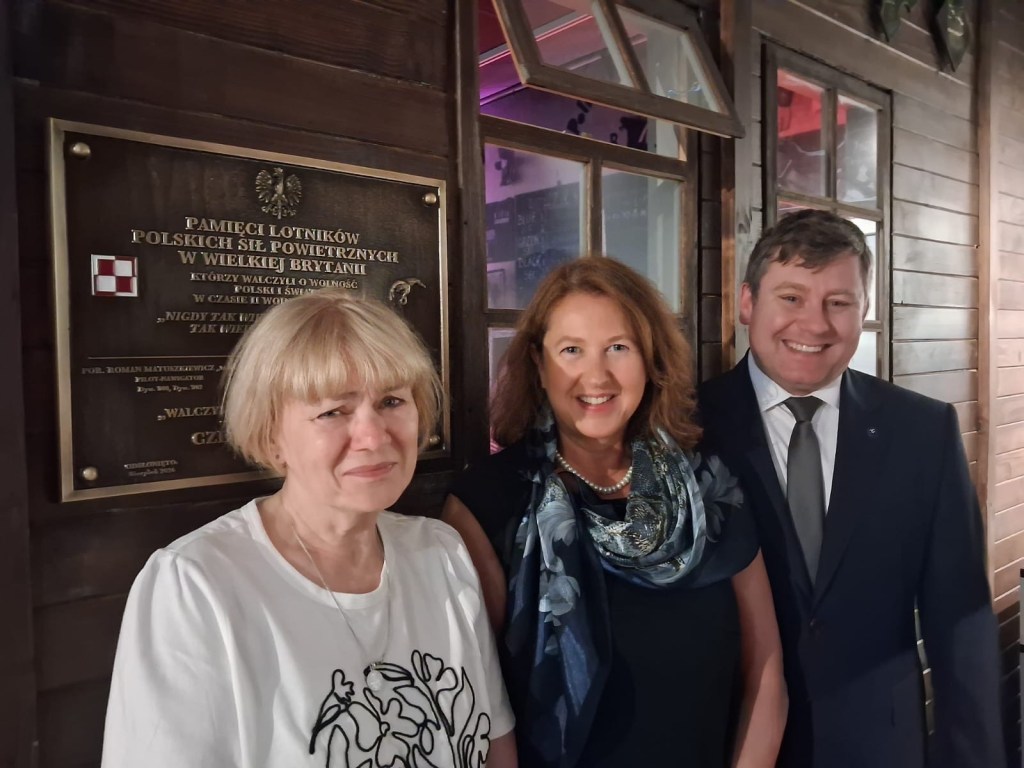
Iwona Golińska spoke again, sharing the story of her family and the mementos that have been preserved.
During the meeting, she also presented the museum with a plaque from the Polish Sue Association, commemorating Polish airmen and honoring their role in the Battle of Britain.
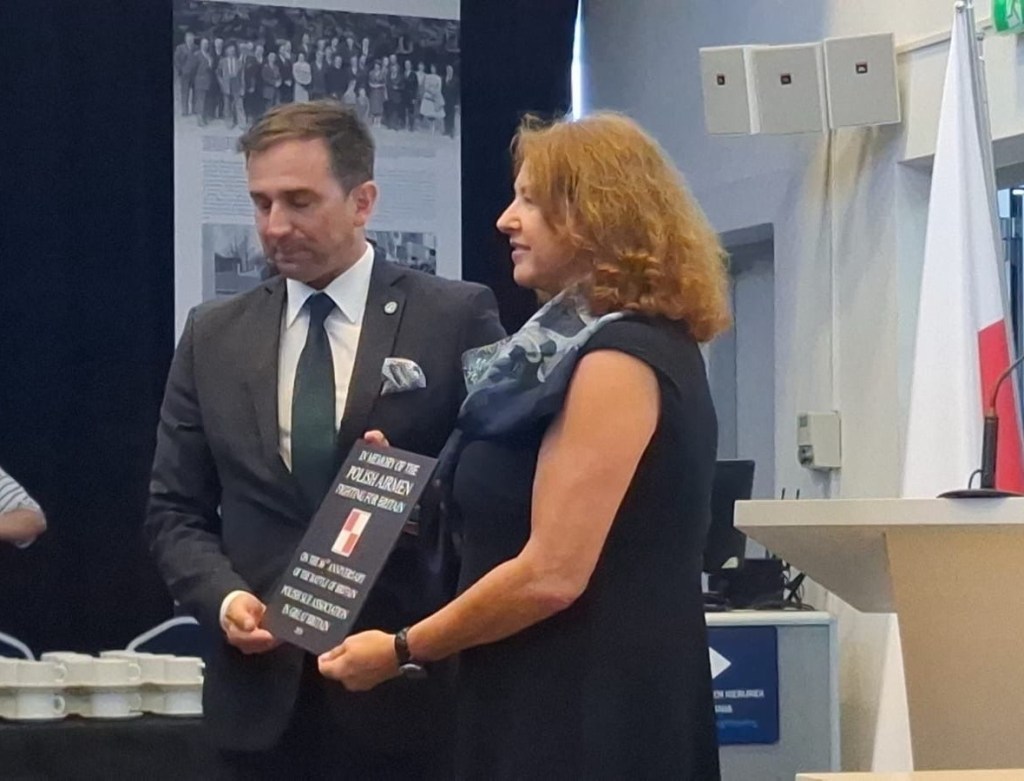
The year 2026 marks the 86th anniversary of the Battle of Britain, a defining moment of the Second World War and an important chapter in the history of the Polish wings.
Among the distinguished guests were members of the Lublin Riflemen’s Brotherhood, Dr Mateusz Marek, Director of the International Branch of the Institute of National Remembrance in Warsaw, and journalist Dorota Kania, who attended with her family.
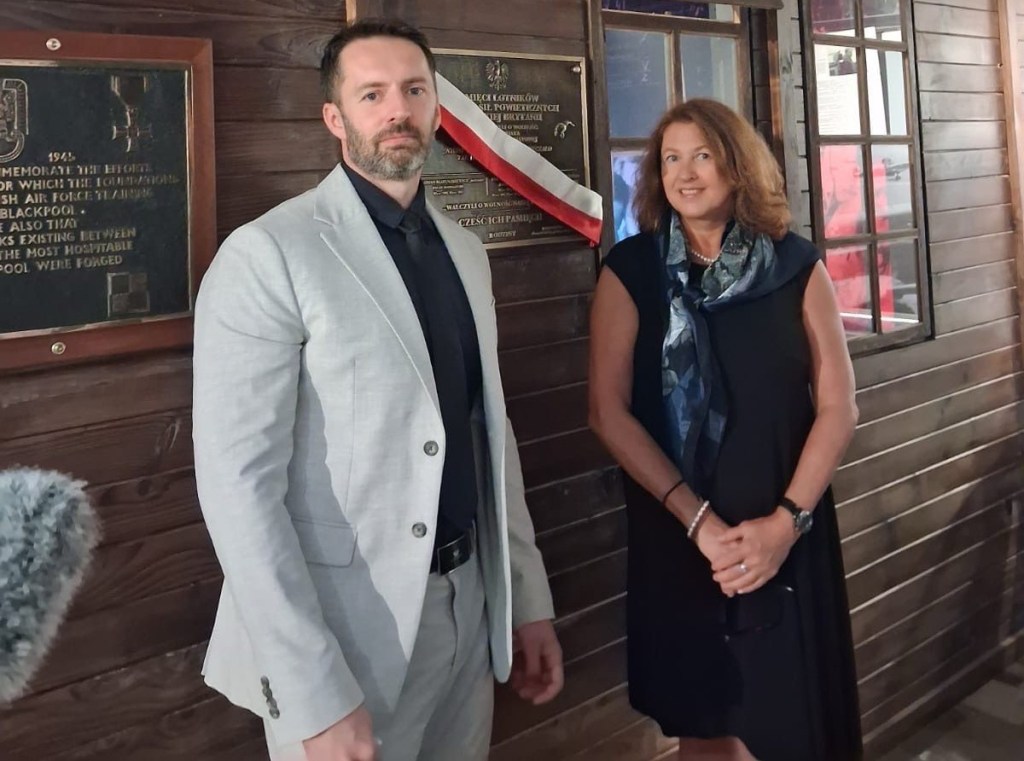
Relatives of Polish airmen, historians, representatives of Polish institutions and members of the Polish community also took part.
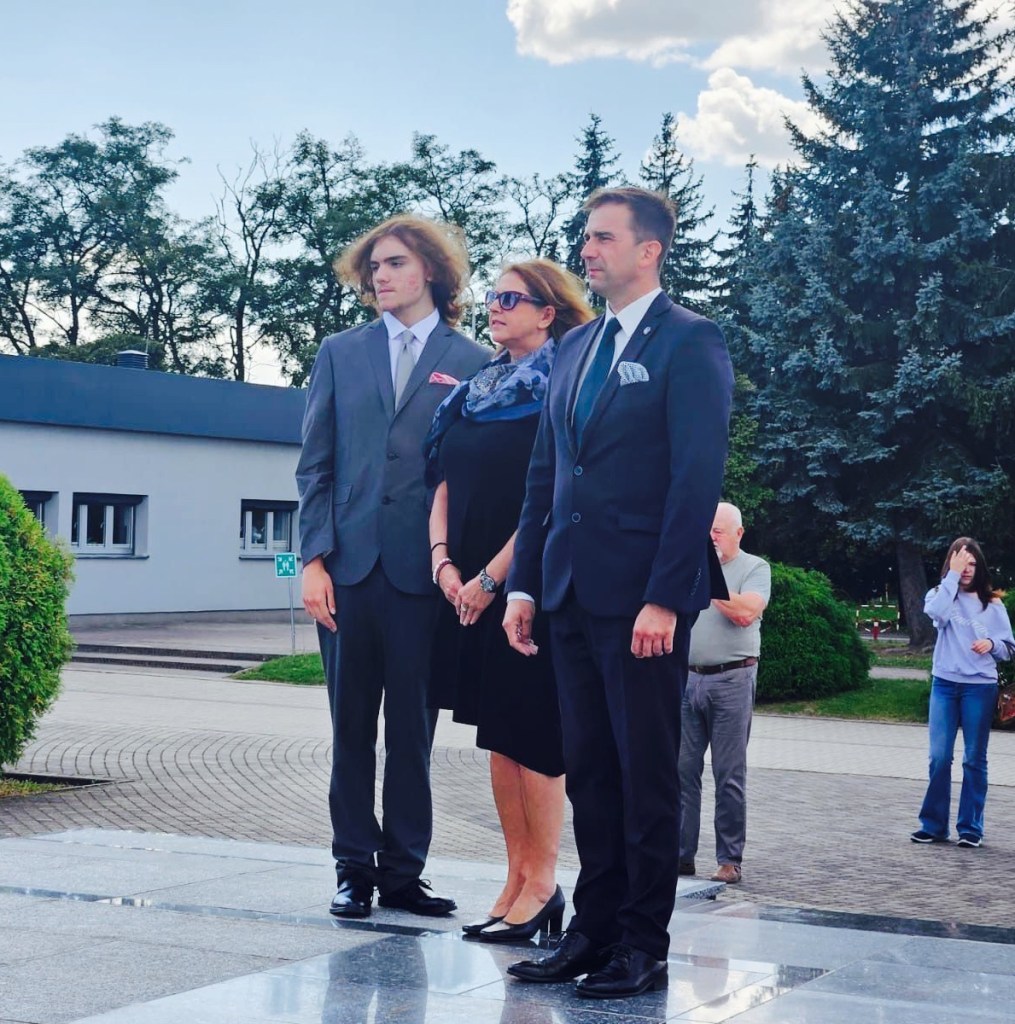
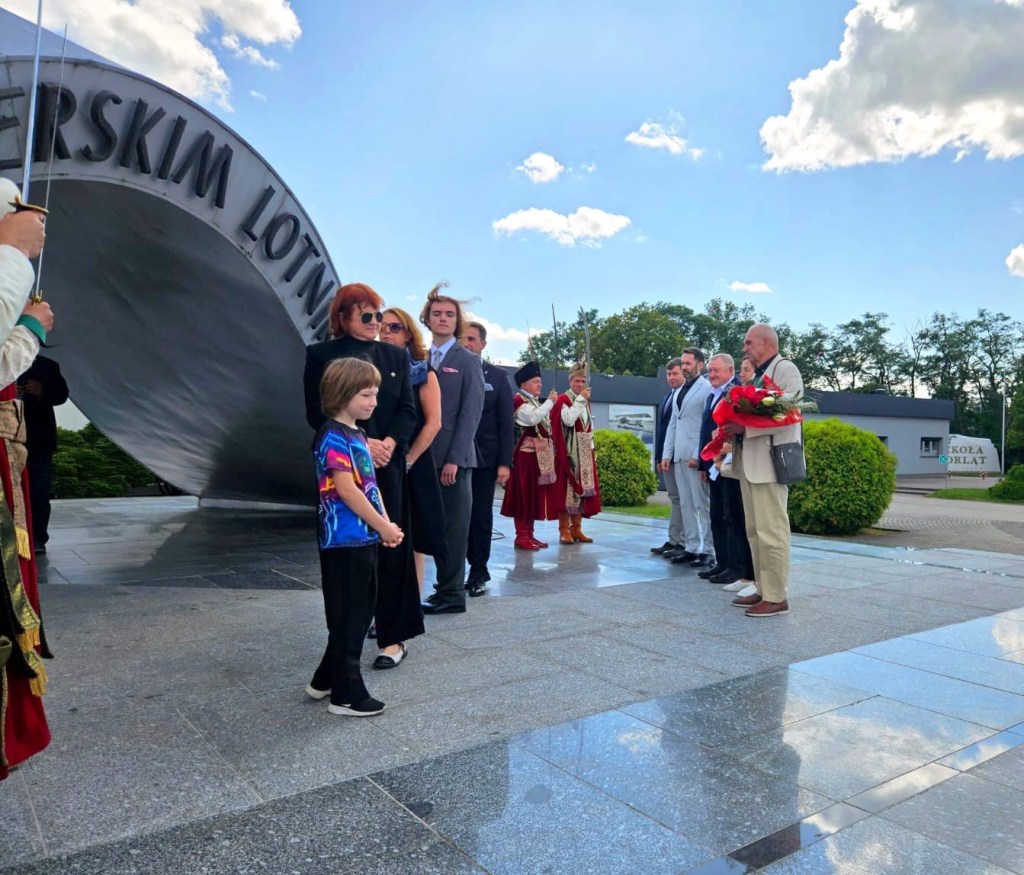
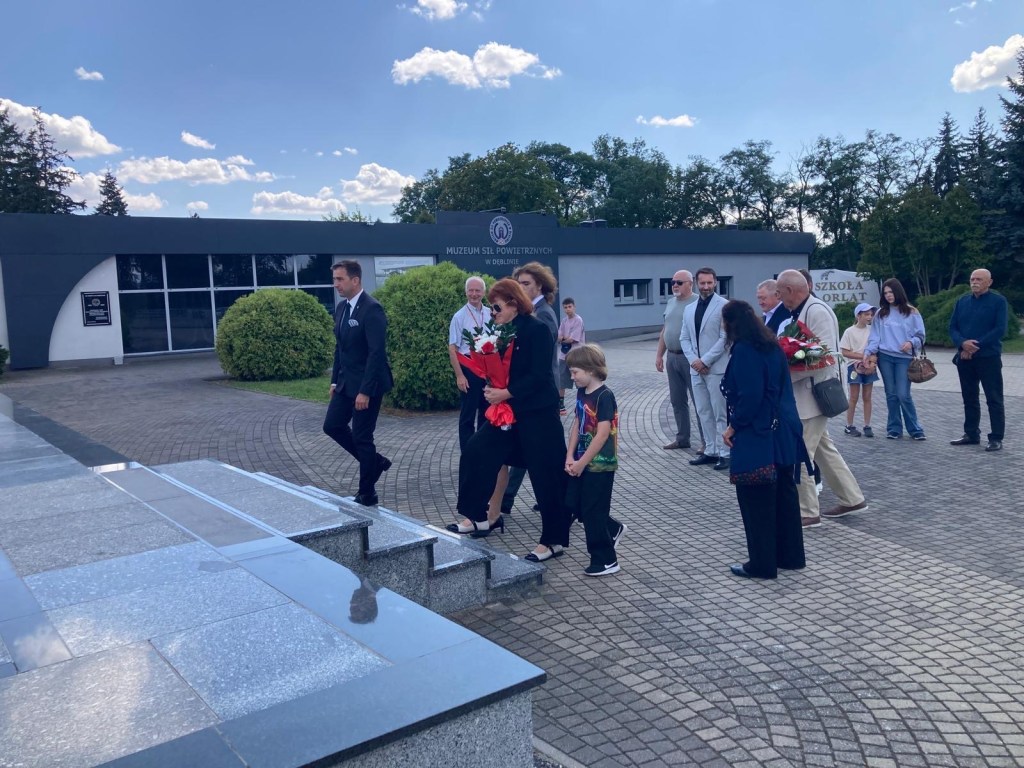
The ceremony concluded with the laying of flowers at the monument to the heroes of Polish aviation in front of the Museum.
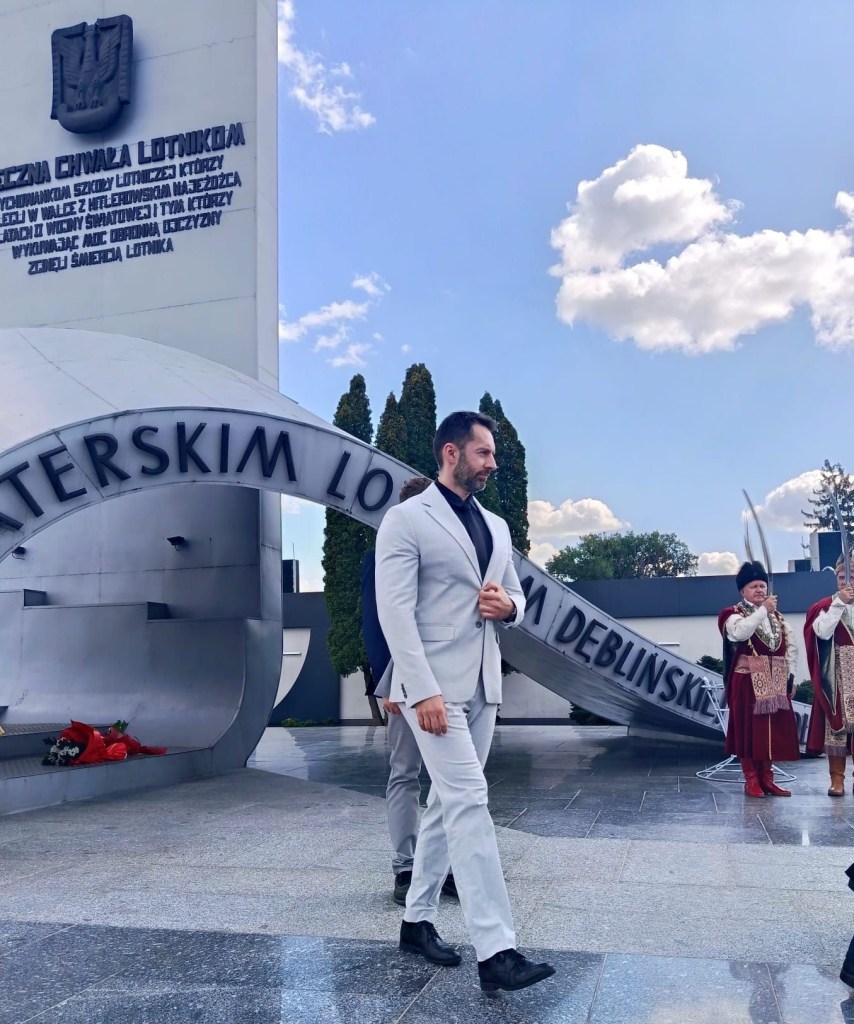
Guests honoured the Dęblin aviation tradition and all Polish airmen, navigators, mechanics and ground personnel who served during the Second World War.
The tribute extended beyond the three men named on the plaque to an entire generation who shared one purpose: to fight for a free Poland and a free Europe.
Guests then met over refreshments and explored the Museum’s collections.
A Memorial for the Future
The ceremony showed that historical memory lives not only in textbooks but also in families, photographs, medals, letters, logbooks and stories passed from grandparents to grandchildren.
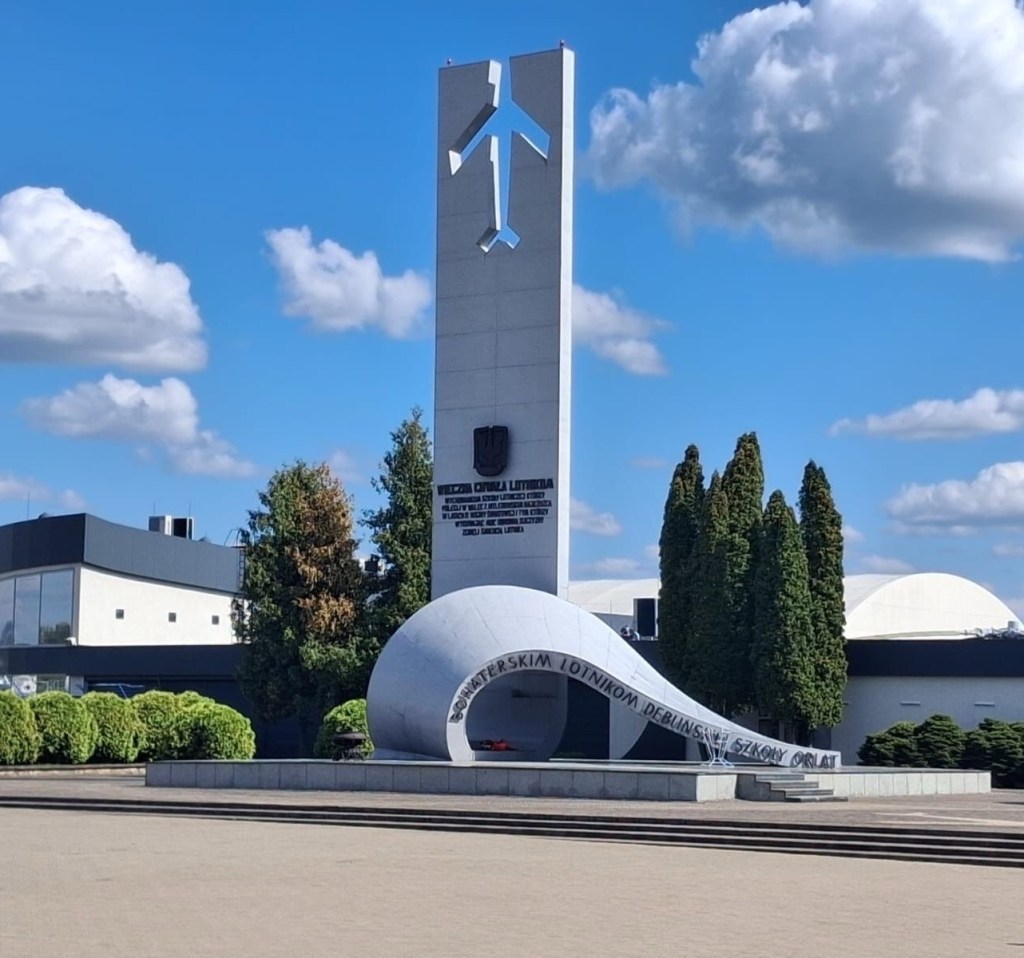
Institutions such as the Polish Air Force Museum in Dęblin ensure that these artefacts remain accessible to future generations.
Special thanks go to the Polish Air Force Museum in Dęblin, Director Monika Żmuda and Deputy Director Jakub Mitek for preparing a dignified ceremony and creating a space where three family histories could become part of the wider story of the Polish Air Force in the West.
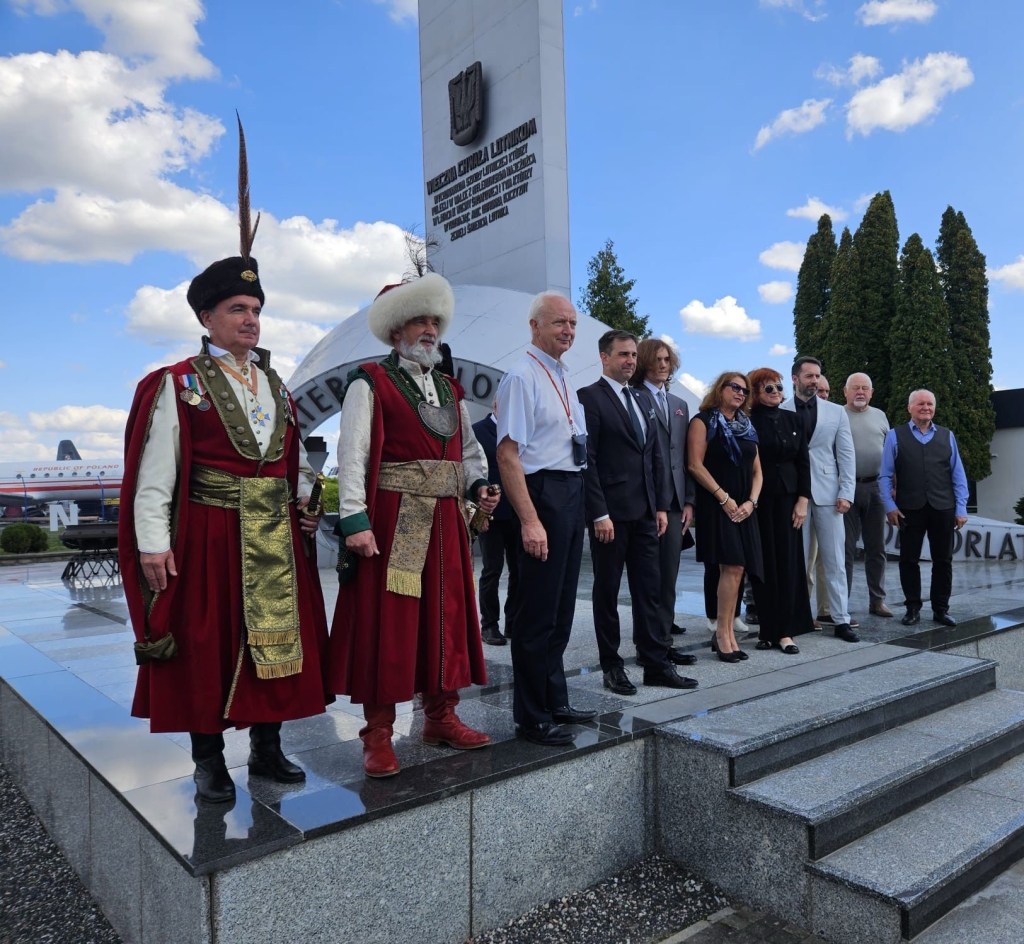
The plaque unveiled on 26 August 2026 will remain in Dęblin as a lasting reminder of Władysław Gnyś, Roman Matuszkiewicz and Feliks Goliński: a pilot, a navigator and a mechanic whose different roles formed part of one common service, homeland and struggle.
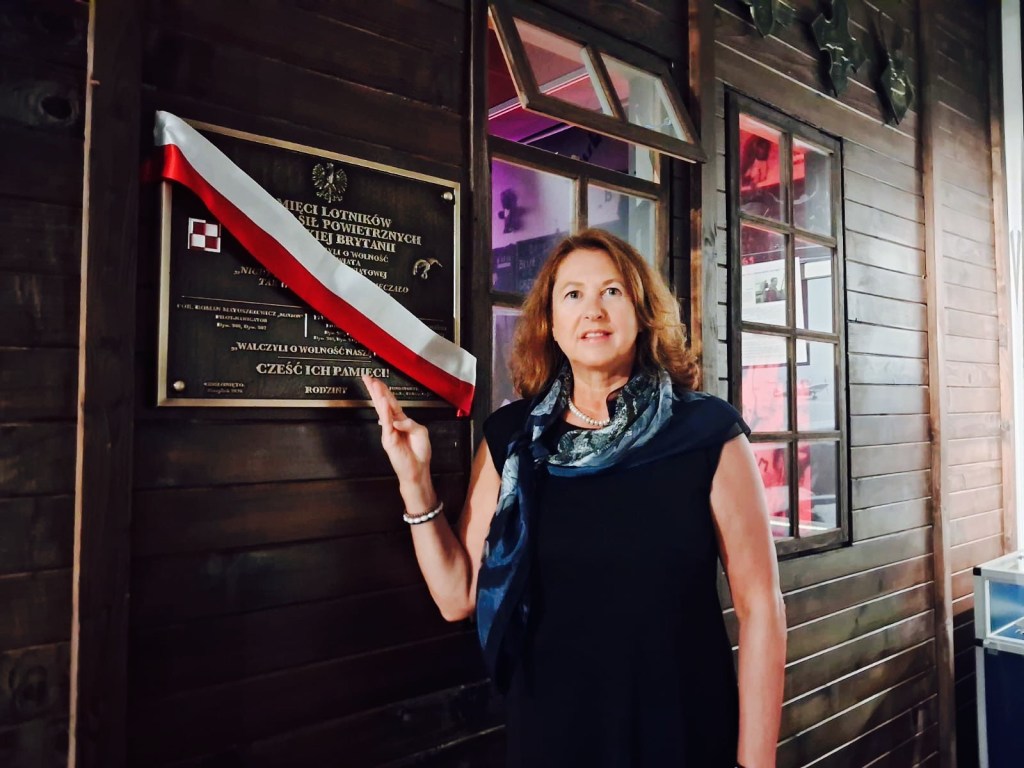
Their names now stand in Poland as a reminder that freedom was defended not by individuals acting alone, but by entire crews, squadrons, families and communities.
Preserving their stories is therefore more than an act of remembrance. It is a responsibility to ensure that future generations understand the cost of freedom and remember those who fought for it.
“They fought for our freedom and yours.”
Text / Photo: Polish Sue



Leave a Reply