The enrichment of the nomenklatura, RSW “Prasa-Książka-Ruch,” the “Transakcja” company, and personal continuity between the Polish People’s Republic and the Third Polish Republic
The transformation after 1989 brought Poland political freedom, a market economy, and the opportunity to build private wealth. For many citizens, however, it was a start without savings, property, capital, or business experience.
Some people associated with the party apparatus, the administration, and the management of state-owned enterprises, by contrast, possessed contacts, institutional knowledge, and access to information that could be highly valuable during a period of rapid change.
It is in this context that the term enrichment of the nomenklatura arises.
It is important, however, to distinguish between documented facts, historical interpretations, and hypotheses requiring further research. Personal connections alone do not constitute proof of unlawful conduct although they may pose Some interesting questions.
What Was the Enrichment of the Nomenklatura?
The term enrichment of the nomenklatura refers to processes in which some party activists, managers of state-owned enterprises, and senior officials used their positions, contacts, knowledge, and access to information to start businesses or gain influence over state assets.
Historian Tomasz Kozłowski describes this process as the acquisition of ownership or control over the assets of state-owned enterprises by members of the Communist Party and senior officials, including through so-called nomenklatura companies.
An IPN study emphasizes that this was not a single centrally planned program, but rather a phenomenon resulting from the collapse of the old system, economic reforms, and the actions of individual groups. (IPN Journals)
Here, PZPR means the Polish United Workers’ Party, the ruling communist party of the Polish People’s Republic from 1948 until its dissolution in 1990.
This does not mean that every former member of the PZPR became wealthy, that every privatization was dishonest, or that every person associated with the former system acted unlawfully.
To confirm a specific case of nomenklatura enrichment, it would be necessary to establish how control over or ownership of assets was acquired, the terms of the transaction, the flow of funds, and any possible violations of the law.
The Nomenklatura System and an Advantage at the Starting Line
In the Polish People’s Republic, the PZPR apparatus had significant influence over the appointment of managers in state-owned enterprises, the administration, and other institutions.
The nomenklatura system enabled the party to influence the selection of people occupying key economic and administrative positions. (IPN Journals)
After 1989, previous experience and networks of contacts could be used both for lawful business activity and, in some cases, for transferring the assets of state-owned enterprises into private structures.
The latter mechanism, however, requires separate documentation in each individual case. (IPN Archive)
In simplified form, the possible mechanism looked like this:
position and contacts → access to information and state-owned enterprises → business activity or a private company → economic capital → further business or public career
This is an analytical framework, not proof of illegality.
RSW “Prasa-Książka-Ruch”: Assets to Be Divided
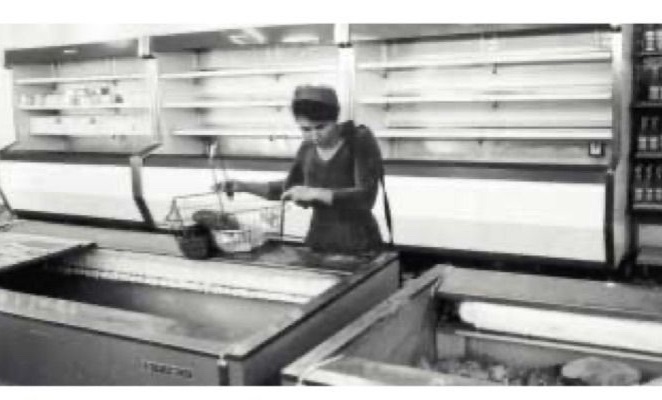
The Workers’ Publishing Cooperative “Prasa-Książka-Ruch” was one of the largest publishing and distribution conglomerates associated with the PRL system.
According to information presented in the Sejm, it controlled more than 90 percent of the Polish publishing market and published dozens of newspapers and hundreds of magazines. (Orka2)
On March 22, 1990, the Sejm passed a law providing for its liquidation.
Of the 178 press titles, 104 were designated for sale, 71 were transferred free of charge to employee cooperatives, and 3 were transferred to the State Treasury.
The process lasted more than a decade. The Supreme Audit Office inspected the activities of the Liquidation Commission in 1992, and a year later examined the ownership structure of selected RSW assets. (Orka2; Sejm Library)
The scale of RSW, the decision to liquidate it, the method of distributing some of its titles, and the NIK inspections are documented facts.
The process also involved real estate, printing plants, and the distribution network, making it one of the key arenas of competition for assets and influence during the first years of the Third Polish Republic.
The data on the distribution of titles alone do not, however, determine whether individual transactions were conducted properly.
Assessing them would require information about valuations, buyers, sources of financing, and subsequent changes in ownership.
“Transakcja” and Its Connections to Muza
In December 1988, before the formal end of the PRL, the company Transakcja was established by RSW and the Academy of Social Sciences at the Central Committee of the PZPR.
Materials concerning this structure mention, among others, PZPR treasurer Wiesław Huszcza, Marek Siwiec, and Jerzy Szmajdziński. They also refer to the companies Transrad, Transpol, Transbiel, Topexim, and Muza. According to the cited source, in February 1989 RSW transferred 2.1 billion złoty to Transakcja, followed by a further 600 million złoty. (Niezależna)
This information indicates that economic structures associated with the former system began operating before the formal end of the PRL. It does not, however, establish that the transfers were unlawful or that specific individuals personally benefited from them.
Włodzimierz Czarzasty and the Muza Publishing House
The official Sejm biography states that, from 1990 onward, Włodzimierz Czarzasty was president of the management board and co-owner of the Muza publishing house. (Sejm)
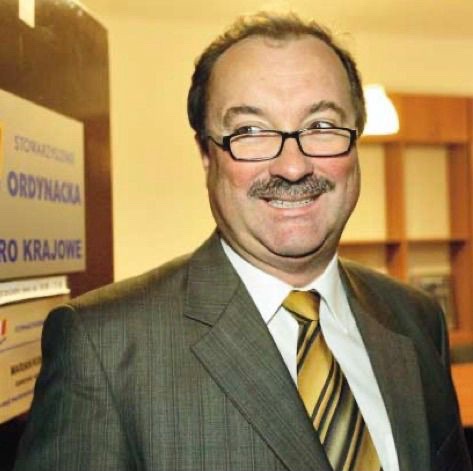
IPN materials describe Muza as a company with a nomenklatura character and indicate that one of its founders was Transakcja, described in that material as an enterprise investing PZPR funds.
In 1990, Czarzasty became a co-owner, president, and chief executive of Muza. (IPN)
On the basis of these sources, the following chain can be identified:
PZPR—the Polish United Workers’ Party → Transakcja → Muza → Włodzimierz Czarzasty
It documents organizational and personal links between structures of the former system and private business activity at the beginning of the transformation.
It is not, however, proof of an illegal takeover of assets or of Czarzasty’s personal responsibility for financial irregularities.
Such conclusions would require an analysis of the founding capital, contracts, in-kind contributions, valuations, and financial flows.
Marek Siwiec and Personal Continuity
Marek Siwiec appears in materials concerning Transakcja as a member of its supervisory board.
He later served as a member of parliament, a member of the National Broadcasting Council, secretary of state in the Chancellery of President Aleksander Kwaśniewski, head of the National Security Bureau, and a Member of the European Parliament.
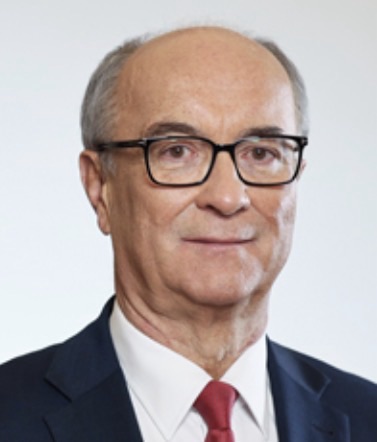
According to information from the Sejm, in 2025 he became head of the Chancellery of the Sejm, appointed by Marshal of the Sejm Włodzimierz Czarzasty. (Niezależna; Sejm)
Siwiec’s biography may be analyzed as an example of personal continuity between circles associated with the PZPR, the Democratic Left Alliance, and the state institutions of the Third Polish Republic. The presence of the same individuals in different structures does not, by itself, prove corruption, an illegal transfer of assets, or the informal subordination of institutions but can be a strong indication.
Aleksander Kwaśniewski: Political Fact and Interpretation
Aleksander Kwaśniewski was a member of the PZPR—the Polish United Workers’ Party—and one of the leaders of the milieu that, after 1989, helped create the post-communist left.
On the basis of the information presented here, there are no grounds for claiming that, as president, he directed privatization for his own benefit.
Kwaśniewski rejected allegations that he controlled privatization or appointed members of supervisory boards of State Treasury companies.
In 1999, he appointed Czarzasty to the National Broadcasting Council, where Czarzasty served until 2005. The appointment documents a political relationship between the two men, but does not by itself establish their motives or the existence of informal benefits.
Comparative Cases
Not every person associated with the PZPR, the administration, or the security apparatus can be classified as a beneficiary of nomenklatura enrichment.
Mieczysław Wilczek
Wilczek was a member of the PZPR—the Polish United Workers’ Party—minister of industry from 1988 to 1989, and at the same time an entrepreneur, chemist, and inventor. (Wikipedia)
His biography shows that state service and business activity could overlap even before 1989. It does not, however, prove that he used public office to obtain improper benefits.
Aleksander Gawronik
Gawronik was associated with the PZPR—the Polish United Workers’ Party—and worked briefly in the Security Service apparatus. After the liberalization of the economy, he developed a network of currency-exchange offices, and in 1990 he ranked first on the list of Poland’s wealthiest people published by the weekly magazine “Wprost.”
His later activities were the subject of criminal proceedings and convictions concerning, among other things, tax fraud. (Wikipedia)
This case shows that some people previously associated with the state or party apparatus quickly took advantage of new economic opportunities. It does not, however, establish that Gawronik’s wealth resulted from nomenklatura enrichment.
Great Britain: Contacts and Open Questions
Research by Jadwiga Staniszkis pointed to contacts between Polish nomenklatura structures and Western business partners.
British documents recorded concerns about the possibility that economic programs could be dominated by people associated with the nomenklatura. (Sage Journals; National Archives)
From the outset, the transformation had an international dimension, and access to Western knowledge, capital, and contacts was a resource over which different groups competed.
It is not possible, however, without additional evidence to claim that a specific person conducting business in the United Kingdom possesses wealth originating from privatization in Poland, however it may be indicated by this persons’ connections with former KPZPR members. who were part of nomenklatura.
Conclusions
The history of the transformation is not a story in which all former members of the PZPR—the Polish United Workers’ Party—obtained financial benefits. Available research does indicate, however, that some nomenklatura elites possessed resources—contacts, experience, knowledge, and access to institutions—that made it easier for them to operate in the market economy.
RSW and Transakcja show that structures associated with the former system began to emerge before the formal end of the PRL.
The history of Muza illustrates their possible connection with private business activity, while the careers of Czarzasty and Siwiec demonstrate personal continuity between the milieus of the PRL, the post-communist left, and the highest institutions of the Third Polish Republic.
This does not establish that the law was violated or that wealth was obtained illegally.
Such conclusions would require direct evidence concerning specific decisions, transactions, and financial flows.
For this reason, the enrichment of the nomenklatura should be studied as a historical and institutional problem: through analysis of companies, decisions, valuations, sources of financing, subsequent careers and their recent reappearance in the mainstream political landscape in Poland.
The key question is:
Who entered capitalism with political capital, contacts, and knowledge of state assets—and how were those resources later used?
Why are these people still in the public and top government domains?
Text: Iwona Golinska, Polish Sue President and the Secretary of the Committee for Polonia and Polish Diaspora Abroad by the President of Poland.
Fotos: IPN, Wikipedia
Sources: IPN, Sejm, WIKIPEDIA, National Archives.


Leave a Reply