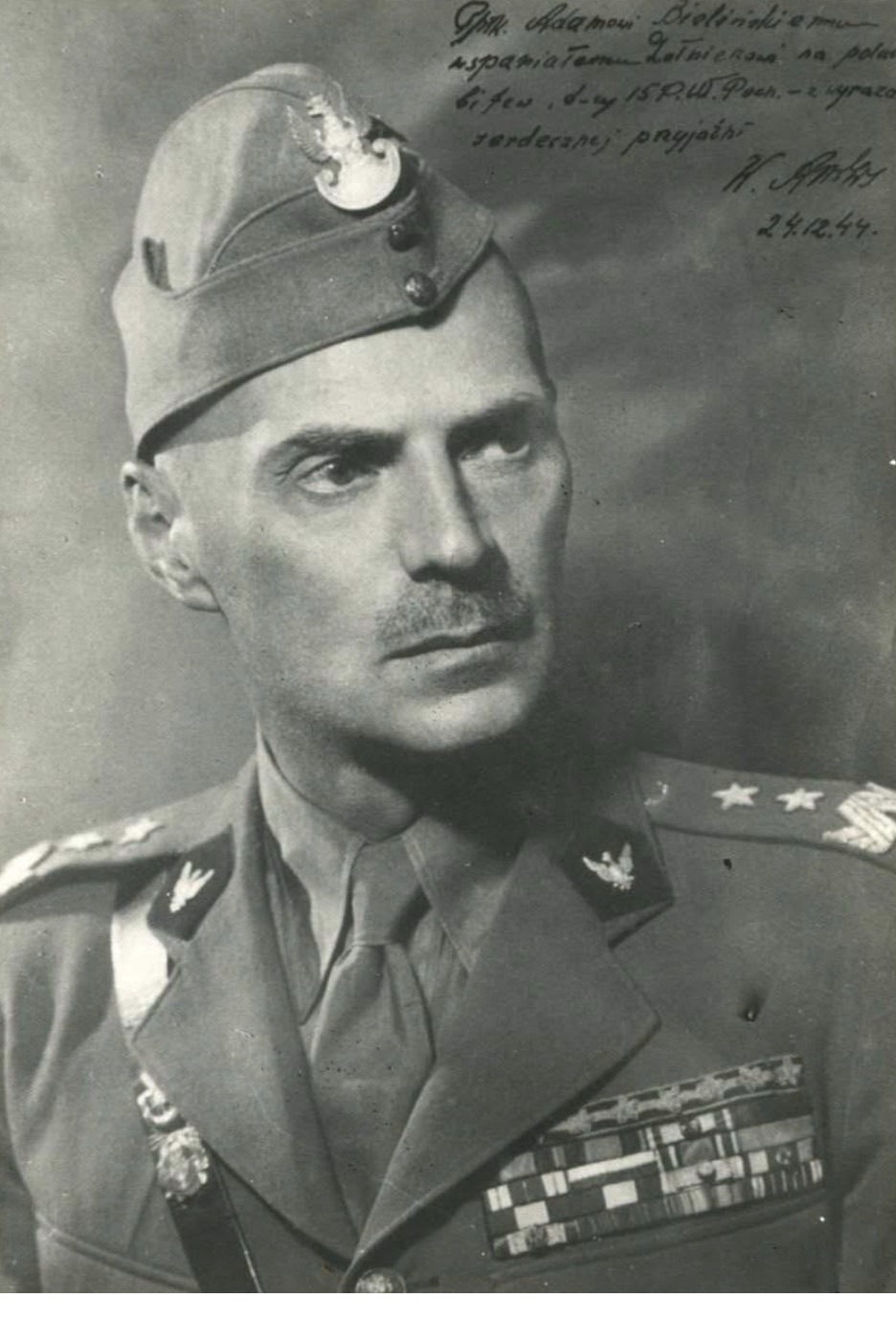
124th Anniversary of his Birth.
11 August 1892 – 12 May 1970.
He fought for Poland on the battlefield. After the war, he fought to preserve Poland in the hearts and minds of future generations.
On 11 August 2026, we mark the 124th anniversary of the birth of General Władysław Anders – one of the most distinguished Polish commanders of the 20th century, commander of the Polish Army in the USSR and the 2nd Polish Corps, victor of Monte Cassino, and one of the most important leaders of the Polish independence movement in exile.
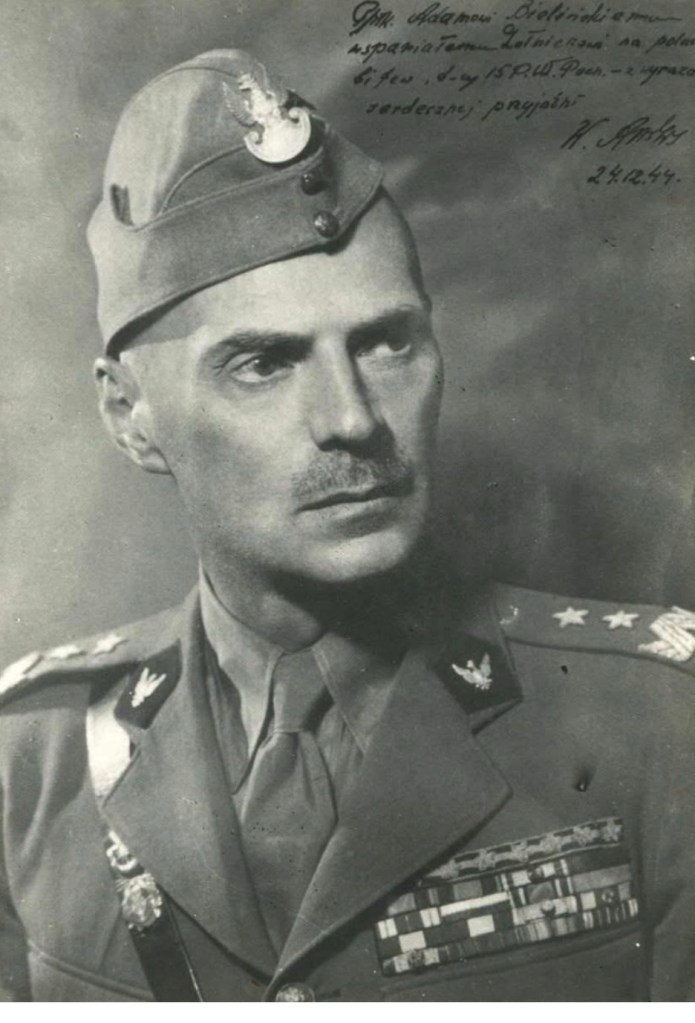
For Polish people, Anders is a national hero.
But for Britain, his story is also part of British history.
Thousands of Polish soldiers fought alongside Britain during the Second World War. When the war ended, many of them could not return to a free Poland. They remained in Britain and became part of British society.
General Anders understood that their struggle had not ended.
The battlefield had changed.
Now the struggle was to build a future.
A SOLDIER OF AN INDEPENDENT POLAND
Władysław Albert Anders was born on 11 August 1892 in Błonie near Kutno.
He chose a military career and served during the First World War.
After Poland regained independence in 1918, he became an officer of the Polish Army and fought in the Polish-Bolshevik War of 1919–1920.
For his bravery, he was awarded the Silver Cross of the Order of Virtuti Militari, Poland’s highest military decoration for courage.
During the interwar years, Anders became one of Poland’s most respected military commanders.
But the greatest challenges of his life were still to come.
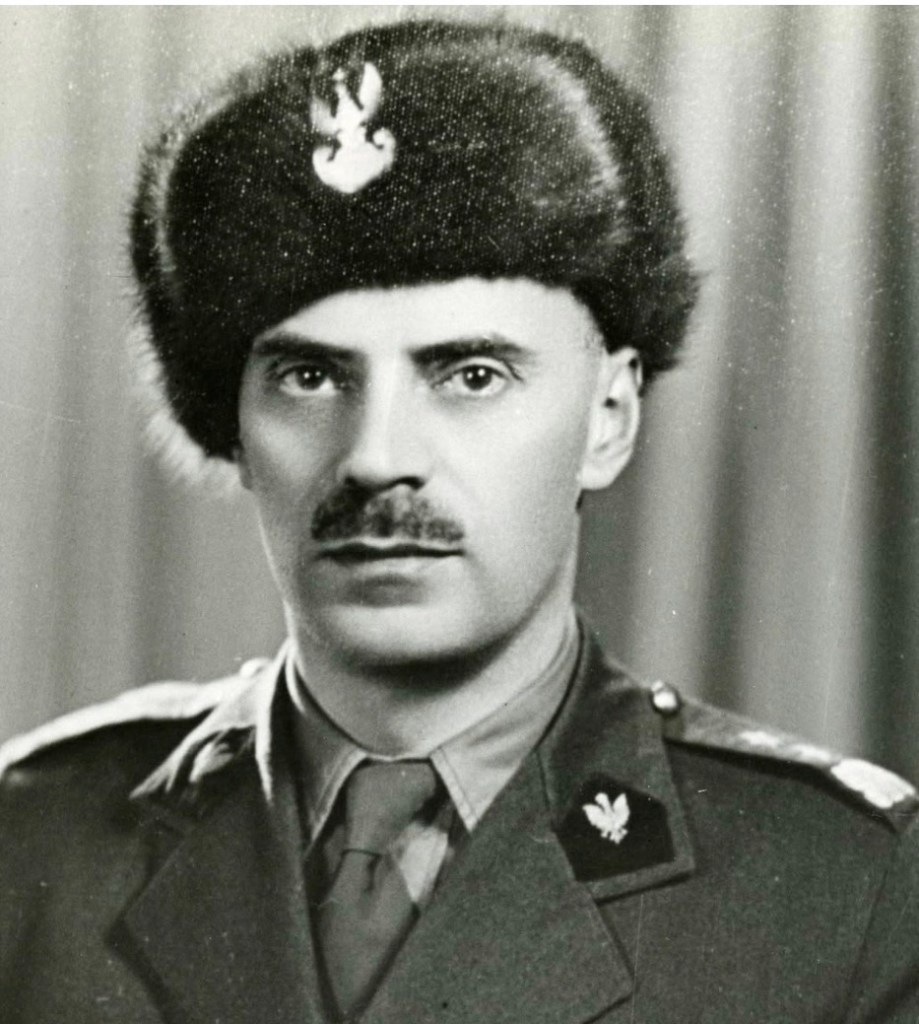
SEPTEMBER 1939 – CAPTURE AND SOVIET IMPRISONMENT
After Germany invaded Poland on 1 September 1939 and the Soviet Union invaded from the east on 17 September, Anders commanded the Nowogródzka Cavalry Brigade.
He was wounded and captured by Soviet forces.
For almost two years he was imprisoned by the NKVD, including in Moscow’s notorious Lubyanka prison.
He experienced the Soviet system of repression personally.
Then, in 1941, following the Sikorski–Mayski Agreement, Anders was released.
He was given a task that would change the history of thousands of Polish lives.
THE ANDERS ARMY – FROM THE GULAGS TO FREEDOM
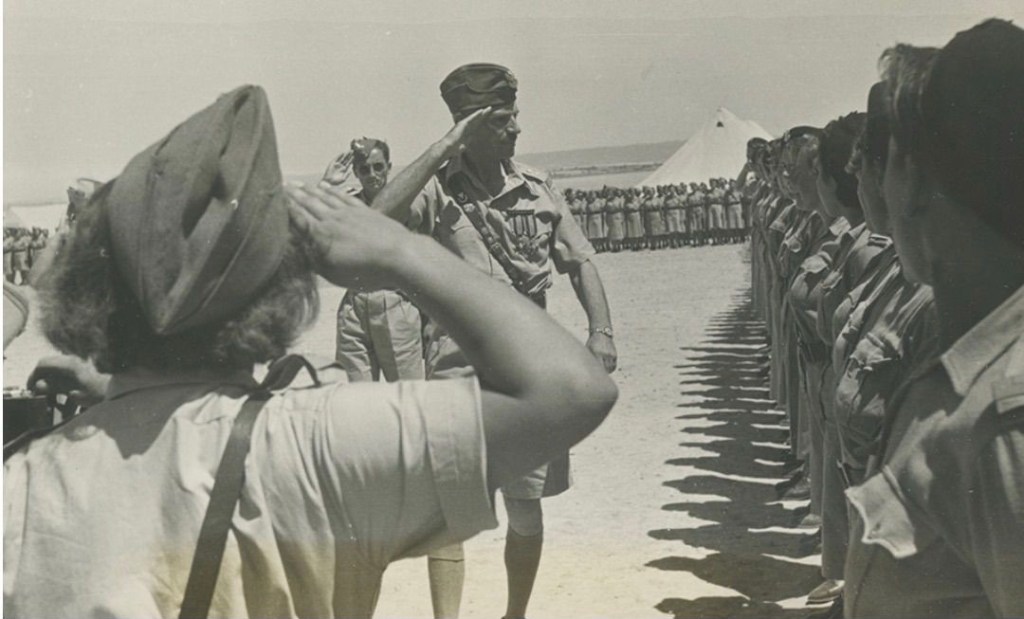
General Anders was ordered to form a Polish army from the soldiers who had been released from Soviet prisons, labour camps and places of exile.
They came from across the Soviet Union.
Many were weak, sick and traumatised.
But they came.
And Anders understood that behind many of the soldiers stood wives, mothers, children and elderly parents.
He therefore fought not only for an army.
He fought for people.
In 1942, the Polish Army was evacuated from the Soviet Union together with thousands of Polish civilians.
More than 115,000 people – approximately 78,500 soldiers and 37,000 civilians, including nearly 18,000 children – left the Soviet Union.
Their journey through Iran, Iraq, Palestine and Egypt became known as the Trail of Hope.
For many, it was a journey from persecution to freedom.
THE 2ND POLISH CORPS
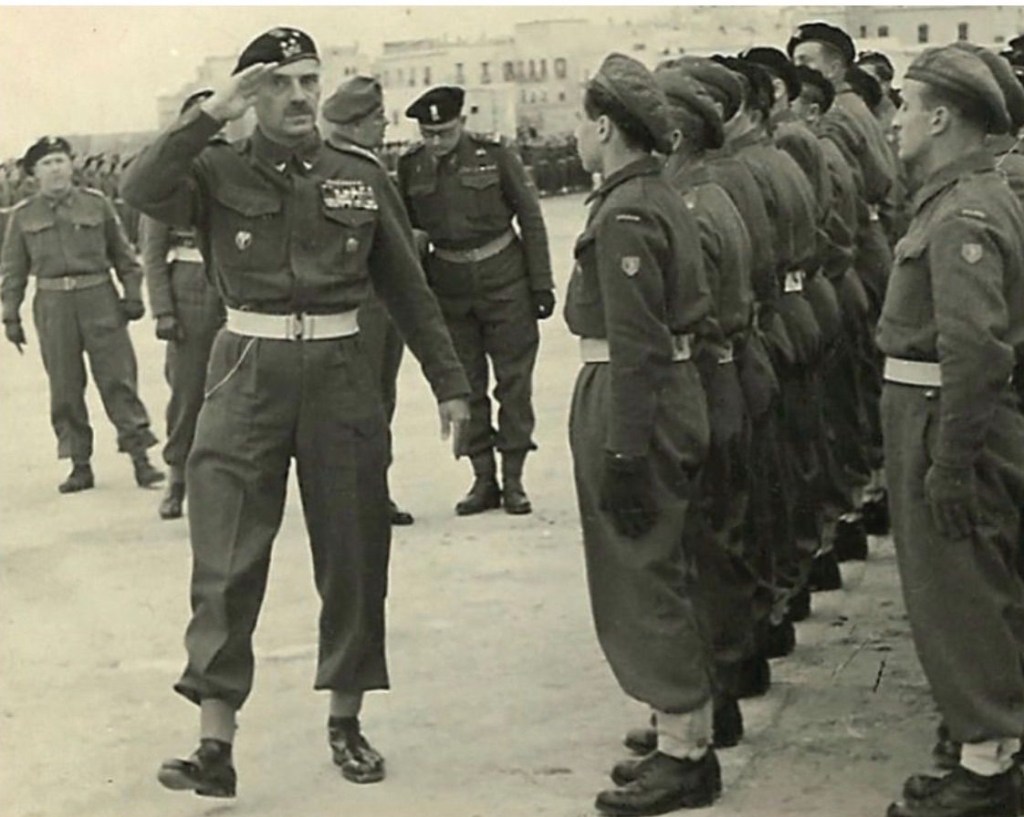
In 1943, the 2nd Polish Corps was formed under General Anders.
The Corps fought within the Allied campaign in Italy.
And then came Monte Cassino.
The battle became one of the most famous episodes in Polish military history.
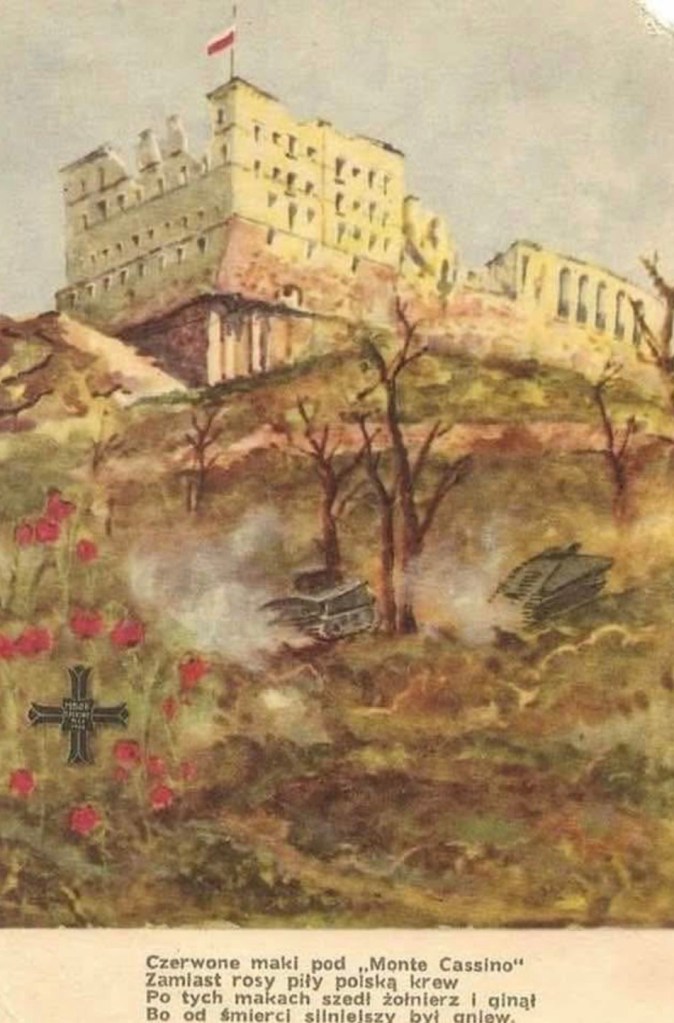
On 18 May 1944, after days of ferocious fighting, Polish soldiers raised the white-and-red flag over the ruins of the Benedictine monastery.
The victory came at an enormous cost.
The 2nd Polish Corps suffered 923 killed and 2,931 wounded during the battle.
For Britain and its Allies, Monte Cassino was part of the long Italian campaign.
For Poland, it became a symbol.
It represented the determination of soldiers who were fighting for a country that was itself still under occupation.
ANCONA AND BOLOGNA
The story did not end at Monte Cassino.
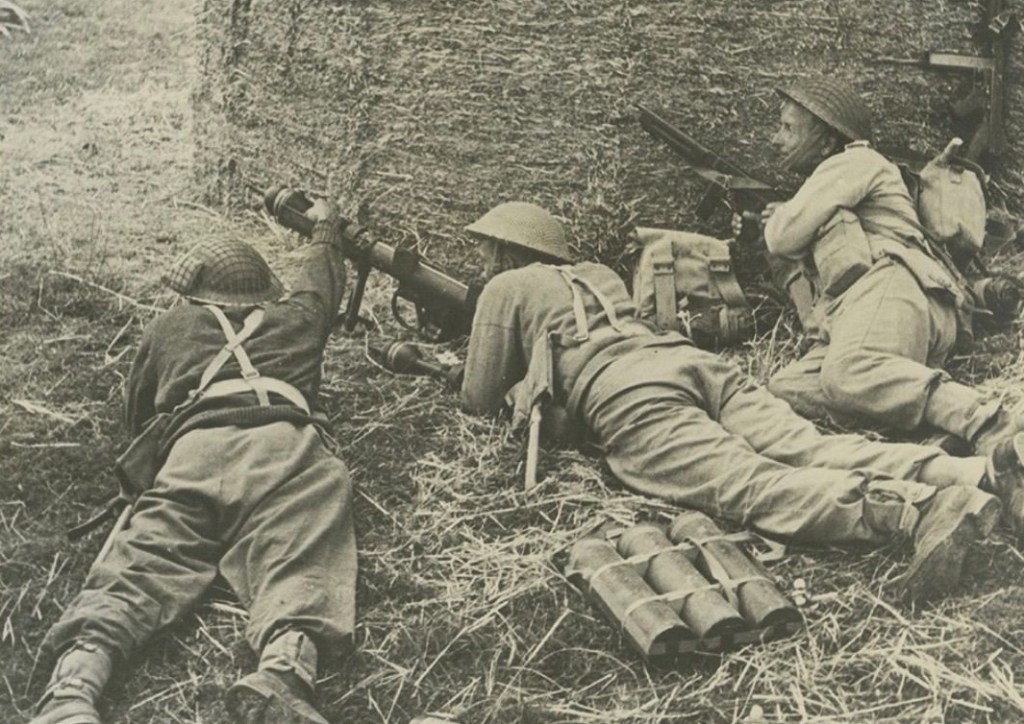
The 2nd Polish Corps continued its advance through Italy.
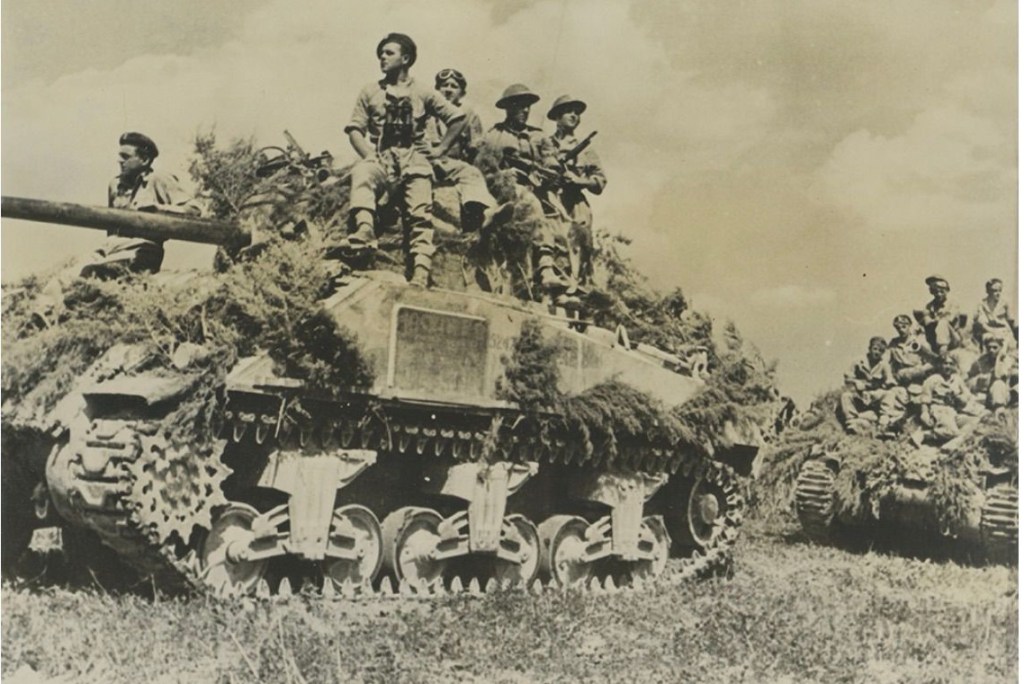
In July 1944, Polish troops captured Ancona, in one of the most important independent operations carried out by the Corps.
In April 1945, Polish soldiers took part in the liberation of Bologna.
The war was finally coming to an end.
But for Anders and his soldiers, the end of the war did not mean the return home they had dreamed of.
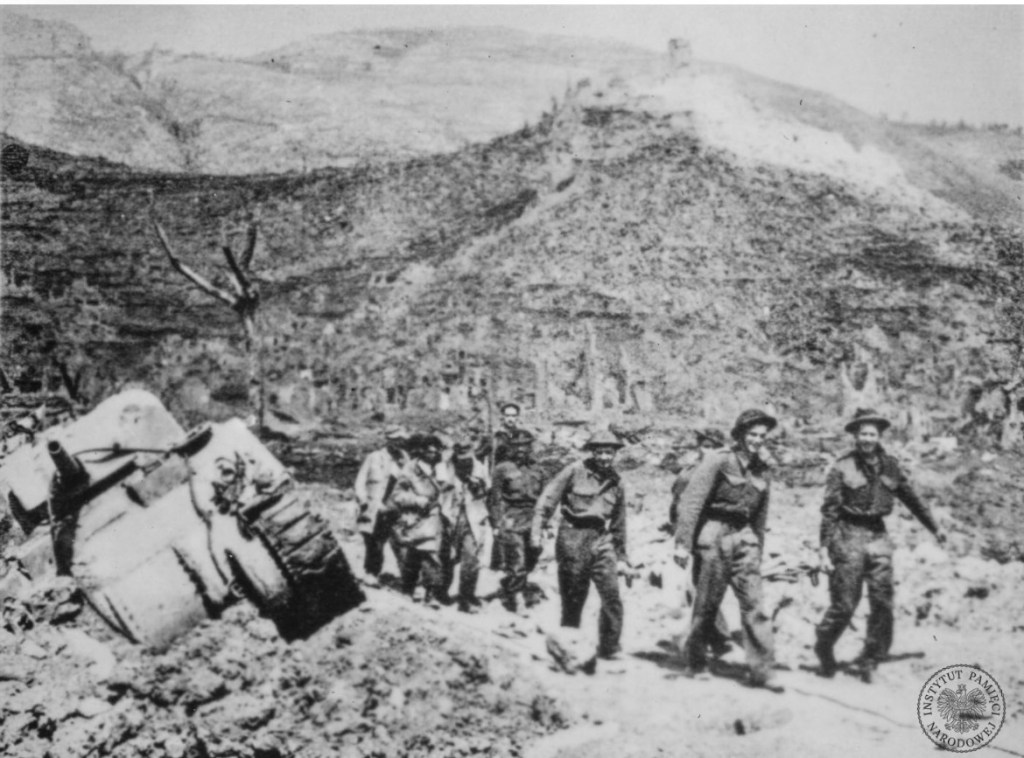
THEY WON THE WAR – BUT POLAND WAS NOT FREE
This was the great tragedy of Anders’ generation.
Polish soldiers had fought alongside the Western Allies for freedom.
But after the war, Poland found itself under Soviet domination.
For many soldiers of the 2nd Polish Corps, returning home was not a return to freedom. It could mean surveillance, imprisonment, interrogation or persecution.
General Anders therefore remained in exile.
In 1946, the communist authorities deprived him of his Polish citizenship.
But they could not deprive him of his Polish identity.
And they could not stop him from serving Poland.
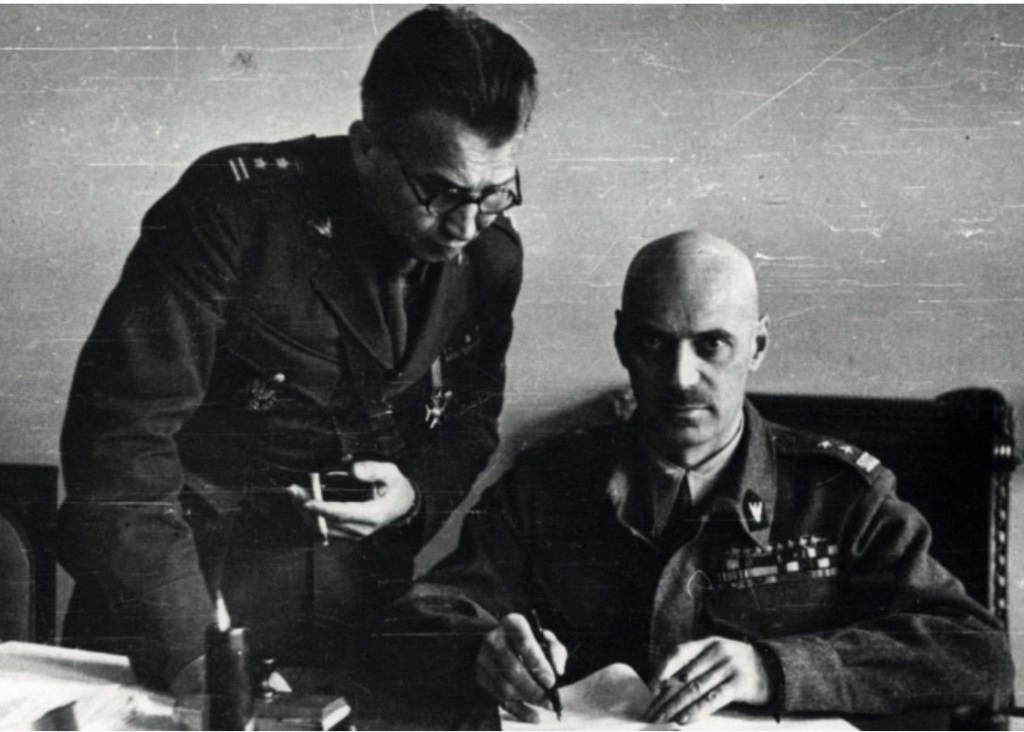
BRITAIN – A NEW BATTLEFIELD
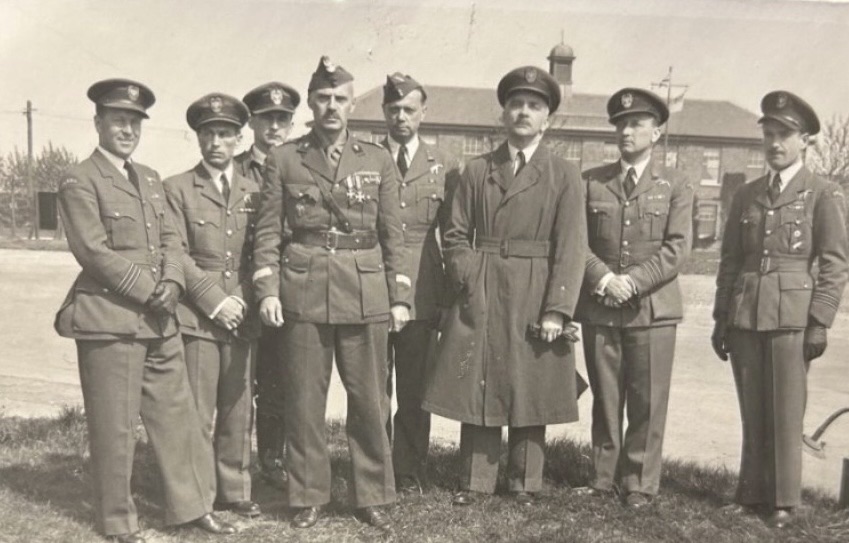
After 1945, Britain became home to thousands of Polish servicemen and their families.
These were men who had fought alongside Britain.
Polish airmen had defended British skies.
Polish sailors had served with the Royal Navy.
Polish soldiers had fought on land.
And Anders’ soldiers had fought their way through Italy.
Now they faced a different challenge:
How do you build a new life when you cannot return home?
Anders understood that his soldiers needed more than jobs and accommodation.
They needed a community.
They needed Polish schools.
They needed youth organisations.
They needed places to meet.
They needed churches and cultural centres.
They needed somewhere to remember their fallen comrades.
And they needed to know that their children and grandchildren would not forget Poland.
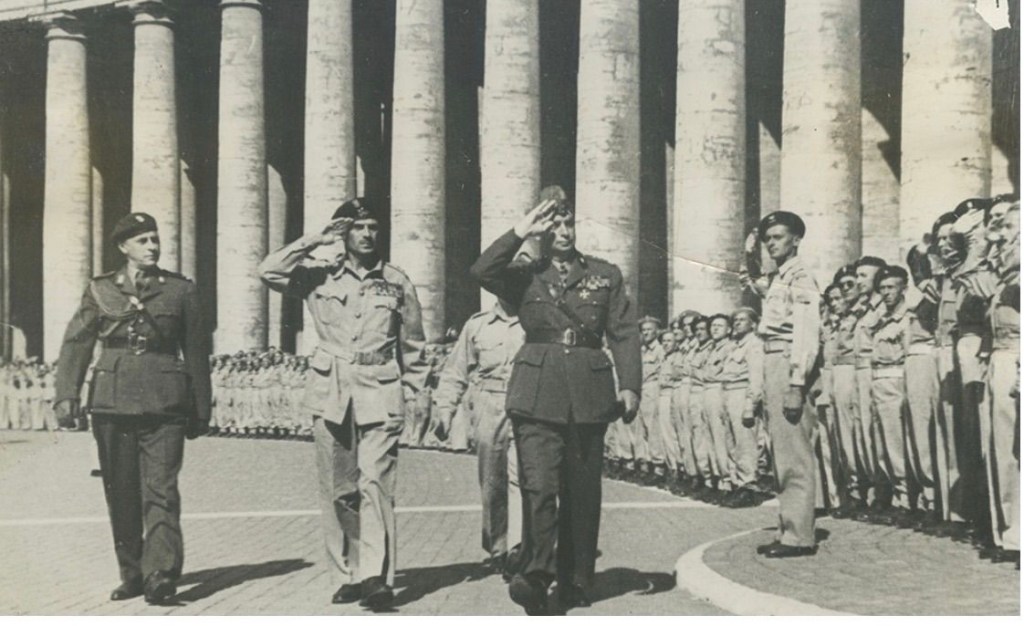
POLISH COMBATANTS’ HOMES – BUILDING A COMMUNITY
Across Britain, Polish veterans’ organisations established Domy Kombatanta – Polish Combatants’ Homes and community centres.
These were much more than clubs for former soldiers.
They became Polish homes in exile.
They hosted meetings, lectures, concerts, exhibitions, celebrations and social gatherings.
Veterans could meet their former comrades.
Families could maintain their Polish traditions.
Young people could grow up surrounded by Polish language and culture.
And these institutions became bridges between generations.
Anders understood that the generation that had fought the war would eventually pass away.
The question was:
Who would carry Poland forward?
The answer was the next generation.
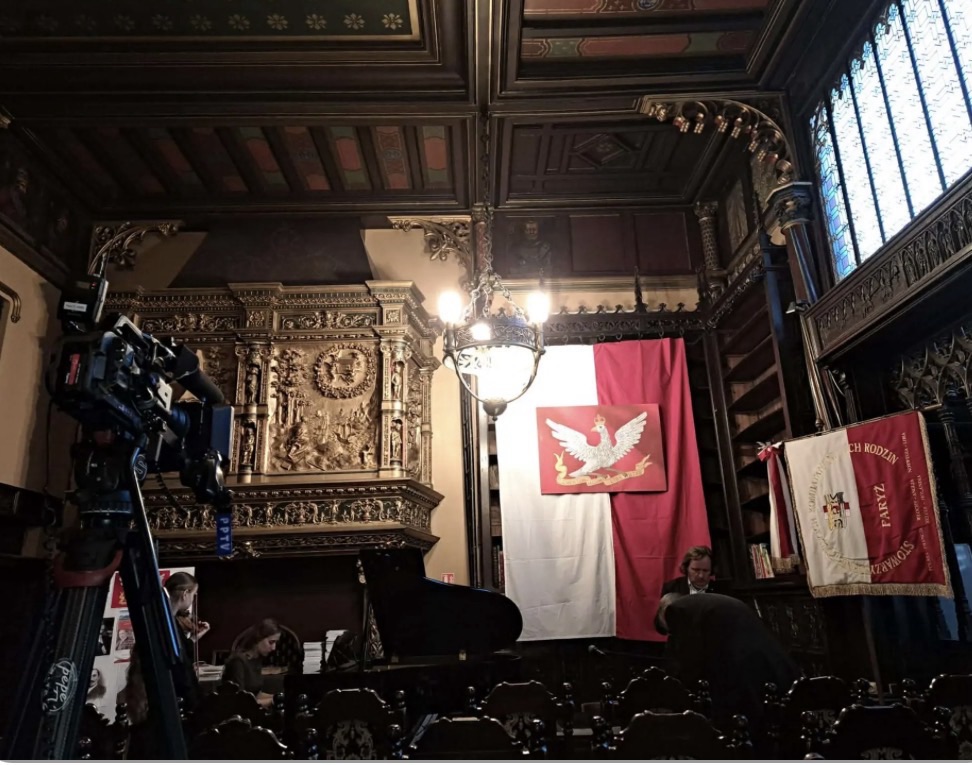
POLISH SCHOOLS – PROTECTING THE LANGUAGE
Anders understood that one of the greatest dangers facing Poles in exile was the loss of language and historical memory.
Education therefore became one of his priorities.
In 1953, Anders was among the initiators of the revival in Britain of the Polish Educational Society – Polska Macierz Szkolna Zagranicą, and he became the first Chairman of its Council. The organisation supported Polish education and the development of Polish Saturday schools.
This was a profoundly important decision.
For a child growing up in Britain, Polish Saturday school was not simply about learning vocabulary or grammar.
It was about knowing:
Who am I? Where did my family come from? Why did my grandparents come to Britain? What did they fight for?
Anders was thinking not only about the children of his soldiers.
He was thinking about their grandchildren and great-grandchildren.
Today, Polish Saturday schools operate throughout Britain.
Their existence is part of the living legacy of the generation that Anders helped to lead.
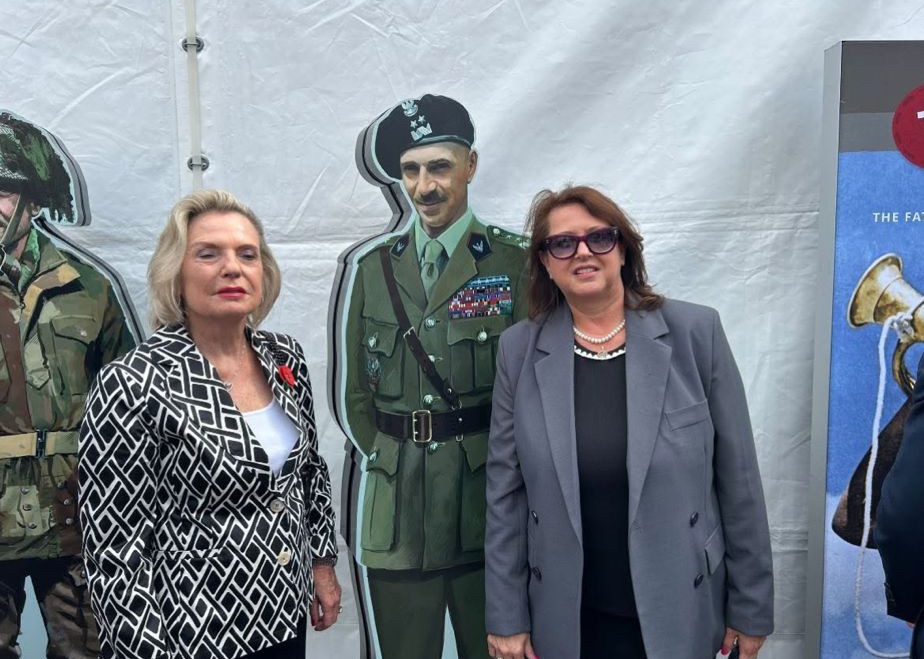
POLISH SCOUTING – TRUSTING THE NEXT GENERATION
Anders also strongly supported Polish Scouting outside Poland.
He understood its importance in educating young people in responsibility, service, leadership, friendship and patriotism.
For young Poles growing up in Britain, Scouting offered a living connection to Polish heritage.
It was not simply about remembering the past.
It was about preparing the next generation to become its guardians.
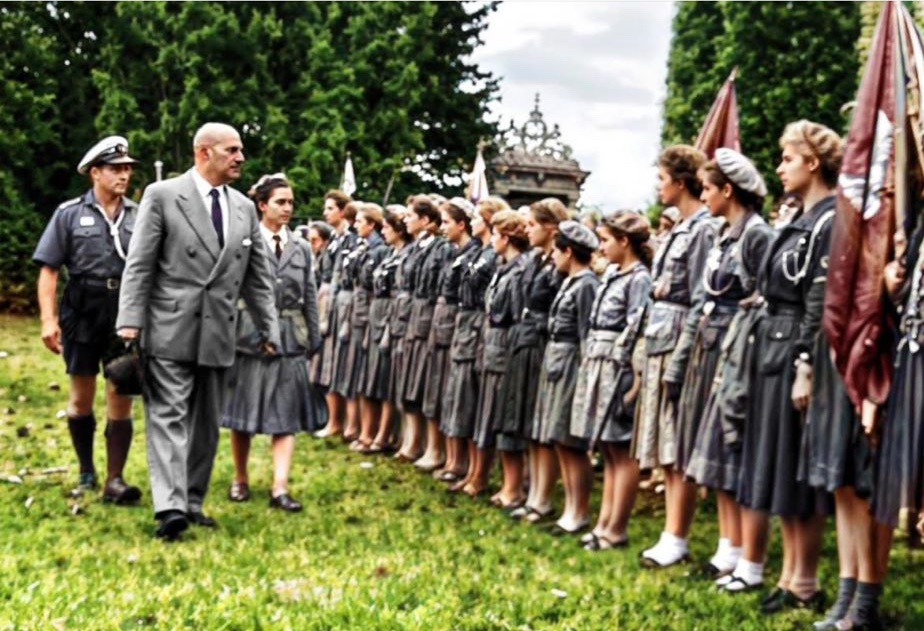
One of the most powerful examples came in 1969, on the 25th anniversary of Monte Cassino.
General Anders entrusted Polish Scouting with the care of the Polish War Cemetery at Monte Cassino.
The symbolism was extraordinary.
The soldiers who had fought and died were entrusting their memory to young people who had not been born when the battle took place.
Those who had died were placing their memory in the hands of those who would live.
THE POLISH COMMUNITY DID NOT FORGET ANDERS
General Anders devoted his post-war life to his soldiers and to the Polish community in exile.
Decades later, the community has continued to honour him.
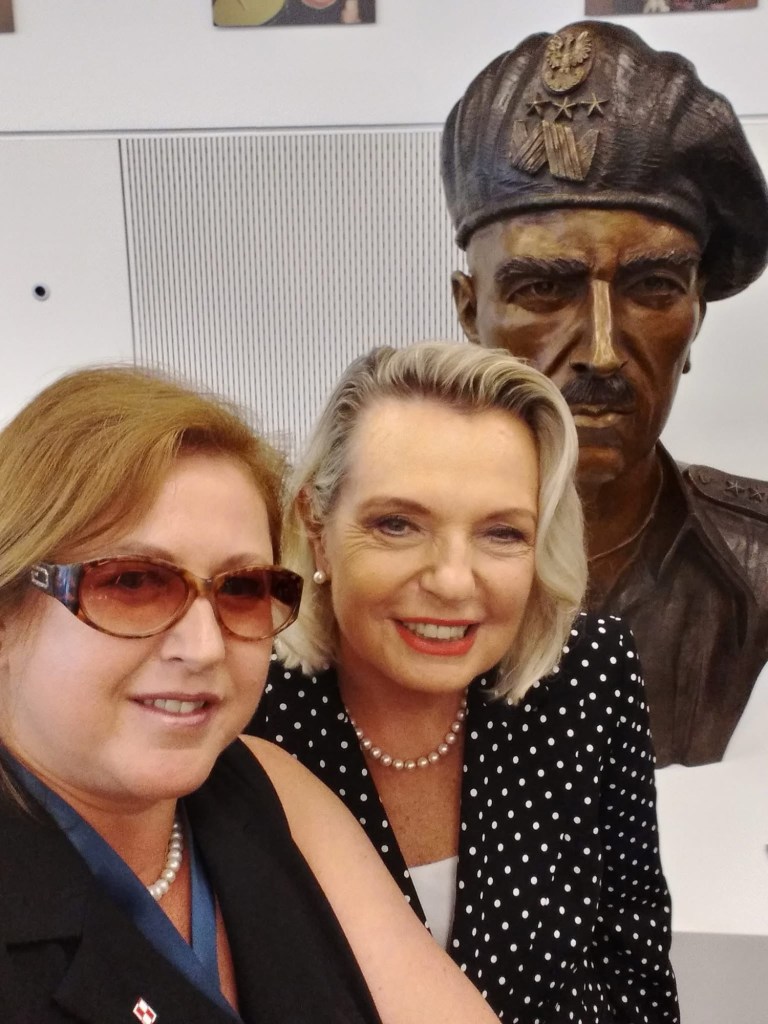
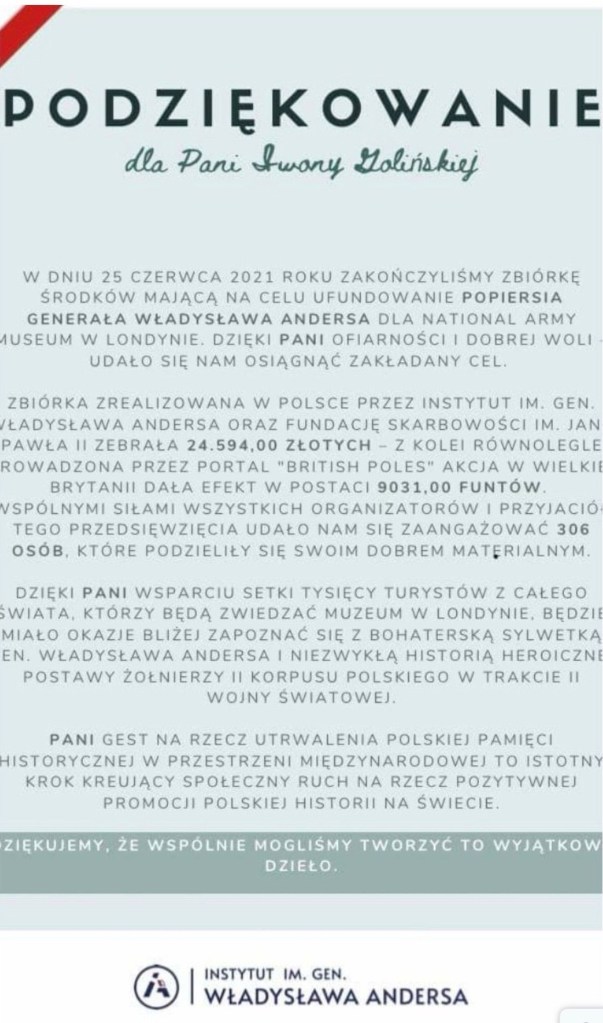
One important example took place in 2021, when Poles in Britain and around the world came together to fund a permanent bust of General Anders at London’s National Army Museum.
The fundraising campaign raised 24,594 PLN in Poland and £9,031 in Britain, with hundreds of people contributing. The thank-you campaign recorded 306 donors.
It was unveiled on 25 June 2021.
The bust, created by Polish sculptor Andrzej Pityński, was a historic addition to the museum. It became the first sculpture of a Polish commander to be displayed in the main museum of the British Army.
This was not simply a monument.
It was a statement.
Polish history belongs in Britain’s public space.
POLISH SUE – HELPING TO PRESERVE AND PROMOTE ANDERS’ LEGACY
For Polish Sue, this project was particularly meaningful.
Together with others from the Polish community in the UK, we were proud to support the fundraising for the General Anders bust at the National Army Museum.
We also brought an exhibition dedicated to General Anders to the occasion, helping to tell the wider story of his life, his soldiers and the extraordinary journey of the 2nd Polish Corps.
The project brought together people from Poland, Britain and the wider Polish diaspora.
It demonstrated something very important:
The Polish community does not simply ask others to remember our history.
We are willing to invest our own time, resources and energy to ensure that it is remembered.
The Institute of General Władysław Anders expressed its gratitude for the support given to the project.
The bust remains a permanent reminder in London of the Polish contribution to the Allied war effort and of General Anders’ extraordinary life.
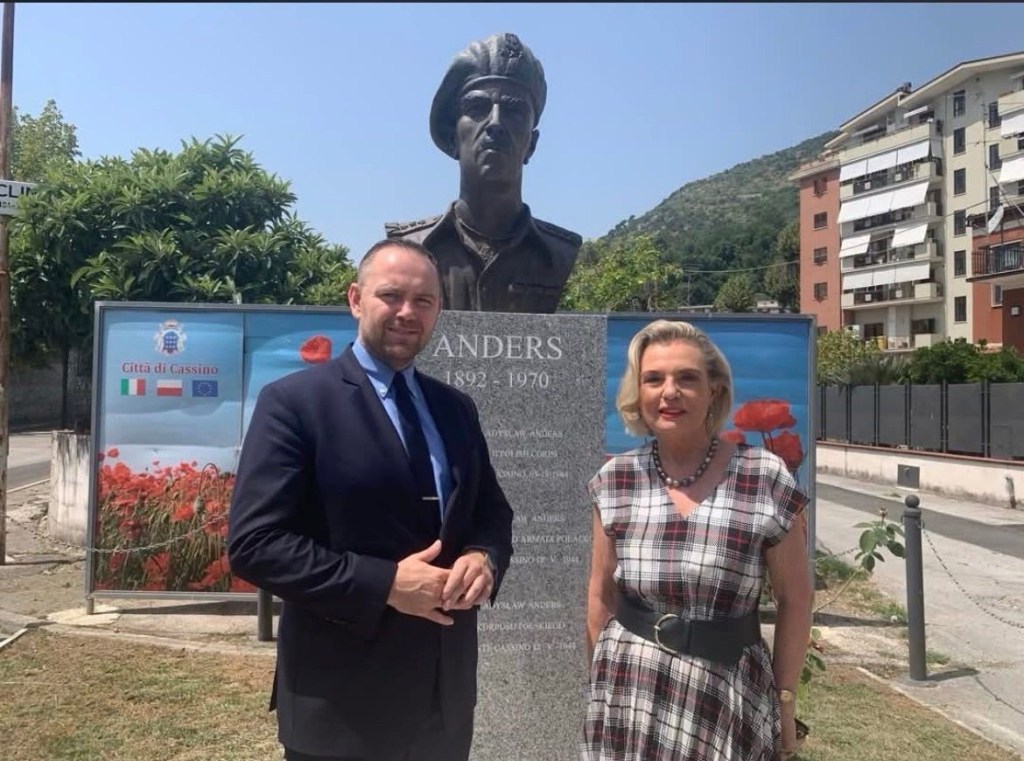
THERE ARE MANY MORE PLACES TO REMEMBER ANDERS
The National Army Museum is only one of many places in Britain where the legacy of General Anders can be found.
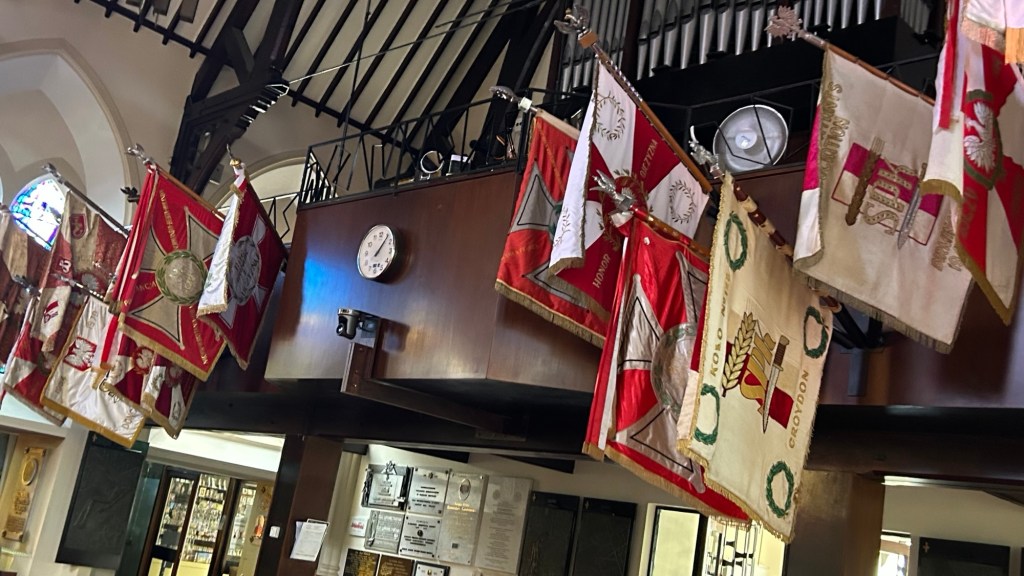
Another particularly powerful place is St Andrew Bobola Polish Roman Catholic Church in London.
For decades, this church has served not only as a place of worship but also as an important centre of Polish national and community life.
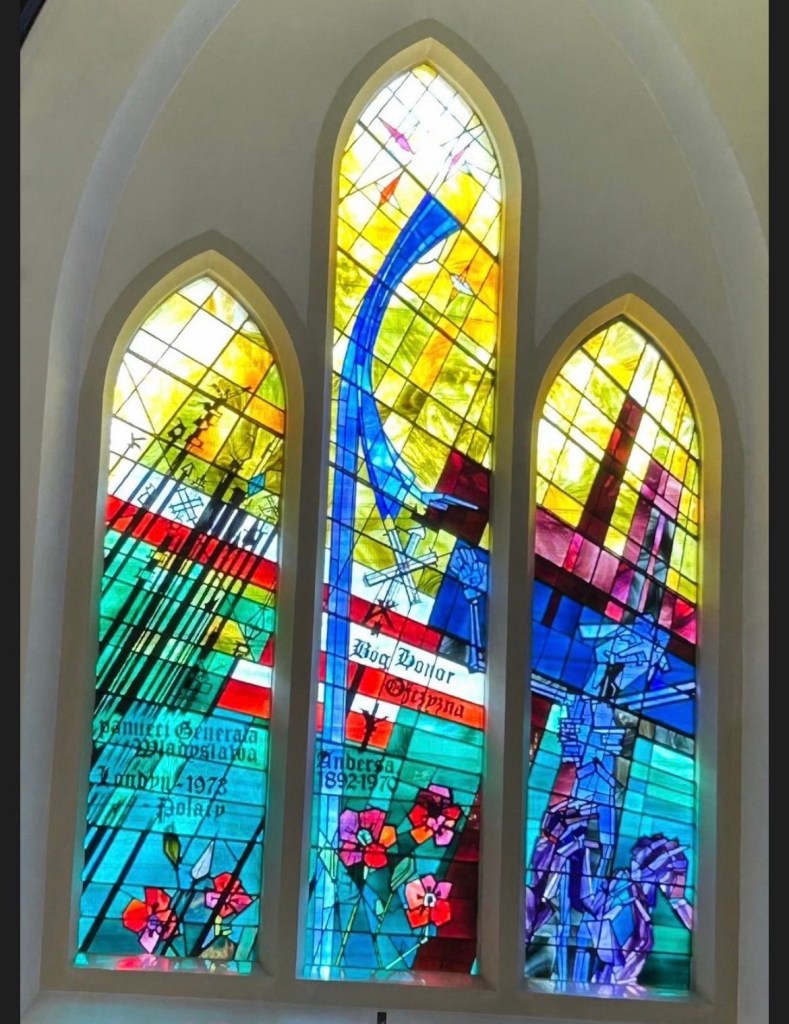
And it contains something extraordinary:
beautiful stained-glass windows dedicated to the Polish 2nd Corps of General Anders, alongside windows commemorating other Polish formations, including the Polish Air Force, General Stanisław Kopański’s Carpathian Brigade and General Stanisław Maczek’s 1st Armoured Division.
These windows are more than beautiful works of art.
They are a visual record of the Polish military contribution to the Allied victory.
And the church has a particularly direct connection to Anders himself.
In May 1970, the funeral Mass for General Anders was held at St Andrew Bobola Church, before his body was taken to Monte Cassino to be buried among his soldiers.
For anyone interested in Polish-British history, this is a place worth visiting.
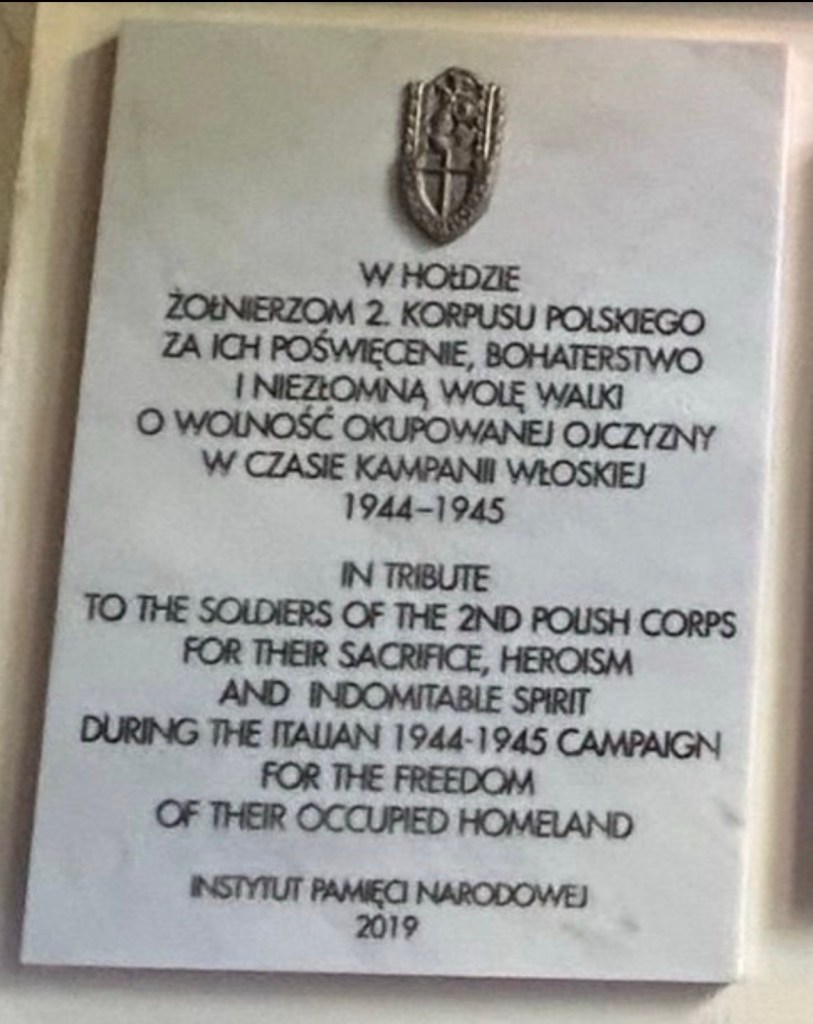
A LIVING MAP OF POLISH-BRITISH HISTORY
There are many other places across Britain where this history can be discovered:
Polish schools.
Scout centres.
Veterans’ organisations.
Polish churches.
Community centres.
Memorials.
Cemeteries.
Museums.
Archives.
Private collections.
General Anders’ legacy also includes military operational 7th Regiment RLC formation within the Royal Logistics CorpS in the United Kingdom, who adhere to his name.
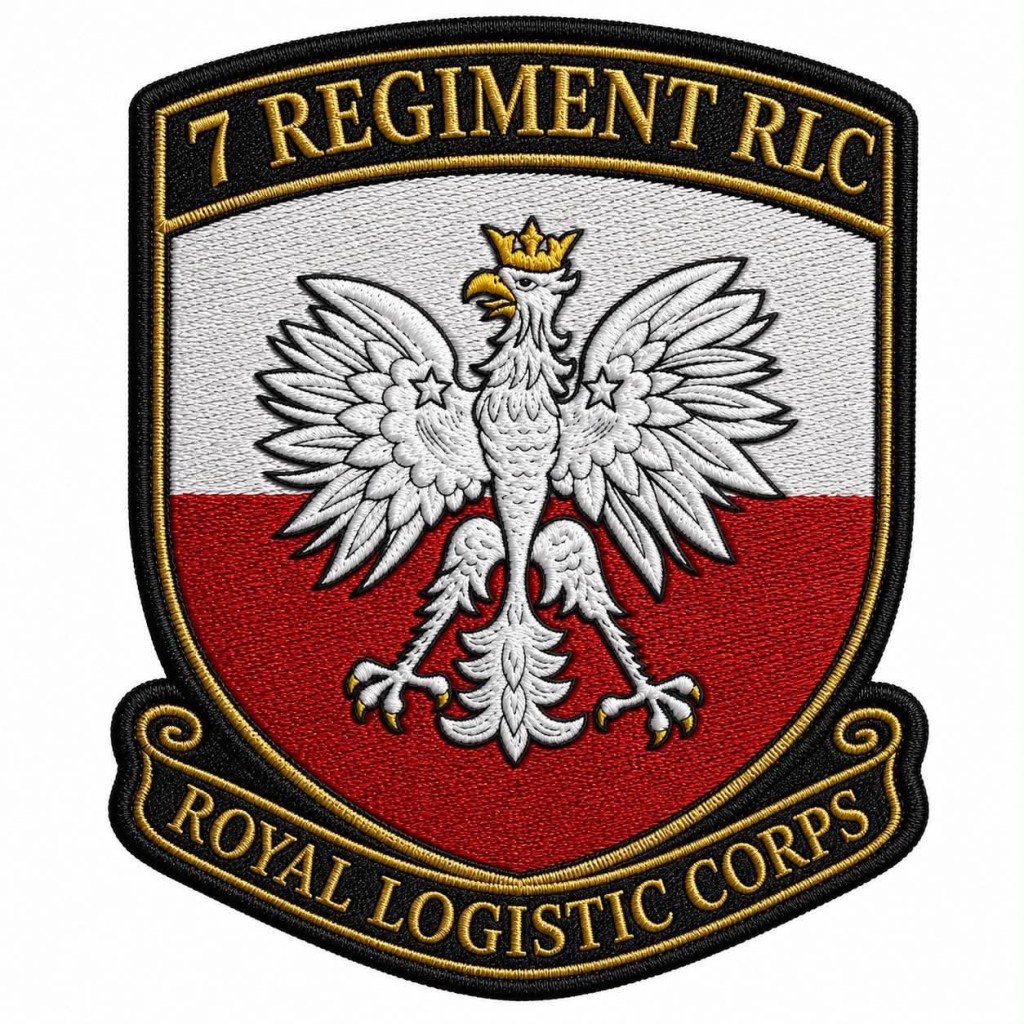
Together they form a living map of the Polish presence in Britain.
They tell a story that goes far beyond the Second World War.
They tell the story of people who arrived as soldiers and refugees and then became neighbours, workers, professionals, teachers, doctors, engineers, entrepreneurs and community leaders.
They contributed to Britain.
They built families.
They built institutions.
And they preserved their Polish identity.
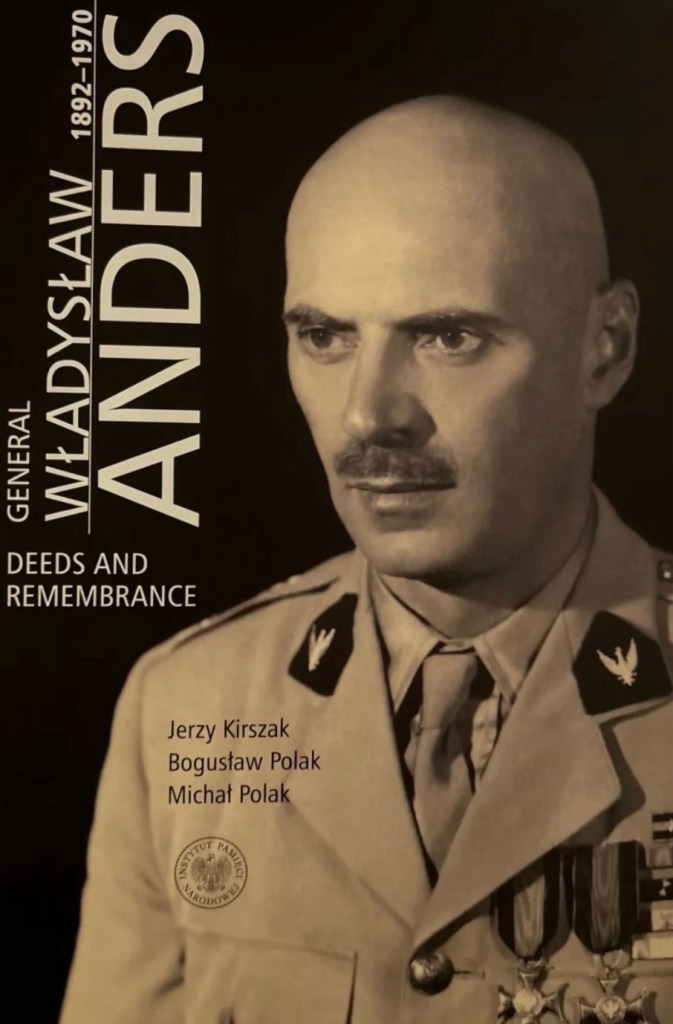
A BRITISH-POLISH STORY
OThis is why the story of General Anders should not be seen only as Polish history.
It is also British-Polish history.
Polish soldiers fought alongside British forces.
They shared the dangers of war.
After 1945, Britain became home to many of them.
Their children were educated here.
Their grandchildren were born here.
Their families became part of British society.
Yet they continued to speak Polish, celebrate Polish traditions and remember Poland.
They became part of a distinctive generation:
Polish by heritage, British by home – and connected to both countries.
That legacy continues today.
ANDERS’ FINAL JOURNEY
General Anders died in London on 12 May 1970.
The date was deeply symbolic.
Exactly 26 years earlier, on 12 May 1944, the decisive Polish assault on Monte Cassino had begun.
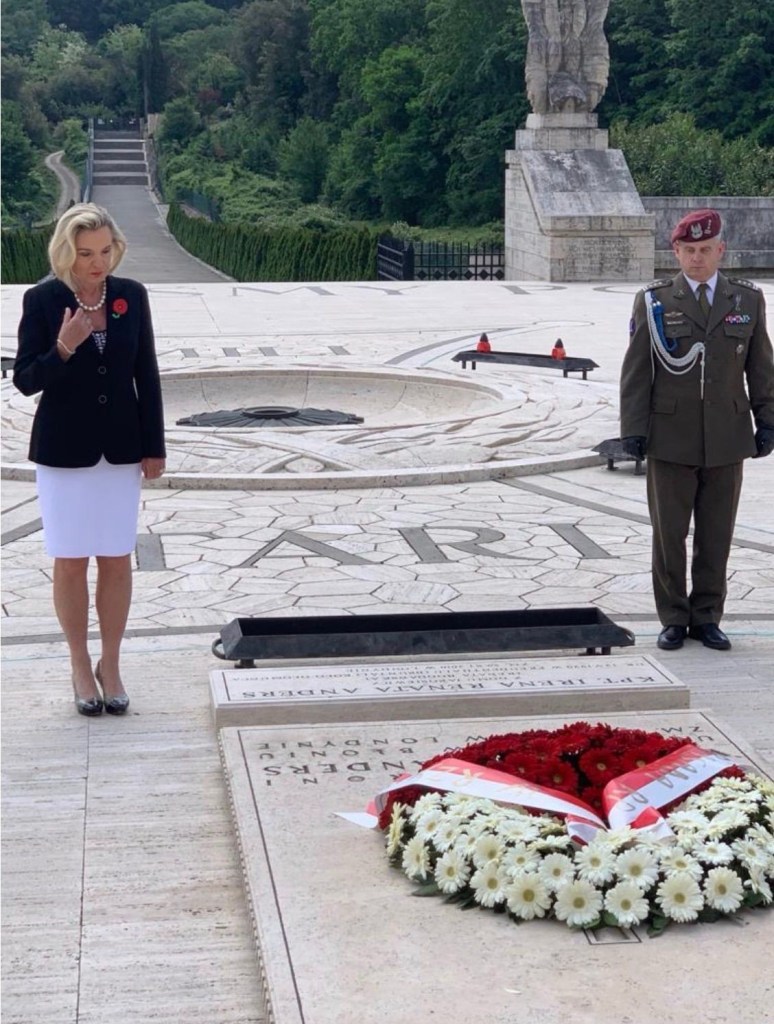
He was buried at the Polish War Cemetery at Monte Cassino, among the soldiers he had commanded.
He had wanted to remain with them.
And he did.
WHY ANDERS STILL MATTERS TODAY
It is easy to remember General Anders through the familiar photographs:
The uniform.
The medals.
The soldiers.
The ruins of Monte Cassino.
The white-and-red flag.
But his greatest post-war legacy may have been something less visible.
He helped build the conditions in which Polish identity could survive outside Poland.
He understood that armies eventually disappear.
Soldiers grow old.
Wars end.
But schools, organisations, culture, community and young people can carry memory forward.
That is why his legacy remains so relevant in Britain today.
OUR RESPONSIBILITY
The Polish community in Britain has inherited an extraordinary legacy.
Those who came before us built institutions when they had very little.
They created homes.
They founded schools.
They established churches and community centres.
They supported Scouting.
They built memorials.
They preserved documents and photographs.
They raised money to honour their fallen.
And they taught their children about Poland.
Today, our responsibility is different.
We must make sure that this history is known not only within the Polish community, but also by British society.
That is why the Anders bust at the National Army Museum matters.
That is why exhibitions matter.
That is why Polish schools matter.
That is why Polish Scouting matters.
That is why the stained-glass windows at St Andrew Bobola Church matter.
Every one of these places turns memory into something that can be seen, visited, understood and passed on.
124 YEARS AFTER HIS BIRTH
On 11 August 2026, 124 years after his birth, we remember General Władysław Anders.
We remember the soldier.
The commander.
The prisoner of the Soviet system.
The creator of an army.
The victor of Monte Cassino.
The leader who refused to accept Soviet domination of Poland.
But here in Britain, we should also remember another Anders.
The builder.
The man who helped his soldiers build new lives when they could not return home.
The man who supported Polish education.
The man who supported Polish Scouting.
The man who understood the importance of Polish community institutions.
The man who thought about children, grandchildren and generations yet unborn.
And the man whose soldiers and families became part of Britain’s story.
Anders fought for Poland on the battlefield.
He fought for freedom in exile.
And he helped build a Polish future in Britain.
Today, that future is all around us.
In our schools.
In our families.
In our community centres.
In our Scout groups.
In our churches.
In our museums.
In our memorials.
And in the young generation that continues to discover the history of those who came before them.
General Anders gave his generation a responsibility: to remember.
Now that responsibility belongs to us.
Let us make sure that the story of General Władysław Anders and his soldiers is not only remembered by Poles.
Let it be known as part of Britain’s history too.
We remember General Władysław Anders.
We remember his soldiers.
We remember the Polish community that built a new life in Britain.
And we remember those who ensured that Poland would never disappear from the hearts of the generations that followed.
WE REMEMBER 🇵🇱
Text: Iwona Golińska, POLISH SUE President and Secretary of The Council for Polish Diaspora and Poles Abroad by the President of the Republic of Poland.
Photo: Polish Sue, IPN – Institute of National Remembrance, NAC Archives, Goliński Family Album



Leave a comment