For more than four decades, 22 July was presented by the communist authorities as one of the most important dates in modern Polish history. Schoolchildren learned about it, military parades filled the streets, factories were officially opened on this day, and state media repeated the same message year after year: Poland had been “reborn” through the Manifesto of the Polish Committee of National Liberation (PKWN).
In reality, 22 July 1944 marked not the birth of a free Poland, but the beginning of the Soviet takeover of the country.
A Government Created in Moscow
According to communist propaganda, the Polish Committee of National Liberation (PKWN) was established in the town of Chełm, the first major Polish town occupied by the Red Army and the Soviet-controlled 1st Polish Army. This narrative was intended to convince Poles that the new authorities had emerged naturally on liberated Polish territory.
The truth was very different.
The PKWN was created in Moscow on 21 July 1944, under the direct supervision and with the approval of Joseph Stalin. Its members did not even arrive in Chełm until several days later. The story of its “Chełm origins” became one of the earliest and most enduring myths of communist propaganda in post-war Poland.
The Manifesto That Changed Poland
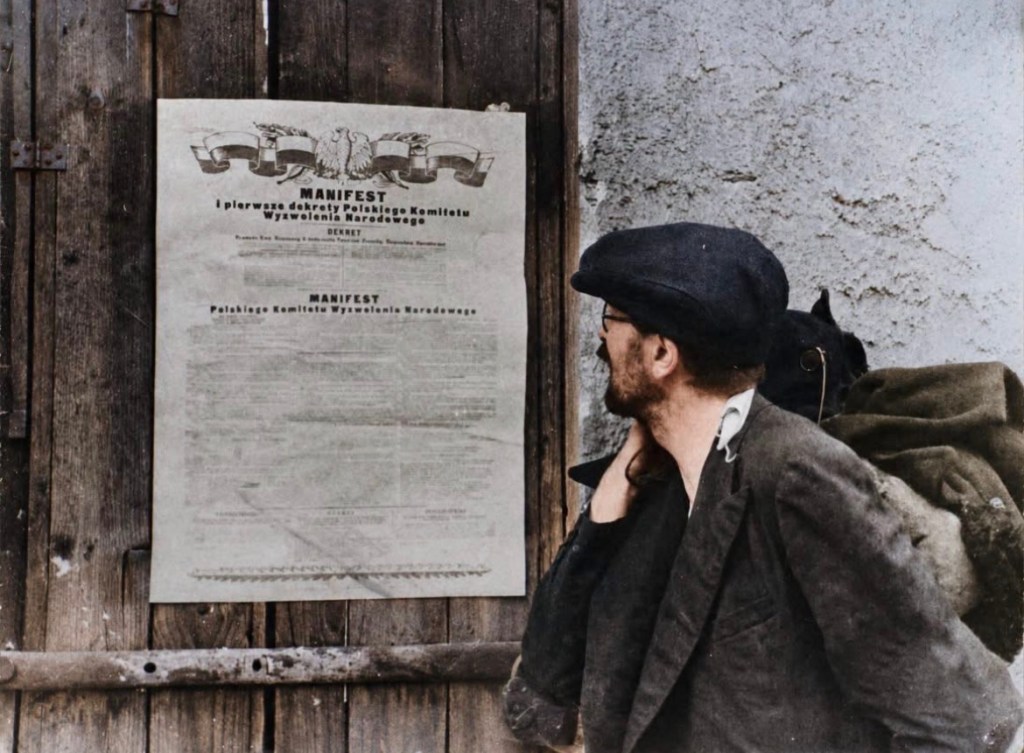
Officially announced on 22 July 1944, the PKWN Manifesto rejected the authority of the internationally recognised Polish Government-in-Exile in London and ignored the April Constitution of 1935.
Instead, it proclaimed the Soviet-backed committee as the legitimate authority in territories occupied by the Red Army, laying the foundations for a political system entirely dependent on Moscow.
The Manifesto spoke of democracy, freedom, social justice, land reform and national reconstruction. These promises appealed to a society exhausted by years of brutal German occupation.
Yet behind this hopeful language stood a very different political reality.
“Liberation” or a New Occupation?
One of the most effective slogans of communist propaganda was the claim that Poland had been “liberated.”
While Nazi German occupation undoubtedly came to an end, true independence did not return.
Instead, Soviet domination replaced one totalitarian system with another.
Over the following years the communist authorities systematically dismantled the Polish Underground State. Thousands of Home Army (Armia Krajowa) soldiers and members of the wartime resistance were arrested, imprisoned, tortured or executed. Political opposition was eliminated, independent organisations were dissolved, censorship became widespread, and elections were manipulated to secure communist rule.
The promises contained in the Manifesto became the foundation of a state controlled from Moscow rather than Warsaw.
Building a National Myth
Throughout the existence of the Polish People’s Republic (PRL), 22 July became the regime’s most important national holiday — the National Day of the Rebirth of Poland.
The choice was deliberate.
Military parades, speeches by communist leaders, medal ceremonies and official celebrations were all organised to reinforce the message that communist rule had created a new Poland.
Major investments — factories, housing estates, roads, schools and public buildings — were frequently completed or ceremonially opened on or around 22 July, regardless of their actual completion dates. The objective was clear: to associate every visible sign of progress with the legitimacy of the communist state.
The End of the Myth
When communism collapsed in 1989, one of the new democratic government’s first symbolic decisions was to abolish 22 July as a national holiday.
The date disappeared almost overnight from the official calendar, reflecting Poland’s rejection of decades of communist propaganda and its return to historical truth.
Today, historians continue to examine the PKWN Manifesto not as the beginning of Poland’s freedom, but as the opening chapter in nearly half a century of Soviet domination.
Did You Know?
- The PKWN was created in Moscow on 21 July 1944, one day before its Manifesto was officially announced.
- The claim that the committee had been established in Chełm was one of communist Poland’s earliest propaganda myths.
- During the PRL, countless factories, housing estates, roads and public buildings were deliberately inaugurated on or around 22 July to strengthen the symbolic importance of the holiday.
- Following the fall of communism in 1989, 22 July was removed from Poland’s calendar of national holidays, symbolising the rejection of the communist narrative.
As Poland continues to confront the legacy of the twentieth century, 22 July remains a powerful reminder that history can be manipulated as effectively as territory can be occupied. Understanding how propaganda shaped public memory is essential to preserving historical truth for future generations.
Text: Polish Sue
Source: Institute of National Remembrance – IPN).
Foto: Wikimedia Commons


Leave a Reply