
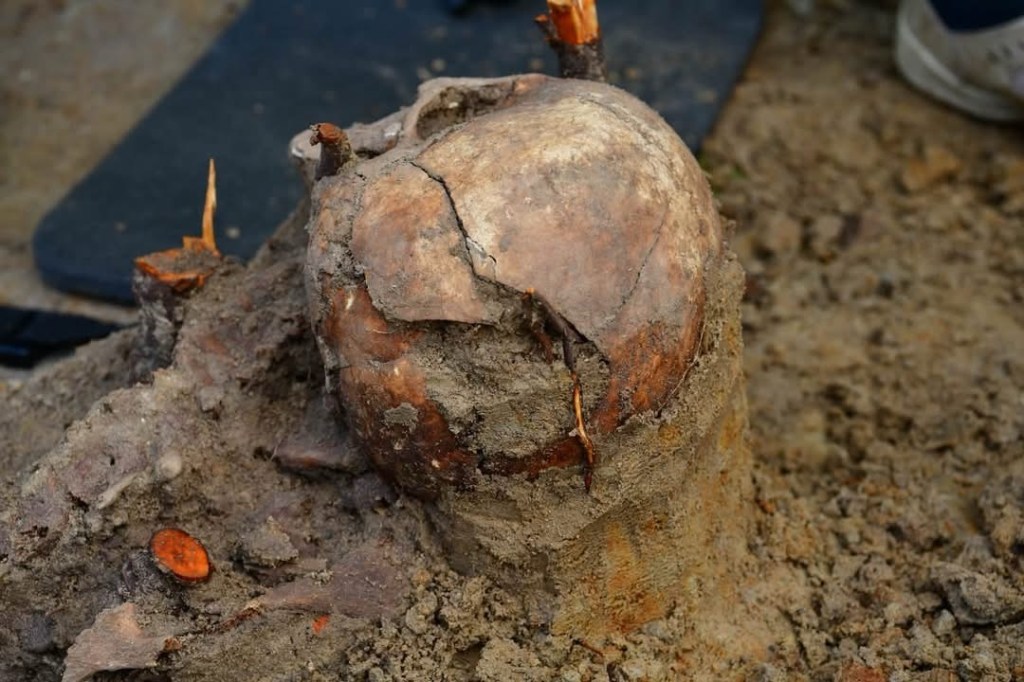
Exhumation work is currently taking place in Ostrówki and Wola Ostrowiecka in Volhynia, carried out by an interdisciplinary team made up of specialists from the Institute of National Remembrance (IPN), the company Wołyńskie Starożytności, and supported by a representative of the Wrocław Medical University. The operation is also being conducted with the involvement of the Ministry of Culture and National Heritage and the Consulate of the Republic of Poland in Lutsk.
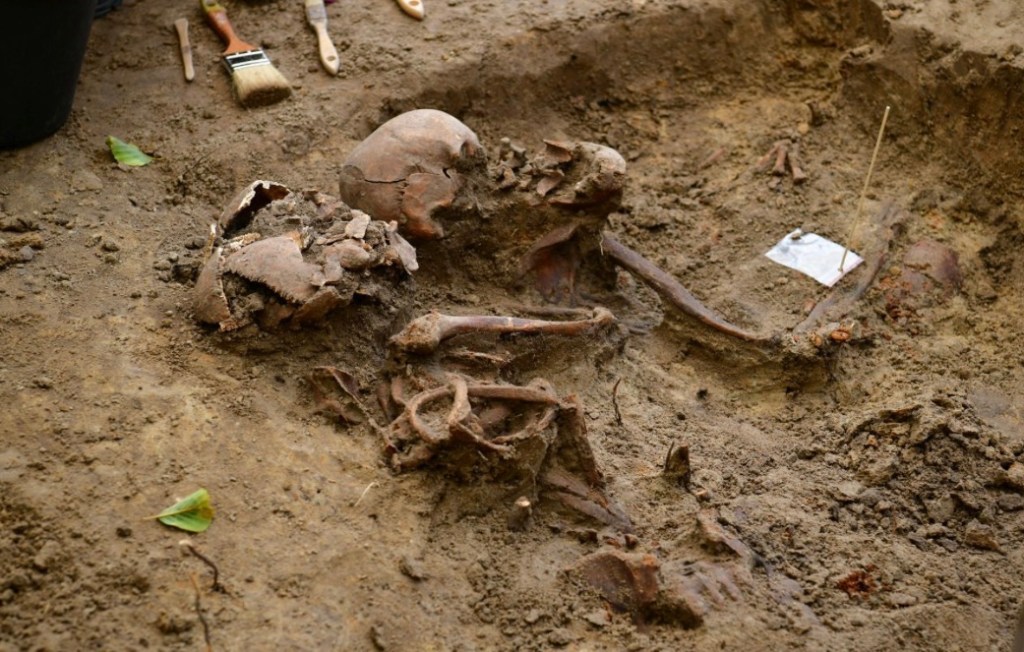
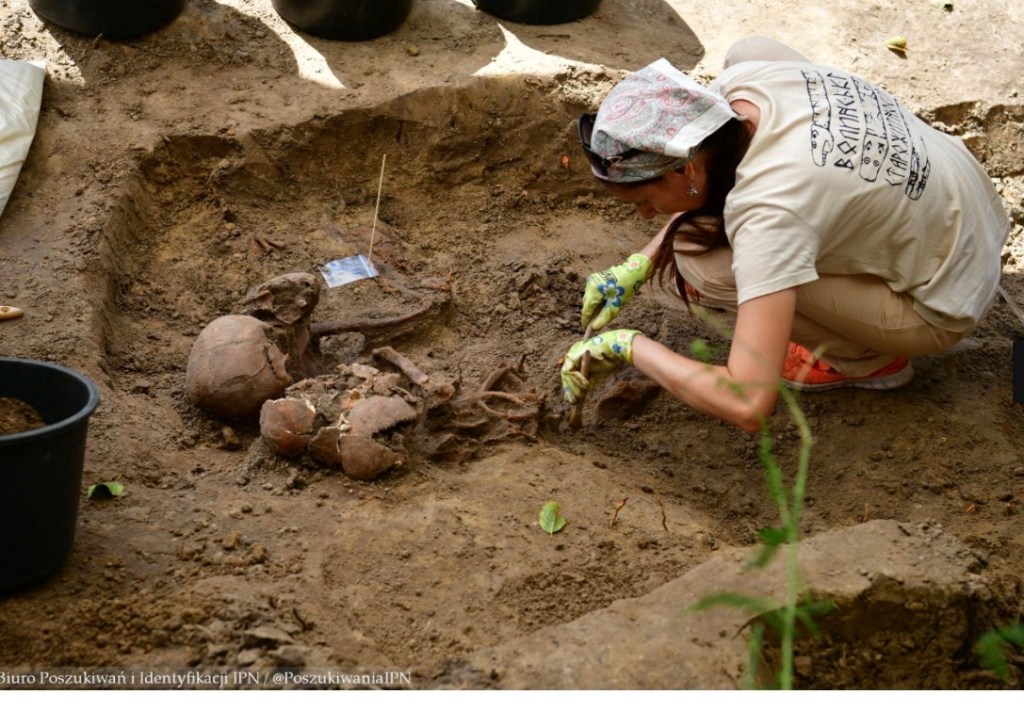
In recent days, the team has begun exhuming a mass grave located at the former farmstead of Aleksander Strażyc in Wola Ostrowiecka.
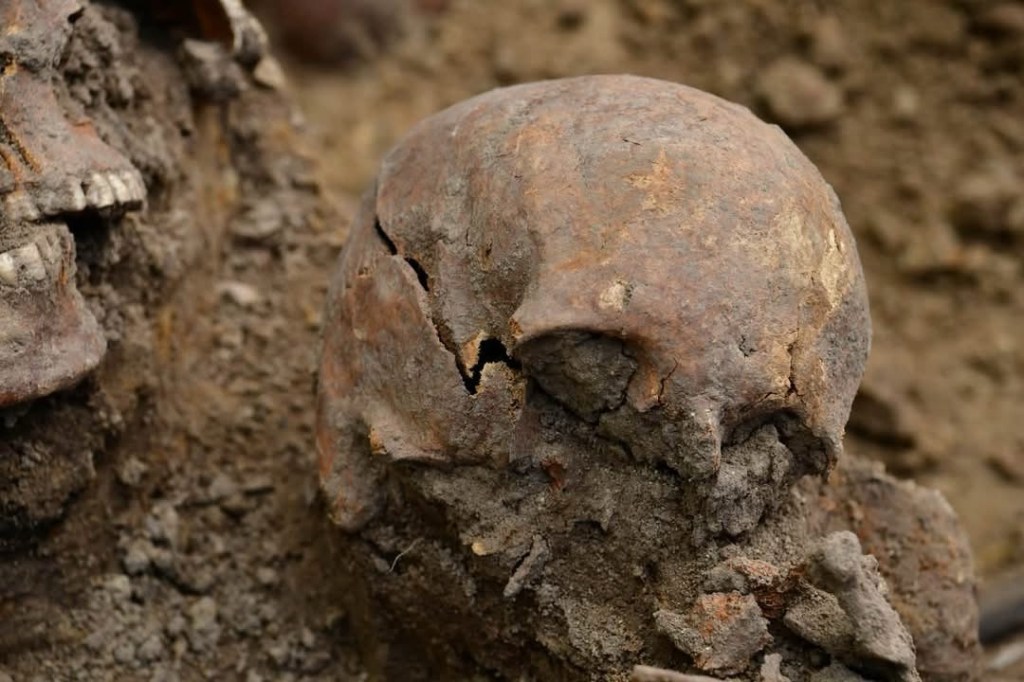
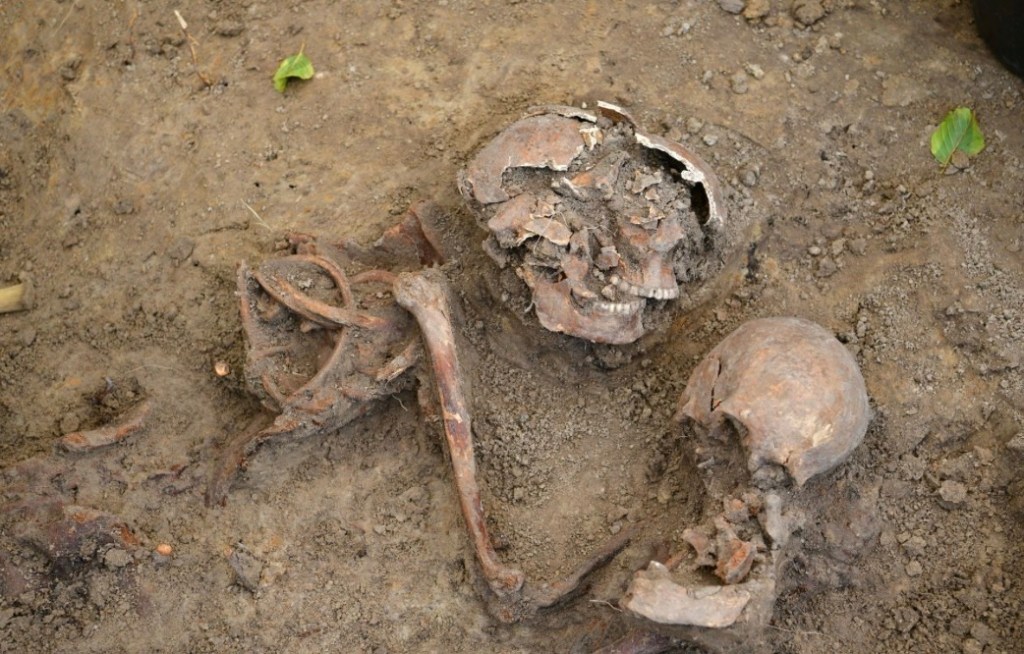
So far, the remains of several people of different ages have been uncovered. Some of the skeletons bear traces of mechanical injuries. It should be remembered that the excavation is currently revealing only the upper layer of burials.
The remains were buried without coffins, the bodies were laid in disorder, and personal items such as fragments of jewellery and clothing were found near some of the skeletons.
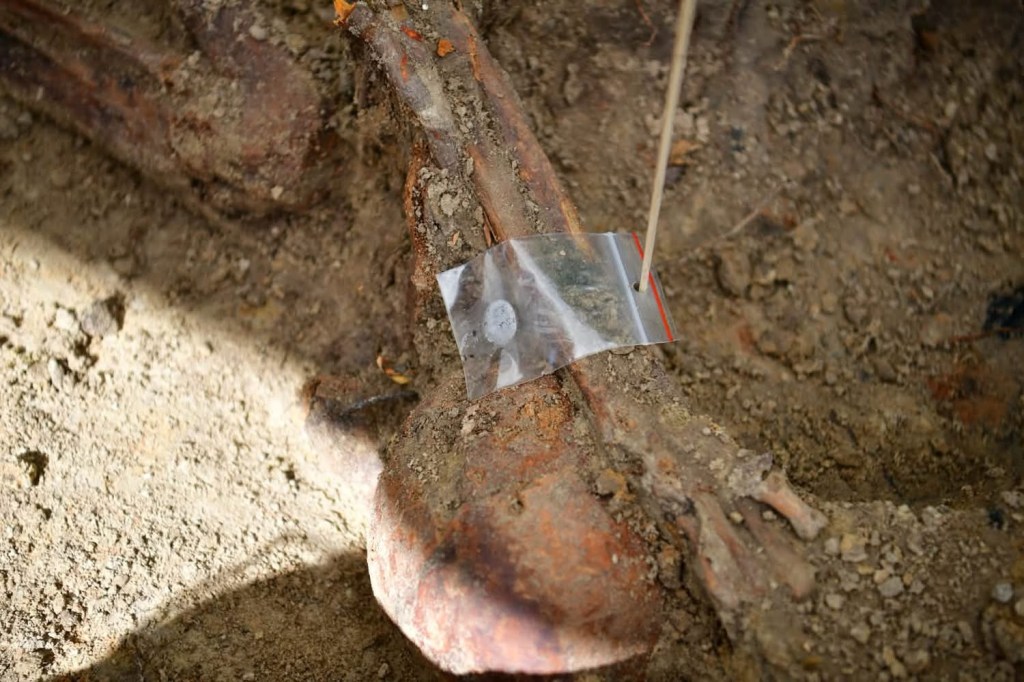
In addition, in a single grave located in the forest near the cemetery in Ostrówki, the remains of one person were discovered.
The exhumation work is scheduled to continue until 7 August 2026. The Institute of National Remembrance has announced that it will provide ongoing updates on the progress of the research through its official communication channels.
The Volhynia Massacre remains one of the most tragic chapters in 20th-century Polish history. Between 1943 and 1945, Ukrainian nationalists from the Organization of Ukrainian Nationalists (OUN) and the Ukrainian Insurgent Army (UPA) carried out a planned genocide against the Polish population in Volhynia and Eastern Lesser Poland.
The attacks began on a larger scale in the spring of 1943 and reached their peak on 11 July 1943, known as Bloody Sunday, when dozens of Polish localities were attacked simultaneously.
In total, between 80,000 and 120,000 Poles — men, women, and children — were murdered using unimaginably brutal methods, including axes, scythes, pitchforks, burning alive, and torture.
Several hundred thousand people were forced to flee in order to save their lives.
One of the most tragic episodes of this crime was the destruction of Ostrówki and Wola Ostrowiecka on 30 August 1943.
At dawn, a UPA unit led by Ivan Kłymczak “Łysy” and a sotnia commanded by Ivan Zarechnyuk “Woron,” supported by Ukrainian residents of nearby villages, surrounded both Polish settlements in a tight cordon.
The inhabitants were deceitfully gathered in schoolyards under the pretext of a meeting.
In Ostrówki, the men were driven into the school and nearby buildings, where they were murdered in groups of ten with axe blows, wooden clubs, and shots to the back of the head. Women with children and the elderly were locked inside the church.
In Wola Ostrowiecka, the residents suffered a similar fate — the men were killed behind Strażyc’s barn, and later the building was set on fire with women and children inside, while grenades were thrown through the windows.
Within just a few hours, the Ukrainians murdered approximately 1,050 people in both villages, including hundreds of children and women.
The survivors were saved by the unexpected arrival of a German patrol, which caused panic among the attackers.
After the massacre, the villages were looted and burned, and the bodies of the murdered were thrown into mass graves, wells, and ditches.
Today, fields and meadows stretch across the sites of the former Polish settlements.
The memory of these events returned only gradually.
It was not until the exhumations carried out in 1992, 2011, and 2015 that hundreds of victims were given a dignified burial.
The commemorations at the cemetery in Ostrówki have become a symbol of the truth about the genocide committed by Ukrainian nationalists.
“Not for revenge, but for memory do the victims cry out” — these words serve as a reminder of the need to locate, exhume, and provide a dignified burial for the victims of the Volhynia Massacre, including those in Ostrówki and Wola Ostrowiecka.
Tekst: Polish Sue
Photo: IPN
Source: Institute of National Remembrance (IPN).



Leave a Reply